
Arabs and Kurds in Syria: Betrayal and Nationalism
The rapid unravelling of Kurdish autonomy in Syria has brought familiar narratives back into play. Nationalism and the language of betrayal have returned to the centre of regional politics.

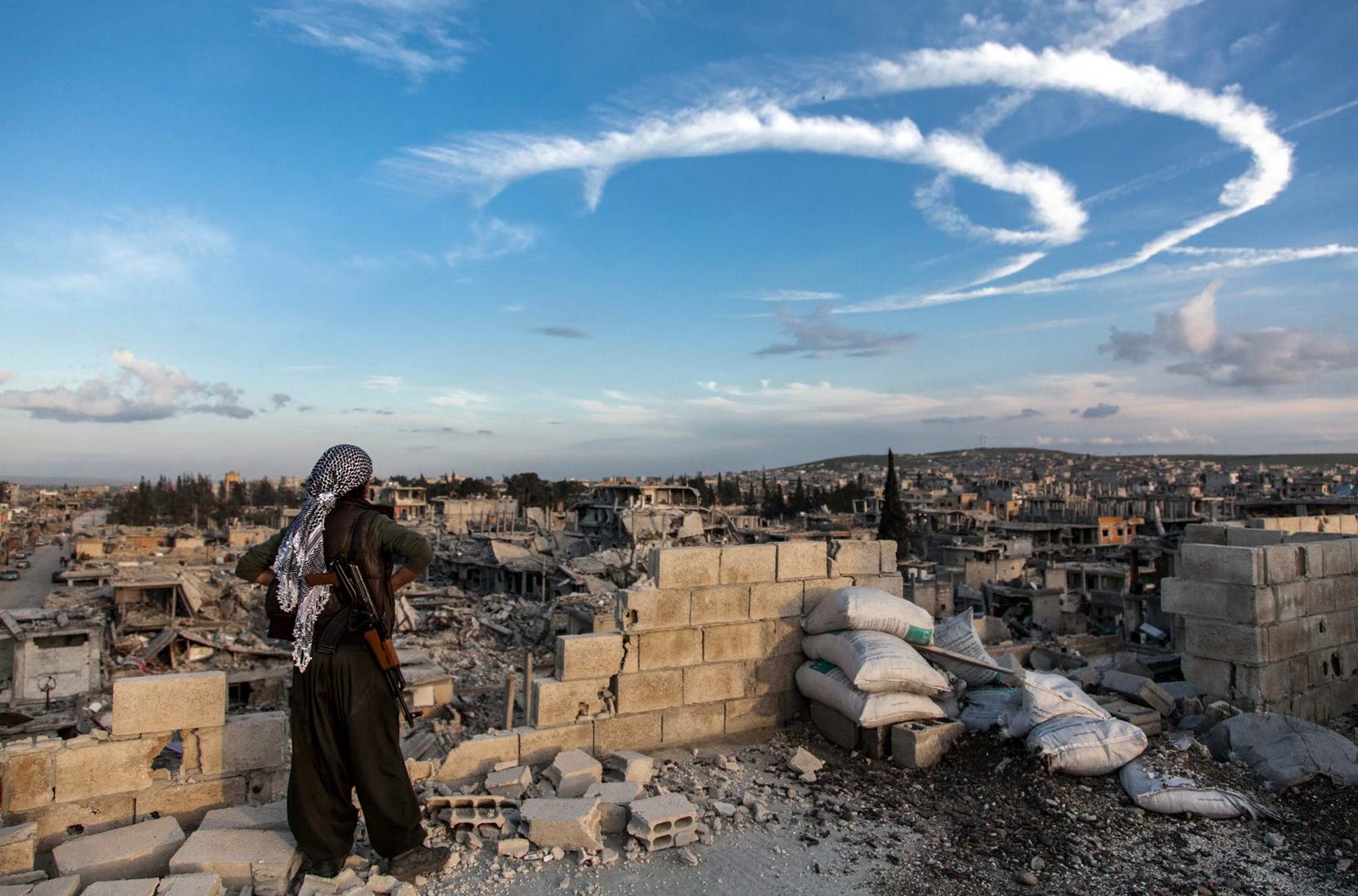
The Syrian Kurds, their military wing the SDF/YPG and their political arm, the Autonomous Administration of North and East Syria (AANES), have suffered a severe strategic breakdown over the past couple of weeks. A cascade of serious miscalculations, the fraying of key internal alliances, and a sharply transformed regional context combined to produce the swift loss of nearly 80 percent of their territory and the disintegration of their autonomy project.
As I have pointed out before, the main mistake was a misreading of the post-Assad moment. The Kurdish leadership underestimated al-Sharaa’s legitimacy bargain with the US and entered talks with the new Syrian government on rigid terms, while inflating the reliability of American backing and discounting the grievances of Arab tribal forces within the SDF.
The Limits of Autonomy
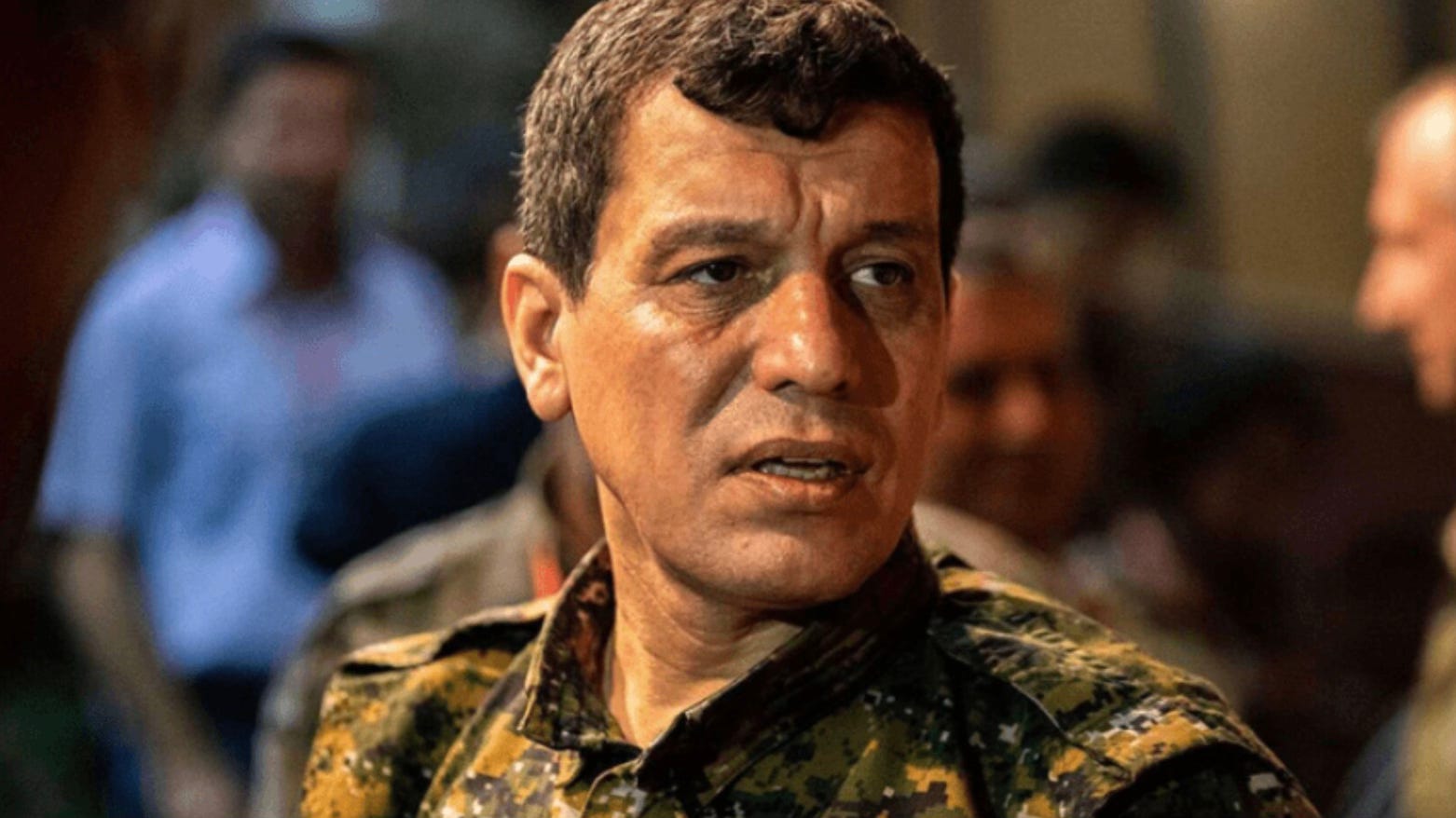
At the end of last week, after intense negotiations, both sides announced that an agreement had been reached. This came as a relief to many of us who were concerned that northern Syria was heading towards a bloodbath. Government forces had pushed to the brink of Kurdish-held areas and had effectively besieged Kobane, a symbolic Kurdish town that fought ISIS in 2016. According to this deal, Interior Ministry security units, but not the military, which at present has a heterogeneous composition, will enter the Kurdish-held cities of Hasakah and Qamishli. It is said that around fifteen vehicles carrying roughly 250 government security personnel will be deployed.
The deal outlines the integration of Kurdish-run autonomous administration institutions into Syrian state institutions, while preserving the status of civilian employees, settling the civil and educational rights of the Kurdish population, and ensuring the return of displaced people to their home areas. Decentralization, the core demand the SDF had been pressing above all else, does not appear in the text. After signing the deal in Damascus, Mazloum Abdi said in an interview that he knew the agreement did not fully respond to his people’s demands, but that it was the best outcome available.
I agree that this is the best outcome under the circumstances. That said, the deal could have been reached much earlier, without coming head-to-head with the government, and without the deaths and displacement that followed. Mistakes were made, many of which I have discussed in this piece. Certain maximalist positions were adopted during negotiations with Damascus, a government that is itself playing a delicate balancing act between the US, Saudi Arabia and Turkey. These maximalist demands did not help the Kurdish case for autonomy.
It is certainly better than nothing, and far better than what Kurdish identity and collective consciousness endured under the Assad dynasty. The vision of a vast SDF military force of around seventy thousand fighters, controlling Arab-majority areas such as Raqqa and Deir ez-Zor, was always unrealistic. It was a dream pushed by irresponsible actors, some senior PKK figures, some Western former and current diplomats and interlocutors.
A Secular And Feminist Project
The Rojava project had strong ideological components shaped by the thinking of the PKK’s imprisoned leader Abdullah Öcalan, known as democratic confederalism. The SDF, consisting largely of the YPG, itself an offshoot of the PKK and a brainchild of Öcalan, has had a mixed record of democratic practice during its decade of rule in Rojava. It has not been especially pluralistic or tolerant of dissenting ideas and individuals. What is certain, however, is that it has been the most secular and feminist political movement in the Middle East. This did not sit well with many socially and religiously conservative Arabs, and indeed with some Kurds, in Raqqa and Deir ez-Zor.
We are now at a crossroads. The deal between the Syrian government and the Kurds, which is expected to begin implementation this week, requires perseverance from political leaders and swift, competent execution by technocratic actors on the ground if it is not to collapse. Even at this early stage, there are diverging interpretations. The Kurdish side presents the agreement as allowing a degree of autonomy, both in security and governance, in Kurdish cities such as Hasakah and Kobane. The Syrian state, by contrast, insists that the deal contains no provision for autonomy, and that the current administration in Rojava will be fully integrated into a centralized state, with YPG fighters joining the Syrian army as individuals. I want to believe that these divergences will be smoothed out.
What this means is that a layer of miasma still hangs over northern Syria, and over the stability of the Syrian government itself. This may not dissipate in the coming months. Nevertheless, it appears that the major external players in Syria, the US, Turkey and Saudi Arabia, have converged on this form of Kurdish integration into Damascus. For Turkey at least, what I have exactly a year ago called an “honourable exit for all parties” now seems possible (a concept I used to describe the recent negotiations between the Turkish state and Abdullah Öcalan, in which Turkey could end the armed phase of the Kurdish conflict without conceding sovereignty or appearing to lose, the PKK could pursue voluntary disarmament framed as a conscious political closure rather than collapse, and Syrian Kurds could find space for partial integration into the Syrian state while lowering Ankara’s threat perception), provided that the Kurdish negotiation process with Öcalan ends with a favourable outcome, including PKK disarmament and the reintegration of its militias.
Another point revealed by the recent clash and subsequent calm is the resurgence of nationalism on both sides, framed through the language of betrayal. This is a familiar trope among former Ottoman polities, Turks, Kurds and Arabs alike, who experienced the dismemberment of the empire and were pitted against one another by Western powers, and who have since built national myths around these narratives.
The Politics of Betrayal
Let me list, very crudely, the colloquial versions of these stories, which circulate not only in coffeehouses but, more surprisingly, in highbrow academic settings. It may sound like a caricature, but it captures core truths about these three societies and their never-ending interplay:
Turks believe that “Araplar bizi sırtımızdan hançerledi”, yani Arabs stabbed them in the back by negotiating with the British for independence, often without a serious understanding of the McMahon–Hussein correspondence (the wartime exchange of letters in 1915–16 between Britain’s High Commissioner in Egypt, Sir Henry McMahon, and Sharif Hussein of Mecca, in which London ambiguously promised Arab independence in return for revolt against the Ottomans) during the WWI.
Kurds believe that they were betrayed by the Turkish state, despite fighting alongside the Turks in the war of independence, only to be persecuted afterwards, with their identity suppressed in the service of an unrealistic, monolithic Turkish nation. Turks, in turn, see the formation of a separatist organization such as the PKK as the ultimate act of betrayal by those Kurds who align themselves with it.
Turks and Kurds are therefore well acquainted with each other’s betrayal narratives and often converge in a shared sense of Arab betrayal. The latest episode, in which Arab tribes within the SDF abruptly switched sides as the Syrian army advanced, and local Arab populations joined them, first shocked the Kurds and then hardened their sense of having been betrayed. That shock deepened when the US also aligned itself with the Sharaa government, while Israel, which over the past year had intermittently sought to lure Kurdish actors, effectively played dead as Kurdish cities were besieged, despite earlier appeals for support. The conclusion many Kurds drew from this sequence was stark and inward-turning: that, in the end, they only have each other to trust. This, in turn, produced a surge of Kurdish unity across Iraq, Syria and Turkey, and intensified an already palpable nationalist mood.
A Nationalist Jihadist
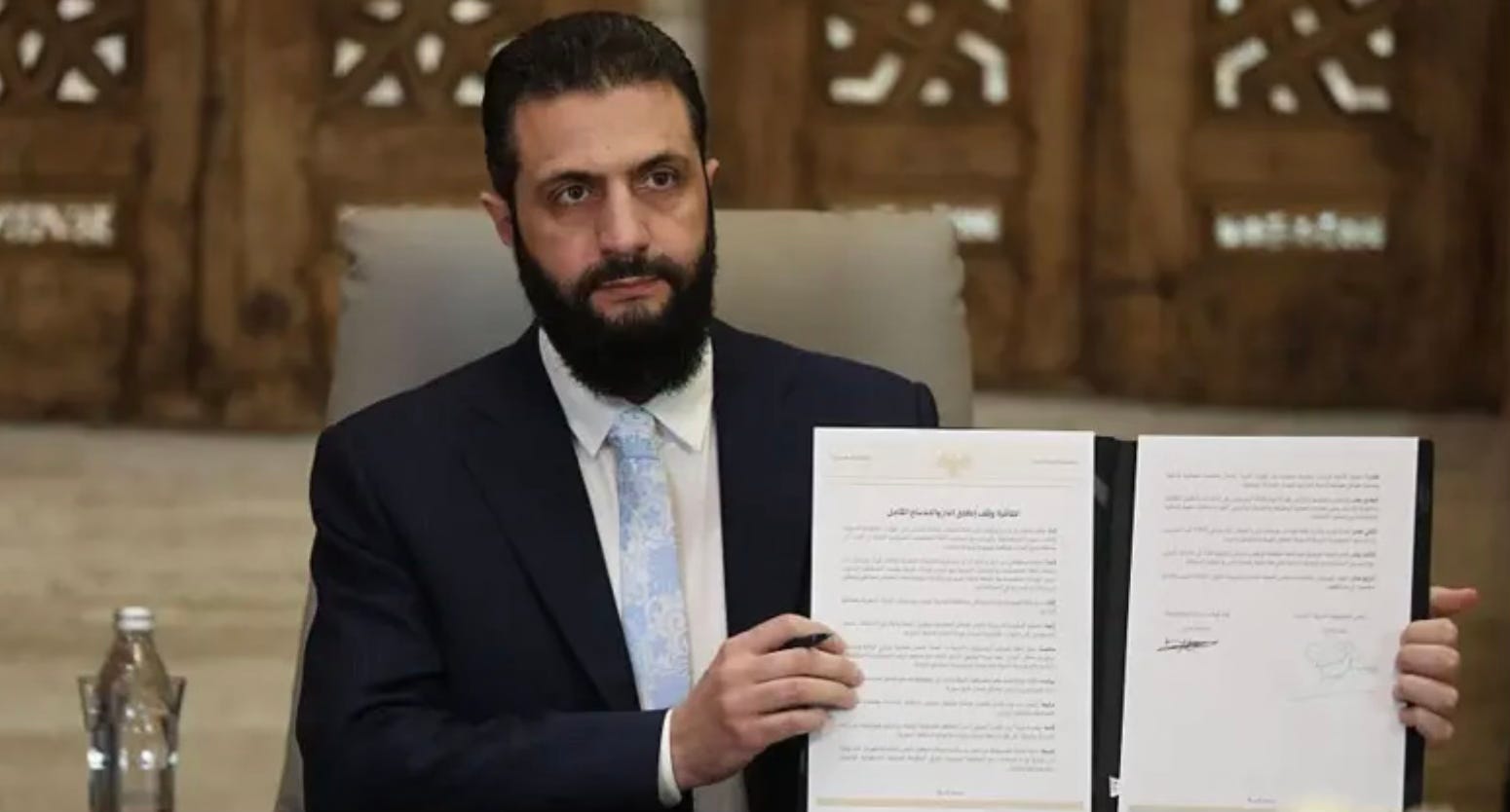
Ahmad al-Sharaa’s position is also revealing. As I have written before, Sharaa became the most conspicuous arbiter of what might be called “localized jihad” when, in 2015, he chose to focus exclusively on Syria, cut ties with al-Qaeda, and seized the opportunity to govern Idlib. Localized jihad is an oxymoron. Jihad, by definition, was meant to be borderless and transnational. Yet in Sharaa’s hands, through pragmatism and agency, it evolved within a specific Syrian context. That context matters. Syria is a country where Arab nationalism was born and flourished. Gamal Abdel Nasser, the Egyptian president and an iconic figure of Arab nationalism who attempted to form a United Arab Republic with Syria, was Sharaa’s hero.
I have often argued that the periphery of Islamism as an ideology is highly porous, while its core remains malleable, and that nationalism ebbs and flows within it. Most Islamists who reach positions of power are also deeply nationalist. Sharaa never seriously contemplated a federal Syria or full Kurdish autonomy extending into Arab-majority regions. His jihadist background has long been a confounding factor, even though his family was known for its nationalist leanings and he openly declared admiration for Abdel Nasser, something rarely seen among Ikhwanis, let alone former jihadists. It is, in that sense, a genuinely interesting case.
Isn’t it striking how quickly societies return to familiar tropes when pressure mounts? Familiar idioms about betrayal re-emerge, nationalism consolidates, and ideological distinctions become harder to sustain. Islamism, when confronted with territory, population and external power, bends towards the logic of the state. Sharaa’s trajectory makes this more visible, as does the narrowing of Kurdish political horizons under siege.