


Merhabalar…
This week I am including an interview in podcast form in Angle, Anchor and Voice. The reason is really simple: to let you hear the experts speak directly to you. My hope is that you come away from each conversation holding a better-formed version of the question that drew you in, rather than a neater version of its answer.
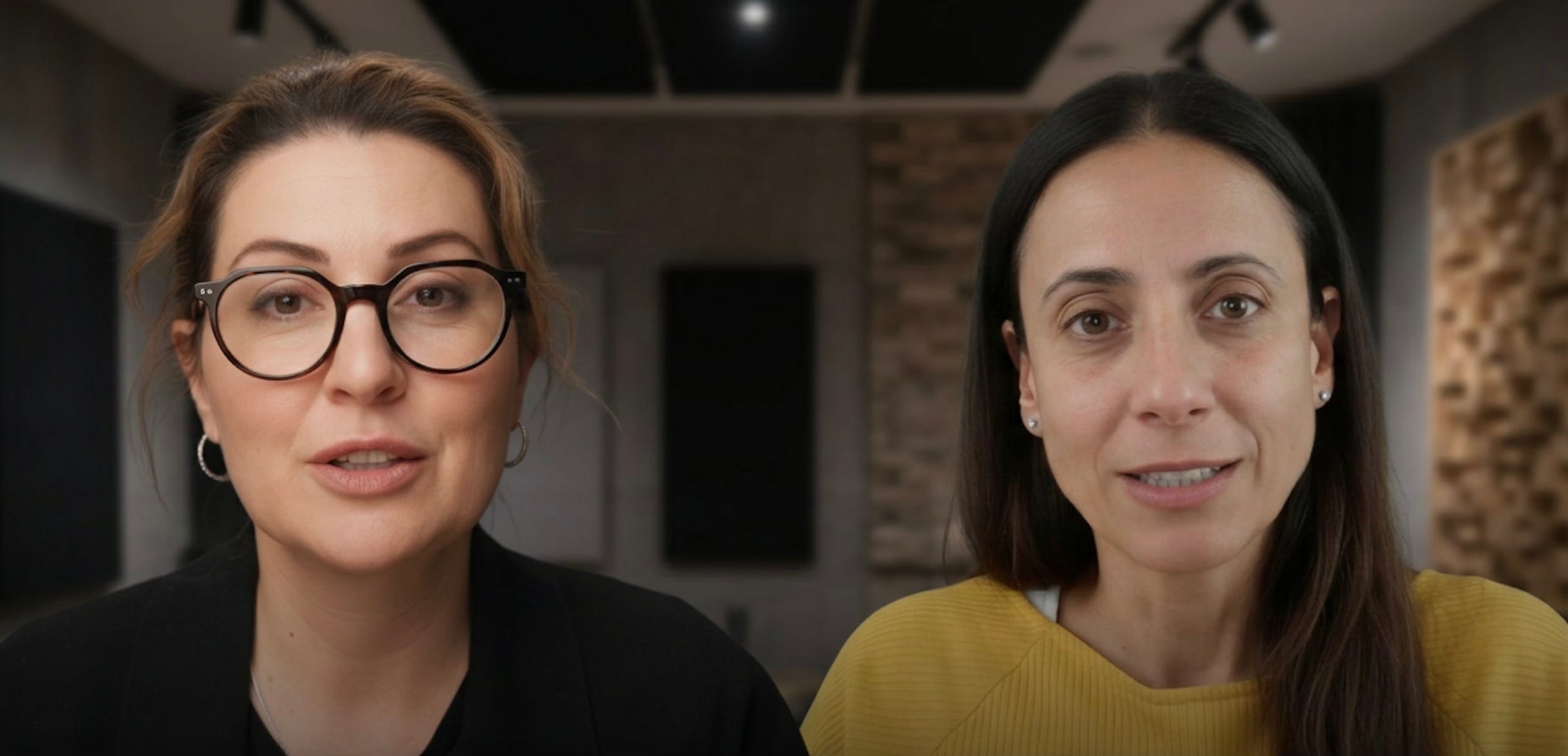
For this opening conversation I could not have asked for a more fitting scholar than Nathalie Tocci, a thinker I read with consistent admiration and one of the most incisive voices on what Europe is and on what it keeps failing to become. She holds a professorship of practice at Johns Hopkins in Bologna and a senior fellowship at Bocconi University’s Institute for European Policymaking. Between 2015 and 2022 she served as special advisor to two successive High Representatives, Federica Mogherini and then Josep Borrell, and in that role she drafted the 2016 EU Global Strategy, the text that gave the Union the language of “principled pragmatism” and “strategic autonomy” it has been struggling, with uneven results, to inhabit ever since. Her books are many, among them a co-authored volume on Turkey’s relationship with the EU. Her recent documentary, Why Europe Matters, has just been released. Here is the link to that.
I wanted to talk to her because the EU finds itself, once again, in the predicament it understands best and resents most, the predicament of having to make decisions it would rather defer. It has to decide how to deal with a Turkey that is both indispensable and impossible. It has to decide what to do about the credibility it has bled on Gaza, on enlargement, on the rule of law within its own borders. And it has to decide how to read Ursula von der Leyen, who told a Hamburg audience last month that the EU’s task was to complete the European continent so that no part of it would fall to Russia, Turkey or China. The two days that followed were spent in Brussels trying to soften the sentence. What was it all about? What is the current sentiment in Europe regarding Turkey?
Nathalie elaborates that Turkey is not viewed as one of the “baddies,” but it is also not on the “map of the goodies.” The current EU enlargement narrative is driven by a geopolitical logic of integrating a “free, secure and democratic grey zone” to prevent it from falling under adversarial influence. That logic, applied to Ukraine and Moldova, does not match Turkey’s situation.
Turkey hits a brick wall
While one could argue Turkey might one day “see the light” — e.g., post-Erdoğan — the logical next step, resuming accession, faces significant, often unconscious resistance within the EU. Because Turkey is an uncomfortable case that defies simple categorization, European discourse often avoids the topic. Nathalie identifies several sources of the “brick wall”: doubts about Turkey’s long-term potential to be a stable liberal democracy; concerns about its size and the complexity it would introduce to EU political balances; and underlying, often unstated, civilizational or religious biases.
The current “geopolitical” rationale for enlargement, which is about integrating vulnerable states for security, doesn’t apply to Turkey. Already in NATO and a strong military power, Turkey doesn’t fit the “integrate them or else” logic relevant to Ukraine. That leaves only the old, unresolved sources of resistance, making the topic hard to address.
For the other topics we touched upon — Ursula von der Leyen’s controversial statement on Turkey, the possible role of the Israeli lobby on her and other European leaders, and our collective failure to find an alternative to accession for EU–Turkey or EU–Britain relations — listen to the podcast. Once again, sorry for any unpleasantness in this podcast. I hope I will learn more along the way, and many thanks to Nathalie Tocci for her insights and her patience with me.


