
Islamisation Debate: Has Turkey Become Like Malaysia?
Among secular Turks, anxiety once centred on Malaysia’s Islamisation trajectory. Two decades on, the comparison reveals less about where Turkey ended up than about how Islamism itself has transformed.

Almost two decades ago, I was working for Turkey’s top mainstream newspaper, Hürriyet, as a reporter when the editor-in-chief of the paper, Ertuğrul Özkök, decided to send me to Malaysia for a story.
I was not the only reporter from Istanbul. The other major newspaper, Milliyet, had sent its top journalist, Ece Temelkuran, now a major author whose recently released book Nation of Strangers is shortlisted for the prestigious Women’s Prize.
Ece and I each spent a week in Malaysia without encountering one another, trying to answer a question that had come to dominate public discussion at the time.
Will Turkey become like Malaysia?
The question did not emerge in a vacuum. By 2006 and 2007, Turkey was moving through a series of political confrontations that exposed a deeper struggle over who would control the state. When the AKP put forward Abdullah Gül as its candidate for president, secular elites and opposition parties resisted, arguing that someone with Islamist roots, and a headscarf-wearing wife, should not occupy the most symbolic office of the republic. The Constitutional Court intervened with what became known as the “367 ruling” (a decision that at least 367 MPs had to be present in parliament to hold the vote, a threshold the opposition used to block the process), effectively triggering a constitutional crisis. Shortly after, the military issued an online statement, later dubbed the “e-memorandum” (a public warning that it remained the guardian of secularism), reminding everyone of its role in politics. At the same time, hundreds of thousands took to the streets in what were called the Republic rallies (mass demonstrations in major cities organised by secularist groups), expressing a different kind of anxiety, less about institutions, more about lifestyle, visibility, and the fear of gradual Islamisation. At the centre of all this sat the hijab. No longer just a personal or religious choice, it became a condensed symbol of a larger question. Who gets to define the republic, and on what terms.
It was in this atmosphere, where electoral legitimacy, bureaucratic resistance, and cultural fear overlapped without resolution, that Malaysia entered the conversation as a plausible trajectory.
The late and eminent Turkish political scientist Şerif Mardin was consulted on the question of hijab wearing and the prospect of an Islamisation akin to Malaysia. In an interview, Mardin said that he could not be sure whether Turkey would end up like Malaysia, noting that there had been no visible Islamisation in Indonesia or Malaysia in the 1960s, but that this had changed gradually. The only point he was certain about, he added, was that women who wished to wear the hijab should be free to do so, and that their education and work should not be restricted, nor should they be forced to remove it, as was the case in Turkey at the time under a rigid, French-style laïcité in which visible Islamic references were not allowed in schools, universities, or state buildings. But Mardin also added that women had reason to be suspicious, and that we could not know whether the AKP had a hidden agenda or whether they were ‘applying takiyya’, and that one day Turkey might become Malaysia. The alarm bells rang louder after his interview.
The original version of this anxiety was, of course, whether Turkey would become like Iran. But by 2007, the public had largely concluded that Iran’s system was too peculiar to be replicated elsewhere, and that Turkey was already too capitalistic and neoliberal to drift in that direction.
Turkish Anxiety About Malaysia
But Malaysia… we might be. When we said Malaysia, very few people actually knew what it meant or what kind of country Malaysia was. In the Turkish psyche, Southeast Asia was a distant and unfamiliar place, with little sense of shared experience or relevance, not even a common tourist destination. Yet here we were, fearing a future in which Turkey would be Islamised, and with it the perceived freedoms in our way of life, especially for women, that we owed to our founding father Mustafa Kemal Atatürk.
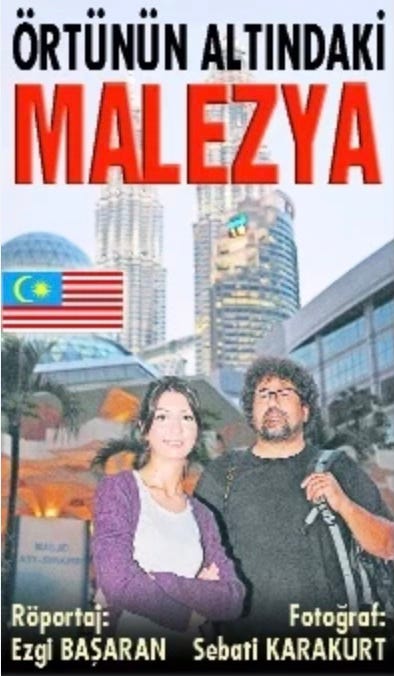
The point of the fieldwork for Hürriyet in 2007 was to understand the so-called Islamisation process Malaysia had undergone, to speak with academics, activists, students, and politicians, and to form a sense of it. I did not only stay in Kuala Lumpur; I also travelled to Kelantan, Malaysia’s most visibly Islamic state, long governed by the Islamist PAS, and interviewed its leader Nik Abdulaziz. His remarks that Islamisation should be gradual, quiet, and non-confrontational, and that he saw the AKP as a model in its strategy of not antagonising different segments of society, pointed to a line of political diffusion that could have invited serious scholarly attention. That dimension was largely overlooked, while his words were received with considerable alarm in Turkey, particularly among women, as a vision of how the country might come to resemble Kelantan in Malaysia.
After returning from the trip, Ece and I appeared on a few TV shows to share our impressions of Malaysia and the likelihood of Turkey following a similar path. I remember that neither of us assigned much analytical weight to our reporting; we treated it as little more than a political travelogue.
Over time, the fear of becoming like Malaysia subsided, only to be replaced by more immediate and tangible anxieties, many of which later became reality. Both Ece and I left Turkey in the last decade to live and work elsewhere, as the country began to resemble Russia more than Malaysia. The newspapers we worked for changed hands, as did the entire media landscape, which became filled with pro-government sycophants. The rule of law was the second and most fatal blow, the ultimate enabler of authoritarianism. If you have not already, you can read these developments step by step in Ece’s bestselling book How to Lose a Country, which I often recommend to my European and, more recently, American friends.
In the meantime, my engagement with Islamism and its transformation as an ideology continued as part of my academic interest in political confluences and interactions among transnational political and societal actors when I moved to Oxford.
A Curious Twist of Fate
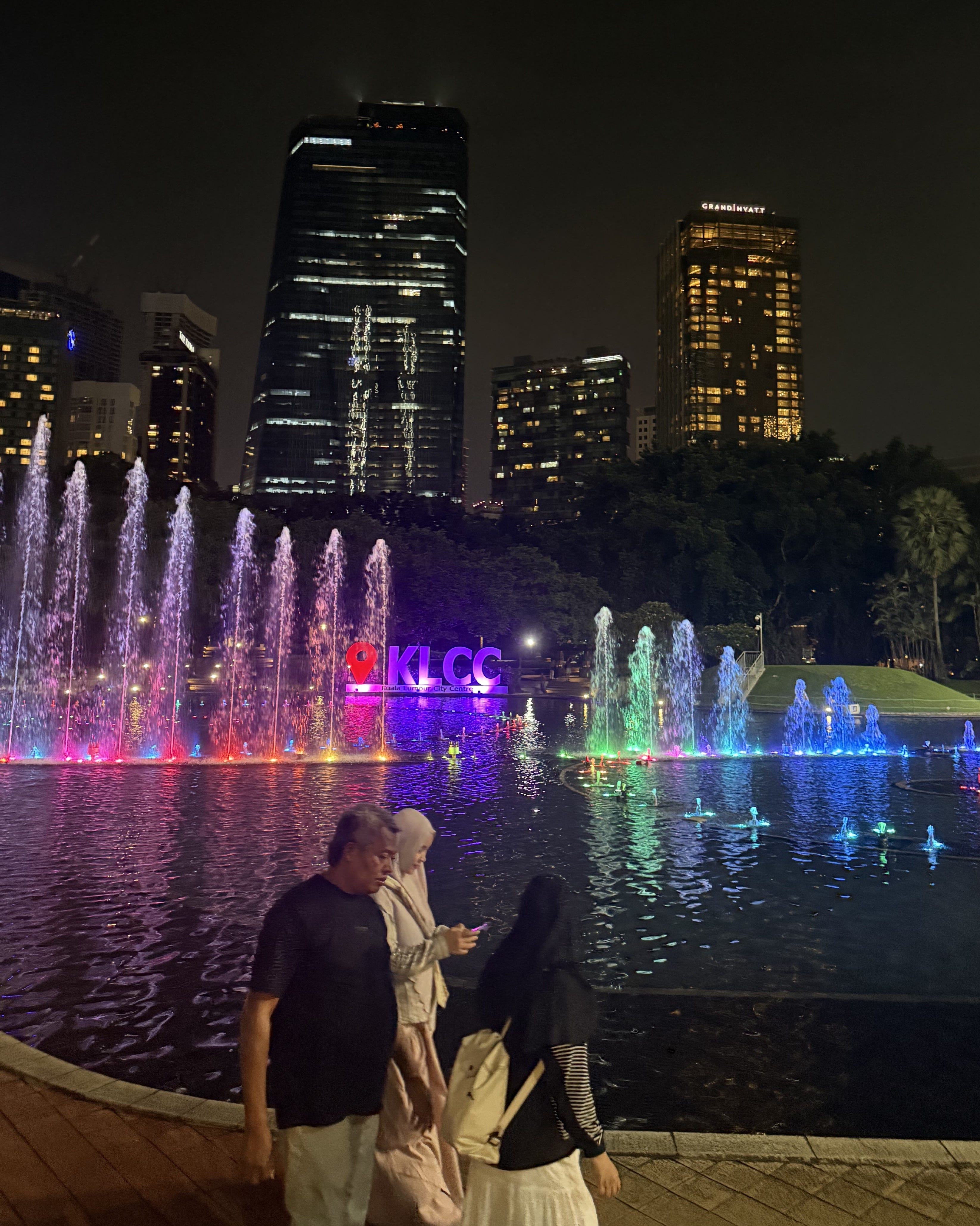
We are once again discussing the degrees of Islamisation, or lack thereof, in Turkey, which, in a curious twist of timing, coincided with my recent trip to Kuala Lumpur.
Last week, my former editor-in-chief Özkök, who had sent me to Malaysia two decades ago, wrote in his online column about a recent survey he considers reliable, pointing to a shift in attitudes in Turkey toward Ramadan.
According to one of the surveys, nearly 60 per cent of respondents said they fasted every day or for part of the month. Yet, for the first time, those who said they did not fast at all outnumbered those who said they fasted every day. Özkök argues that a growing body of sociological research suggests that 24 years of AKP rule have not altered patterns of religious behaviour in Turkey.
In his reading, the government has not succeeded in making society more religious. On the contrary, several studies indicate that religiosity may, in fact, be in decline.
So, we did not become like Malaysia in the sense that initially frightened secularists, but instead came to be governed by a full-blown authoritarian regime. This was not directly related to the AKP’s Islamist background, but part of a broader trend in which right-wing ideologies have shifted back toward illiberalism.
Islamism’s core as an ideology, in the meantime, has transformed after its encounter with power and market forces. Turkey did not become like Malaysia, nor did Malaysia or Indonesia become like Turkey. But perhaps Islamism itself has taken a different form, and the societal trends in these three countries manifest this new spirit most clearly. Let me explain.
Back in KL for an Islamism Conference


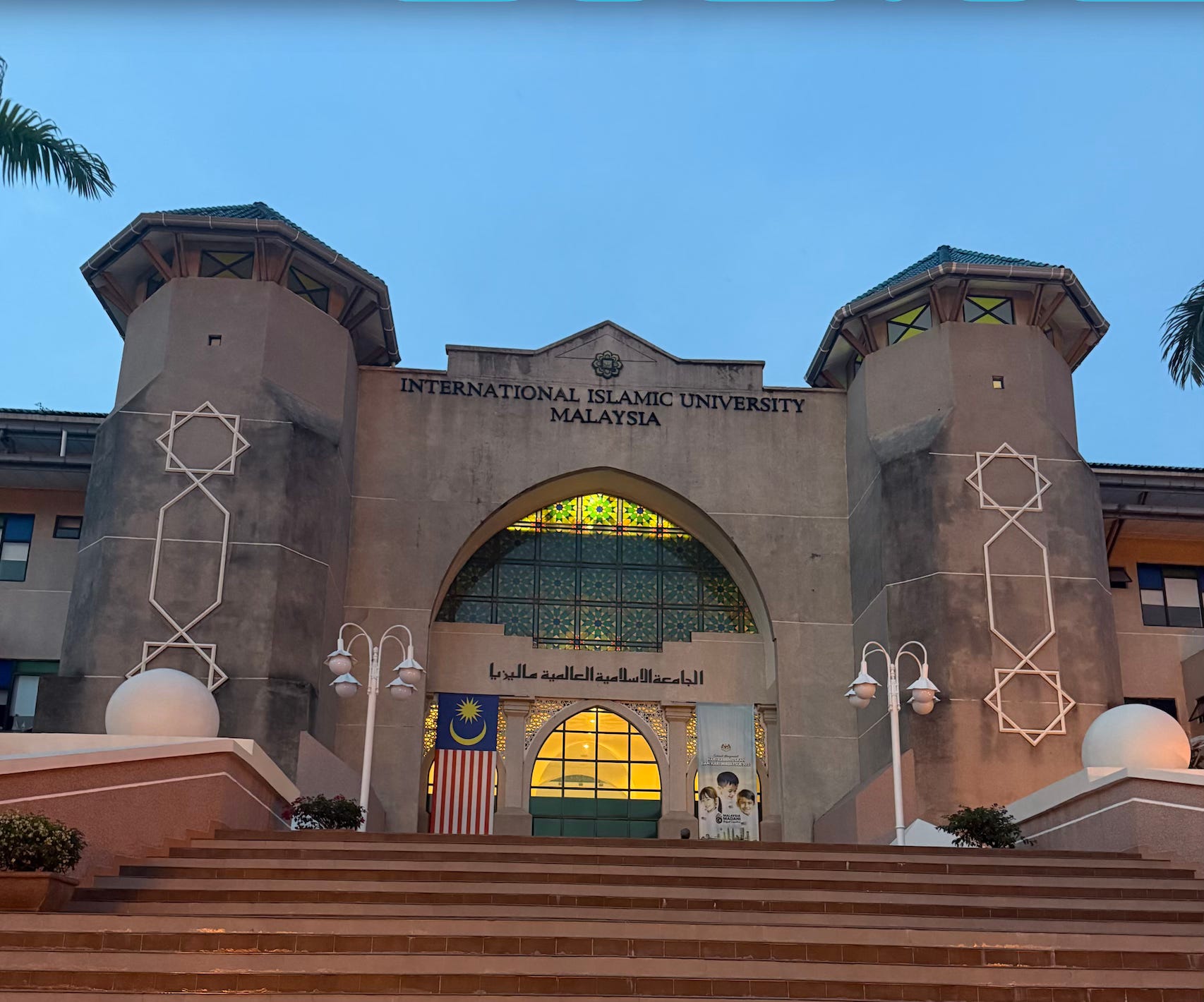
In the same week my former editor’s column was published, I was in Kuala Lumpur, sitting in the meeting hall of the International Islamic University of Malaysia (IIUM) for a two-day conference on Islamism, this time not as a reporter but as an academic from Oxford.
I was part of a group of stellar scholars, Raihan Ismail, Eugene Rogan, Michael Willis, Frank Griffel, Maryam Alemzadeh, Neil Ketchley, Pascal Menoret, Ammar Azzouz, most of us affiliated with the University of Oxford’s Middle East Centre at St Antony’s College. There was a wide range of topics and methodologies, with papers ranging from slavery and state-making in eighteenth-century Central Arabia, to sectarian violence in late Ottoman Damascus, Sunni religious authority in post-Saddam Iraq, the relationship between Islamist and Amazigh movements in the Maghreb, Islamic activism around mosques in interwar Cairo, Syria’s reconciliation process after fifteen years of civil war, the internal workings of the IRGC, and post-classical Islamic philosophy.
I presented a paper on the limits of pragmatism in Islamist politics, where I shared my research on the interplay among the AKP, the Ikhwan, and Ennahda after 2011, and the transfer of a political toolbox from the AKP to these movements in the pursuit of electoral and governing success. That toolbox is now being extended to Syria, to former HTS, now the interim government, and its president Ahmad al-Sharaa.
My argument is that this search for a successful governing model among Islamist actors is a byproduct of a New Spirit of Islamism, defined by a managerial turn in praxis.
If we look back over the past fifteen years, what stands out is a quiet shift rather than a story of ideological convergence or divergence. Islamist actors that come close to power, or manage to hold it, tend to move away from mobilisation and dawa toward efficient administration. They stop trying to inspire and instead learn to govern within the constraints of the status quo.
By the managerial turn, I mean the shift from ideological legitimacy and moral grounding to managerial legitimacy. Authority is no longer derived from a divine mandate or a revolutionary vision, but from the capacity to deliver, adapt, and govern competently.
In this vein, what diffused from the AKP to the Ikhwan and Ennahda was a toolbox of success, electoral strategy, service delivery, alliance-building, and the cultivation of a co-dependent Islamic bourgeoisie.
The New Spirit of Islamism
This suggests that the core concepts of Islamism as an ideology, the building of an Islamic state, the implementation of sharia, and the remaking of society, have been rearranged, with some elements pushed aside within its morphological structure. Ideals that once defined the programme of Islamist movements in the era of Sayyid Qutb no longer drive them. Electability, efficiency, and market responsiveness have moved to the centre. That is the new spirit of Islamism. And now, I argue, the same toolkit is being transferred to al-Sharaa’s administration in Damascus.
At this stage of market-driven Islamist politics, an equally pressing question is how these shifts register in everyday social life. A possible answer came from a Malaysian scholar at the International Institute of Islamic Thought and Civilization (ISTAC), Khairudin al-Jneid. His paper was on Islamophobia, but the part that interested me more concerned Muslim cosmopolitanism and its identity markers.
Al-Jneid argued that Southeast Asia offers empirical and theoretical evidence of everyday Muslim cosmopolitanism, often described as “smiling Islam,” marked by tasamuh, yani peace, harmony, stability, and tolerance. Despite Islamisation and conservative shifts, most Muslims remain socially inclusive, and Islamic parties rarely secure parliamentary majorities in Malaysia, Indonesia, or the Philippines; where they do, such as in Kelantan, their influence remains localised.


For me, the more striking part of his paper was his framing of the market within Islamic politics. He argued that the hijab has become a “new normal” and an expression of Islamic beauty, supported by a trillion-dollar Muslim industry led by Malaysia, Indonesia, and Turkey, rather than a source of anxiety as it is in parts of Europe. Disputes centre on brands, Zara, Naelofar, Bokitta, rather than the principle of veiling, he claimed.
Since my research focuses on how market forces reshape the morphology, that is, the core goals and action plans of Islamism, I asked how this “new normal” had emerged in Malaysia, and how this trillion-dollar industry affects the less visible dimensions of piety and religiosity.
Al-Jneid traced a historical trajectory in which the hijab moved from a stigmatised symbol in the 1970s, to a politicised marker after the 1979 Iranian Revolution, to its mainstreaming in Malaysia through the Islamisation policies of the 1980s, when the Mahathir government expanded Islamic institutions, incorporated Islamic banking and education into the state, and normalised public expressions of piety as part of national development. It was later rebranded after 9/11 as a global fashion commodity. Today, he argued, the hijab signals class and consumer culture, where piety intersects with the logics of the neoliberal market.
I pressed further and asked more directly whether Islamic values are being co-opted by the market, and whether consumerism has begun to replace piety.
Both al-Jneid and the Indonesian scholar Farish A. Noor (ISTAC) suggested that this remains an open question, difficult to measure because it ultimately depends on how one defines and assesses the authenticity of religious life.
What is clear is the hijab’s evolution from a symbol of piety, and at times resistance, into a global fashion object shaped by consumer capitalism. This “pious fashion” phenomenon, while opening new economic avenues, especially for women, reveals the complex interplay between religious identity, class, and the adaptive capacity of global capital. The rise of the hijab industry and halal cosmetics has had significant socio-economic effects, including the emergence of a new female middle class in countries such as Indonesia, which has in turn become a notable political force shaping Islamist politics.
For another perspective on Turkey’s religiosity, I suggest reading some of Selim Koru’s Kültürkampf posts. For example, this , this and this.
The author deserves to be commended for avoiding simplistic comparisons and instead moving beyond the Turkey–Malaysia analogy to examine the issue from a much deeper perspective: the transformation of Islamism itself.
This is precisely where the strength of the piece lies. It does not get trapped in the narrow question of “Has Turkey become like Malaysia?” but rather shows how the ideology has evolved into a new form shaped by governance, market forces, and pragmatism.
For this reason, the article is not merely a current political commentary; it offers a powerful and thought-provoking framework for understanding the present.
Moreover, its real value lies in not reducing the issue to recent political developments alone. What it captures is a longer-standing tension within political Islam—between its moral and ideological claims and the realities of power. What we see today is simply a new phase of that tension, shaped by administration, markets, and pragmatism; the real question is not what Turkey resembles, but what Islamism becomes when it encounters power.