
It will not be the same Hormuz ever again
There is another way to read the disruption in the Strait of Hormuz. If it is right, there is no way back to normality, as Helen Thompson argues.

Just when the markets are about to open, he claimed that the talks with Iran are going well and that he is prolonging the time to 5 days for Iran to accept a 15-point plan to end the war. Iran rejected any direct and indirect talks with the US.
In an old world, that would be very embarrassing for Trump. Not in this world. We know that Pakistan and Turkey are working hard on shuttle diplomacy between Iranian and American officials, but all sources agree that Iran is not and will not agree to the terms Trump put forth. Mostly because they do not trust him and think he is buying time to prepare for a harder strike, even a land operation to secure the enriched uranium.
I think at this time it would be a waste of time to make an educated guess regarding what Trump will do. Education is counterproductive to gauge anything about him or the people in his administration who apparently copy-pasted a list of justifications for attacking Iran, from a pro-Israeli think tank’s website and most probably prompt some AI to come up with those ‘XX-point peace/ceasefire plans’, none of which are equidistant to a just peace or a practical ceasefire.
While Trump is mercurial, spontaneous and ignorant about many things, some businessmen around him might not be. As you might have notice, his wars or war threats usually starts at the beginning of weekends, then he backtracks usually at dawn on a Monday. Same thing happened. Large, unexplained trades were placed on oil and stock markets just minutes before Donald Trump announced “productive” talks with Iran, reversing market movements and generating the potential for rapid, substantial profits.
Yani, what happened? Some men earned a lot of money. Who would those men be? Surely not business elites with an ear at the White House?!
Corruption and erraticism aside, the disruption in the Strait of Hormuz began with Israel’s expansionist and increased aggression towards Iran a couple of years ago, now culminating in a halt and shaking the global economy in a way many experts predicted it would.
The problem we have now is that this disruption in Hormuz may not be temporary but be better understood as a structural break in the energy system, one that exposes a deeper contest over supply routes, monetary power, and the limits of political control. First things first.
Why is this strait so important?
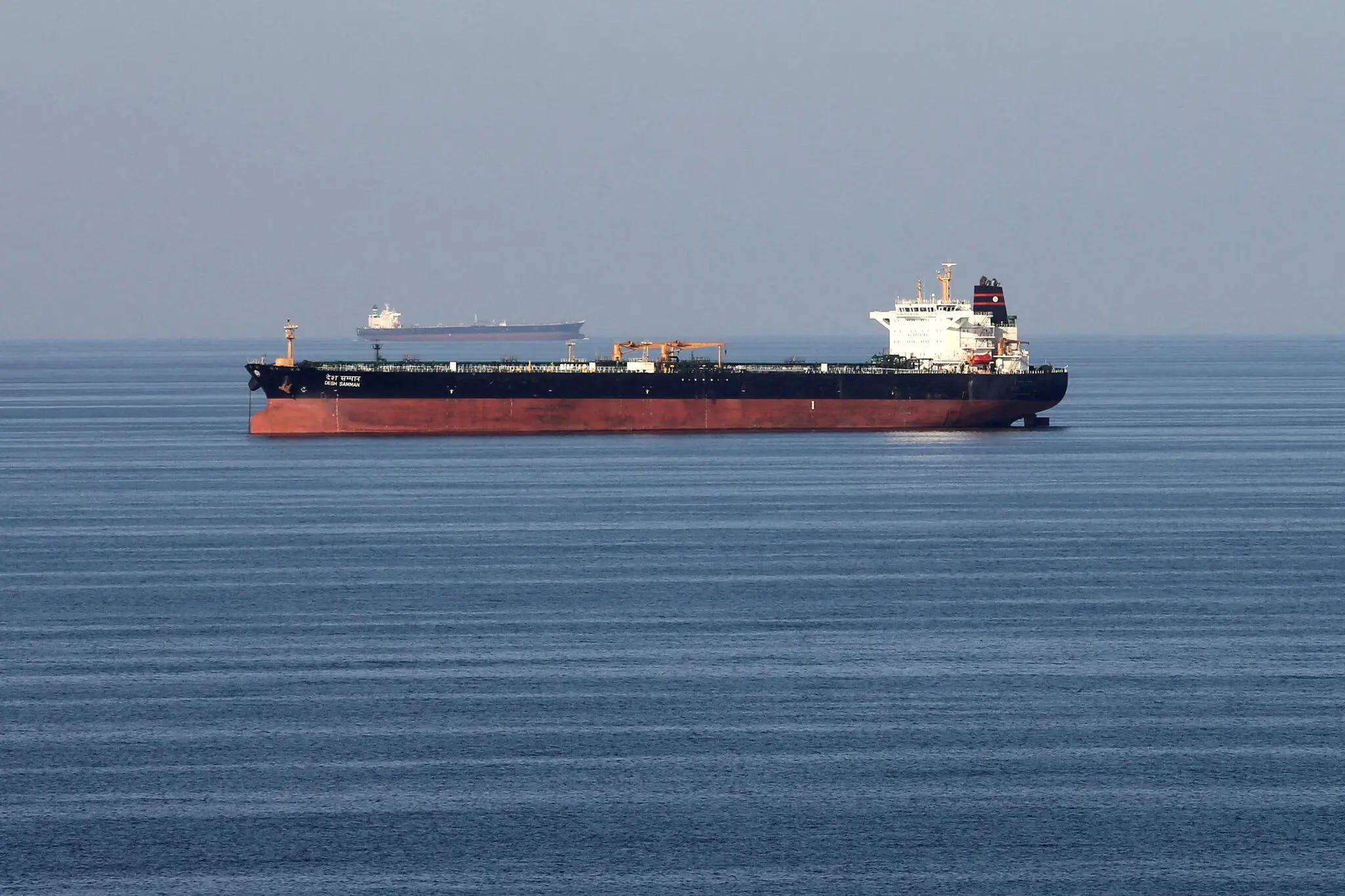
Almost a fifth of the world’s oil passes each day through a stretch of water that, at its narrowest point, is barely 50 kilometres across. 39 to be exact. The actual shipping lanes are narrower still. Just a few kilometres in each direction. Nearly twenty million barrels a day move through that corridor, alongside a share of global gas flows for which there is, in practice, no alternative route.
If the Strait of Hormuz were to close in any meaningful sense, something like a quarter of globally traded oil would be removed from circulation. Only a fraction of that could be rerouted. Perhaps five million barrels a day at best, through pipelines that are themselves exposed to other vulnerabilities. Liquefied natural gas (LNG) is even more tightly bound to the passage. Close to a fifth of global LNG trade depends on it, with exporters such as Qatar and the UAE lacking viable alternatives. So the consequence would not simply be higher prices. It would be immediate pressure on electricity systems in countries that rely on those flows to keep the lights on.
But hear this: the distribution of that pressure is uneven because Asia would absorb most of it. China alone takes several million barrels a day through the Strait, alongside other Asian economies whose dependence is deeper than that of Europe or the United States.
Prof Helen Thompson, a political economy scholar at Cambridge, has been my guide on everything related to the Middle East’s energy routes, especially her framing of the 1956 Suez Crisis as one of the historical junctures in the making of the Middle East, which I wholeheartedly follow and devote time to in my Politics tutorials at Oxford. Thompson’s reading of the closing of Hormuz as one of the consequences of US/Israeli waging of war on Iran is somewhat divergent from the rest. I believe there is great value in sharing her arguments here.
There is a tendency, already visible in market pricing and policy commentary, to treat the current crisis as a disruption with an expiry date. A shock, severe but temporary. As in, supply tightens, insurance premiums rise, and then normality returns. Wrong!
Thompson believes that the current disruption has less to do with a closure in the narrow, technical sense than with the collapse of a set of expectations that had governed the Gulf for decades. The non-Iranian oil producers of the region operated on a simple premise that, yes, Iran might threaten, harass, but it would not cross certain thresholds. For example, not direct attacks on core infrastructure. That premise has now been broken, and once broken, it is not easily restored.
Financial markets, particularly outside Asia, have not quite caught up with this shift. Oil futures still carry the trace of an older world in which risk could be priced as cyclical rather than structural, as something that would dissipate within months rather than harden into a new baseline. The expectation that the Strait will, in effect, reopen itself within a year rests on the belief that the underlying security order remains intact. But it does not. Even a substantial American security build-up would struggle to reconstitute that order. The point is not simply the presence or absence of naval power. It is the credibility of the system that power underwrites. Once the assumption of restraint has gone, every tanker carries a different calculation.
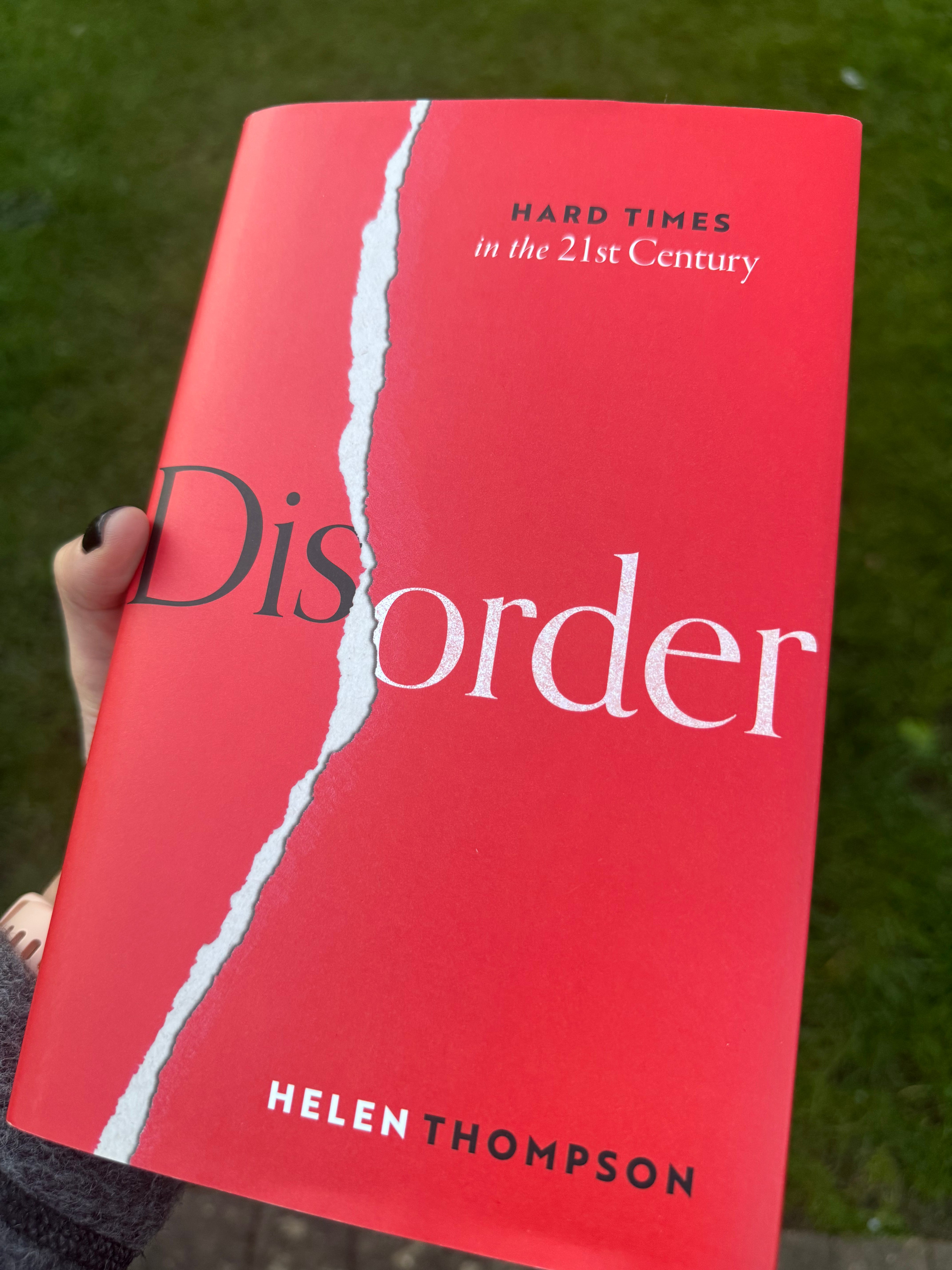
To see why this matters, it helps to step back from the immediacy of the crisis and place it in a longer frame. Helen Thompson has spent much of the last decade arguing that energy is not one variable among others in world politics but one of the conditions that makes certain political outcomes possible and others not. Her book Disorder: Hard Times in the Twenty-First Century was written in the shadow of the 2008 financial crisis and, ironically, arrived on the shelves in the UK on the day Russia invaded Ukraine. What could be more timely? Yet the book’s argument runs across the entire twentieth century and into the present.
The starting point is deceptively simple. As coal gave way to oil as the decisive fuel of military and industrial power, the distribution of that resource began to structure the possibilities of states. The United States entered the twentieth century with abundant domestic oil. The European powers did not. Their expansion into the remains of the Ottoman Empire was not only imperial ambition but, concomitantly, an attempt to secure access to energy they lacked at home, financed in no small part by American capital.
By the end of the WWII, American oil and money had again underwritten victory. Yet within a few decades, the United States had joined Europe in a shared dependency on Middle Eastern oil, while the Soviet Union briefly emerged as the world’s largest producer. Very, very important to remember this part of the story when reading current affairs of the world!
These shifts did not remain confined to foreign policy but fed directly into the organisation of the global economy. The breakdown of Bretton Woods (the postwar system of fixed exchange rates anchored to the US dollar) in the 1970s coincided with a reordering of energy markets and the rise of a more financialised form of capitalism. The liberalisation era of Reagan and Thatcher did not only unleash markets but coincided with rising debt, recurrent instability, and a series of crises that culminated in 2007- 2008. Energy alone did not cause these events; however, it set constraints within which they unfolded.
We must be aware that the world is not organised around a single causal chain but around the interaction of systems that rarely align neatly with one another.
Stay with me here.
Who is the immediate loser? CHINA
Energy markets, currency regimes, democratic politics, great power competition. Each follows its own logic and then spills into the others, which is another way of saying that a disruption in one domain propagates across others.
Oil, sitting at the centre of this web, links military capacity to economic growth, ties the fortunes of producers to price fluctuations they do not fully control, and binds consumers into dependencies that cannot be easily unwound. The same entanglement shapes the present, Thompson argues. China’s emergence as an industrial power has altered not only trade flows but the structure of global energy demand. Its manufacturing dominance has been built on integration into a dollar-based system that it does not control, while its energy needs tie it to supply routes that run through regions shaped by American power.
A-ha!
Which brings the question of the Strait of Hormuz and the motive behind the attack on Iran, something no expert could quite figure out the calculation for the US.
Thompson provides another reading.
Could it be that the disruption in Hormuz is not an unintended consequence of a campaign against Iran but part of a wider strategic calculus aimed at China?!
A-ha x 2!
Could Trump have planned this all along?
So the target is not only a regime but a supply chain of energy. Thompson underscores a sequence we might have missed, I had missed for one.
It is that the crisis of Hormuz did not begin with an Iranian declaration but began when insurers withdrew. Once firms such as Lloyd’s of London stopped underwriting transit through the Gulf, the Strait was already compromised. Tankers without insurance do not sail.
That withdrawal followed an American strike on an Iranian naval vessel near Sri Lanka, which expanded the perceived theatre of risk far beyond the Gulf itself. The Indian Ocean entered the calculation. Washington offered convoys and insurance. The offer did not translate into a functioning system. The market had already adjusted. Iran moved within that space. It did not need to formally close anything. The disruption was already in motion.
From this angle, the familiar claim that Iran has closed the Strait begins to look imprecise. The closure is better understood as the outcome of a sequence in which the United States helped create the conditions for systemic risk.
Who is at the centre of this risk? China. It is the principal importer of oil and gas through Hormuz, along with a range of other inputs that are less visible but no less essential. Strategic reserves provide a buffer, but they are not designed for a prolonged interruption at this scale.
Meanwhile, alternative routes from the Gulf offer limited reassurance. Saudi Arabia’s pipelines to the Red Sea reduce reliance on Hormuz but introduce new vulnerabilities. The Houthi movement has already demonstrated its capacity to disrupt traffic in the Red Sea and the Suez corridor.
Who is the immediate winner? RUSSIA
So, what will happen? Russia will come back into the scene stronger. It looks like the most immediate beneficiary of this crisis.
A-ha x 3!
Beijing is deepening its energy relationship with Russia, revisiting plans for another pipeline and the expansion of Arctic LNG routes that bypass Hormuz.
So, a China–Russia axis, bound more tightly by necessity. Others, including much of Europe, navigating between them. Europe is unfortunately more dependent on American LNG due to the Ukraine war. To reduce exposure to Middle Eastern instability by increasing reliance on the United States is to exchange one dependency for another. Similarly, a return to Russian energy would resolve one problem and create another.
The United States’ position is ambiguous. As a major energy producer, it is less exposed than in earlier crises. As a strategic actor, it is taking on a different kind of risk. If the disruption is indeed part of a broader attempt to constrain China’s energy security, the outcome will depend on whether that pressure can be sustained without triggering a wider economic contraction.
The result is a more fractured energy world. It used to be that shocks in one region could be absorbed elsewhere with relative ease. Not anymore.
The question, then, is no longer when the Strait of Hormuz will reopen. It is whether the system that made its openness seem natural can be restored at all. So, as Thompson says, there will never be that kind of normality from now on. As history suggests, once these arrangements break, they do not easily return. Sometimes they do not return at all.
To listen to Thompson’s podcast, here is the link. There is also this valuable piece, you might want to read, The Narrow Strait of Hormuz and its Long Winding History by Aman Narain.
Thompson's point about the insurance withdrawal being the real closure is the sharpest observation in here — the Strait was functionally compromised before Iran did anything formal. That reframes the whole timeline.
I'd push the structural permanence argument one step further though. The IRGC's pay-to-pass corridor isn't just military enforcement — it's a functioning toll operation generating hard currency, with preferential access for Chinese and Indian carriers. That changes the institutional incentive structure completely. It pays for itself, it creates beneficiaries who want it to continue, and it punishes those excluded. Every day it runs, the cost of dismantling it goes up.
The 2015 JCPOA comparison is useful here. In that deal, the IRGC was asked to accept constraints on a programme that cost money. Now they're being asked to surrender one that makes money. That's a fundamentally different negotiating problem, and it's the reason I think the "temporary disruption" framing is so wide of the mark — the corridor has its own economic gravity now, independent of whatever happens diplomatically.