The Iran War and the Capture of Opposition in Turkey
Another metropolitan mayor in Turkey was arrested this week. Municipalities are being steadily captured by the AKP government. This is not unrelated to war in Iran.
I don’t think it will end until he captures all of them. Each and every one.
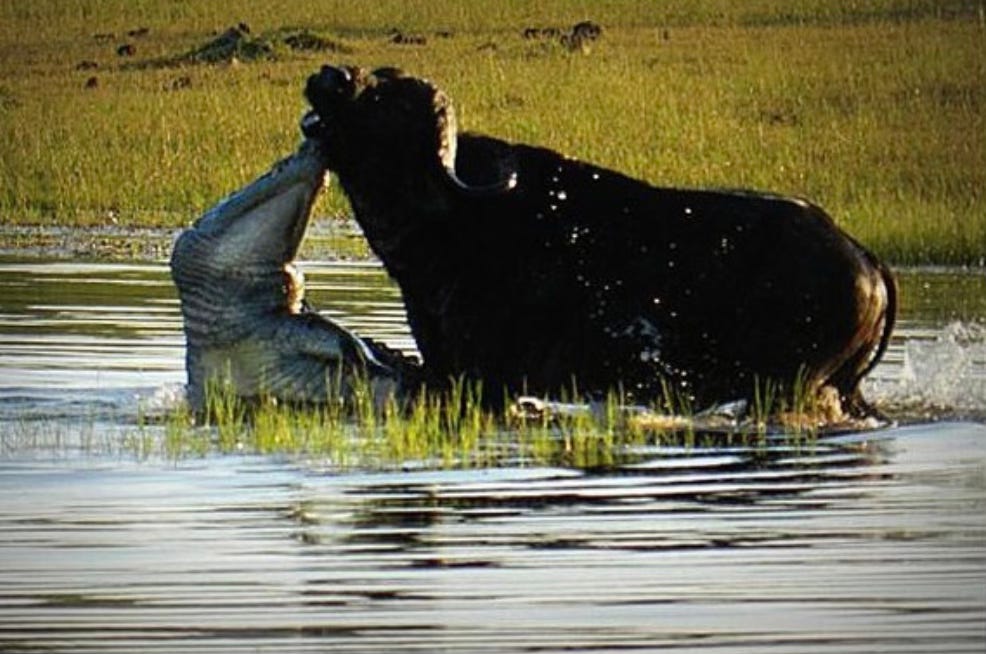
He is Erdoğan. What is being captured, one by one, like a buffalo at the water’s edge, ambushed by an apex predator, are municipalities. Municipalities led by Turkey’s main opposition party, the CHP.
As of today, it is clear that the March 2024 local elections meant very little. One could call them Turkey’s first “performative” elections, staged so that the façade of a democratic contestation is maintained. Or, as we say in Turkish, dostlar alışverişte görsün seçimi.
Since then, the Erdoğan government’s use of the judiciary marks a new stage in its authoritarian trajectory. Consider the numbers.
The CHP won the March 2024 elections decisively. It secured 35 cities, including 14 metropolitan municipalities, and 337 districts. The AKP, by contrast, lost almost all of the major cities it had held, including Istanbul, Ankara and İzmir, and was left with 24 cities, 12 of them metropolitan, and 356 districts. Yet the situation today bears little resemblance to those results.
As things stand, 30 municipalities in Turkey are now governed by people who were not elected by their citizens. 12 are run by trustees. 18 have effectively been captured through judicial intervention. These 30 municipalities together represent a population of 28 million.
In addition, as many of you will know, Istanbul’s mayor, who is not only that but also the CHP’s likely presidential candidate against Erdoğan in the next elections, Ekrem İmamoğlu, has been in prison for a year. Alongside him, more than twenty other mayors, as well as numerous provincial officials and municipal employees, have been detained.
A few days ago, another CHP metropolitan mayor, the mayor of Bursa, was imprisoned. He had been under threat for some time. Through back channels, he had been offered a way out, a switch to the AKP in exchange for his freedom. He refused. He is now in prison. It is that simple. What we are looking at is a system that operates with a kind of brazen, almost mafioso logic. We have seen it before. In August 2025, another CHP mayor, Özlem Çerçioğlu, a party member of 23 years, avoided prison by putting on the AKP badge. Yani, the mechanism is real. And it works. Smoothly.
Why municipalities matter
Because in Turkey, as in many other countries, municipalities function as arenas where opposition forces can accumulate governing capacity even under nationally consolidated executive power. When national-level competition is foreclosed or severely constrained, local governments become the primary terrain on which alternatives can be demonstrated. The CHP’s hold on Istanbul, Ankara, and İzmir matters not only electorally, but because it allows the party to develop policy credibility, patronage networks, and voter loyalty that cannot easily be built at the national level.
Because Turkish municipalities are central nodes in the allocation of public goods, contracts, employment, and social services. The AKP’s municipal dominance throughout the 2000s and 2010s was foundational to its hegemony precisely because municipalities controlled housing development, construction permits, and welfare distribution. This is why the 2024 losses were so costly for Erdoğan. Economically, yes. But symbolically as well. Erdoğan and his party became what they are through their control of municipalities. “Service to the people is like a prayer,” a motto of the AKP in its early years, and the construction of clientelistic networks, often through flexible municipal channels rather than rigid state schemes, helped produce the image of Erdoğan as a benevolent leader who delivers results, later projected outward to Egypt and Tunisia. Losing municipal power was therefore a drastic blow. One that had to be undone.
Hence the weaponisation of the judiciary and the recapture of municipalities.
Trump, Syria, Iran triangle
Özgür Özel, the CHP leader, who has been straining to resist this pressure, cancelled his entire programme after the arrest of the Bursa mayor and addressed the press a few days ago. He said:
“From the outside, Turkey is now seen as a country without democracy, without justice, where dissenting voices are imprisoned. Europe sees this. Trump sees this. They interpret what is happening as the jailing of the opposition in order to eliminate it. Yet they tolerate it, because they think in the following way. In Syria, I can change the regime and whoever I install will govern. I can strike Iran, topple it, and someone suitable to me will take over. In Venezuela, the same. In Turkey, I can change the regime and whoever I say will rule. At the moment, that person is Recep Tayyip Erdoğan.
For this reason, what we are experiencing is not merely a CHP issue. The multi-party democratic system, the rule of law, and the ballot box, which is the most important inheritance of the Republic founded by Atatürk, are all under threat. The local elections have already been neutralised. If the right conditions are created, the same will be done for the general elections. If not, perhaps even those will be abandoned. With Trump’s backing, there is an attempt to dismantle the republican system in Turkey and impose a new order governed by whoever Trump prefers. The situation is as clear as Venezuela, as stark as Syria, but for Trump it remains, like Iran, a place where the stakes are high. Today the target is the CHP. Because this is where opposition to the established order takes concrete form.”
Özel’s remarks reflect the anxieties of a large part of the CHP electorate. They also matter because they point to something else: Erdoğan’s personal political future is increasingly entangled with a wider disorder in which Trump and Israel move through the Middle East like an elephant in a china shop, shattering diplomacy, restraint, and any remaining sense of proportion.
As I have tried, with some urgency, to explain in earlier posts and/or podcasts, the Iran war will, as things stand, reinforce authoritarian leaders. This does not necessarily mean that they will be strengthened in foreign policy terms. The geopolitics of the Middle East shifts daily, even hourly. A Turkey that plays its cards well may still find itself targeted by Iran or Israel. Erdoğan, who is today praised by Trump as a “tough guy”, could fall out of favour just as quickly, as happened during the Brunson crisis, or as Keir Starmer has recently experienced. In this environment, every leader in the region, all of whom fit comfortably within the definition of authoritarianism, is navigating something closer to a minefield than a strategic landscape.
So when I say the Iran war will strengthen them, I mean domestically. First, it consolidates their base. Second, and more importantly, the low hum of a nearby war allows authoritarian regimes to continue the quiet suffocation of already weakened opposition forces.
Political parties and civil organisations, what remains of them in the region, are pushed further down, buried more quietly, as the world watches the war with anxious attention. Mesela… did you know that there are around 60,000 political prisoners in Egypt right now? Much the same in Tunisia, where activists and even former parliamentarians are detained on overtly politicised charges. Or that Algeria imprisons journalists, activists, and opposition figures, using elastic charges such as “undermining national unity” to criminalise dissent? Most probably you didn’t. (For a broader account of the region’s authoritarian drift, see LSE’s Fawaz Gerges here.)
This is the regional context.
It is therefore befitting that the leader of Turkey’s main opposition situates the pressure on his party and its municipalities within the triangle of the Iran war, Syria, and Trump.
For months now, voices in Israel, not marginal ones but figures such as Naftali Bennett, who stands as a serious challenger to Netanyahu, have suggested that Turkey could be next after Iran. This kind of discourse feeds, above all, a public anxiety that can rally society around Erdoğan.
A recent poll makes this visible. In a scenario where Turkey is caught in a regional war, 45 percent of respondents consider Erdoğan the safer option in power, while 29 percent prefer the opposition leader Özgür Özel. Despite the government’s economic erosion, it retains a relative advantage in matters of security and crisis management. A textbook rally-around-the-flag effect.
This is why such leaders cultivate, whether domestically or externally, a constant atmosphere of fear and crisis. Crisis, fear, conflict are allies to strongmen. They make them stronger.
5 key aspects of authoritarianism
At this point, it is worth returning to Stanford University’s Stephen Kotkin and his definition of authoritarianism and its key features.
Kotkin defines authoritarianism as the absence of institutional limits on executive power. First, there is a large repressive apparatus, deliberately subdivided into competing and rivalrous groups. This fragmentation prevents any single faction from dominating, while at the same time generating internal tensions and animosities that can be exploited by those at the top.
Second, rather than relying on a “social bargain” with citizens, which typically involves trading prosperity for parts of their freedom, these regimes depend primarily on stable cash flow. This may come from natural resources such as oil and gas, from illicit activities including counterfeiting or cyber operations, or from export driven manufacturing economies, as in China.
Third, authoritarian regimes exercise control over citizens’ access to jobs, housing, education, and travel. Kotkin describes this as control over “life chances”. The greater this control, the more effectively the regime can shape both public and private behaviour. A strong private sector can, in principle, weaken this grip, although modern surveillance technologies complicate the picture. Totalitarian systems approach near total control, while authoritarian ones retain small openings that citizens can still navigate, including the ability to travel abroad.
Fourth, these regimes produce compelling narratives to justify their hold on power. These often draw on a glorified imperial past, promises of restored greatness, and the identification of internal and external enemies, frequently presented as acting in concert and blamed for past failures. The regime presents itself as uniquely capable of defeating these enemies and reclaiming national strength.
This is why I tend to push back against those in academic and media circles who insist on describing Erdoğan’s policies as driven by neo-Ottoman ambitions. Erdoğan is, in fact, a political realist. He is careful not to invoke Ottoman references in his dealings with Middle Eastern leaders, precisely because he knows they would irritate them. What is described as neo-Ottomanism is better understood as a set of narratives constructed for domestic consumption, designed to sustain his authority. Not a foreign policy or civilisational impetus. Not because he lacks the desire, but because he grasps enough about global history and power politics to see that it cannot be realised.
Finally, and most relevant to the present moment, Kotkin emphasises the role of the international environment. Geopolitical shifts and conflicts can either reinforce or weaken authoritarian regimes. Commodity prices, which affect revenue streams, international sanctions, and even decisions taken by the US Federal Reserve can all have direct consequences for regime stability.
Shopping bag of the strongmen
Now let’s take stock, shall we?
The economy in Turkey is in shambles. The main topic across every segment of society is the same: the astronomical rise in the cost of living, how it has become unbearable, pushing the lower classes below the poverty line and crushing what used to be the middle class into something amorphous.
Cash reserves are depleted. The business class that supported and sustained the Erdoğan regime is no longer healthy enough to generate new markets. What they can do in Syria’s reconstruction is limited, at best acting as mid-handlers or builders with Gulf investment. In other words, dependent on Gulf money. That in turn weakens a patronage network that took decades to build.
So what is left of this shopping list?
Grand narratives. And constant conflict in the region.
And this is where the capture of opposition at home feeds on the fear and noise of war.


