
The state of the Iraqi state
An awkward moment between the Iraqi PM and Turkey's president in Ankara laid bare how the Iraqi state is run, and how exposed it now is between Turkey, Iran and the US.

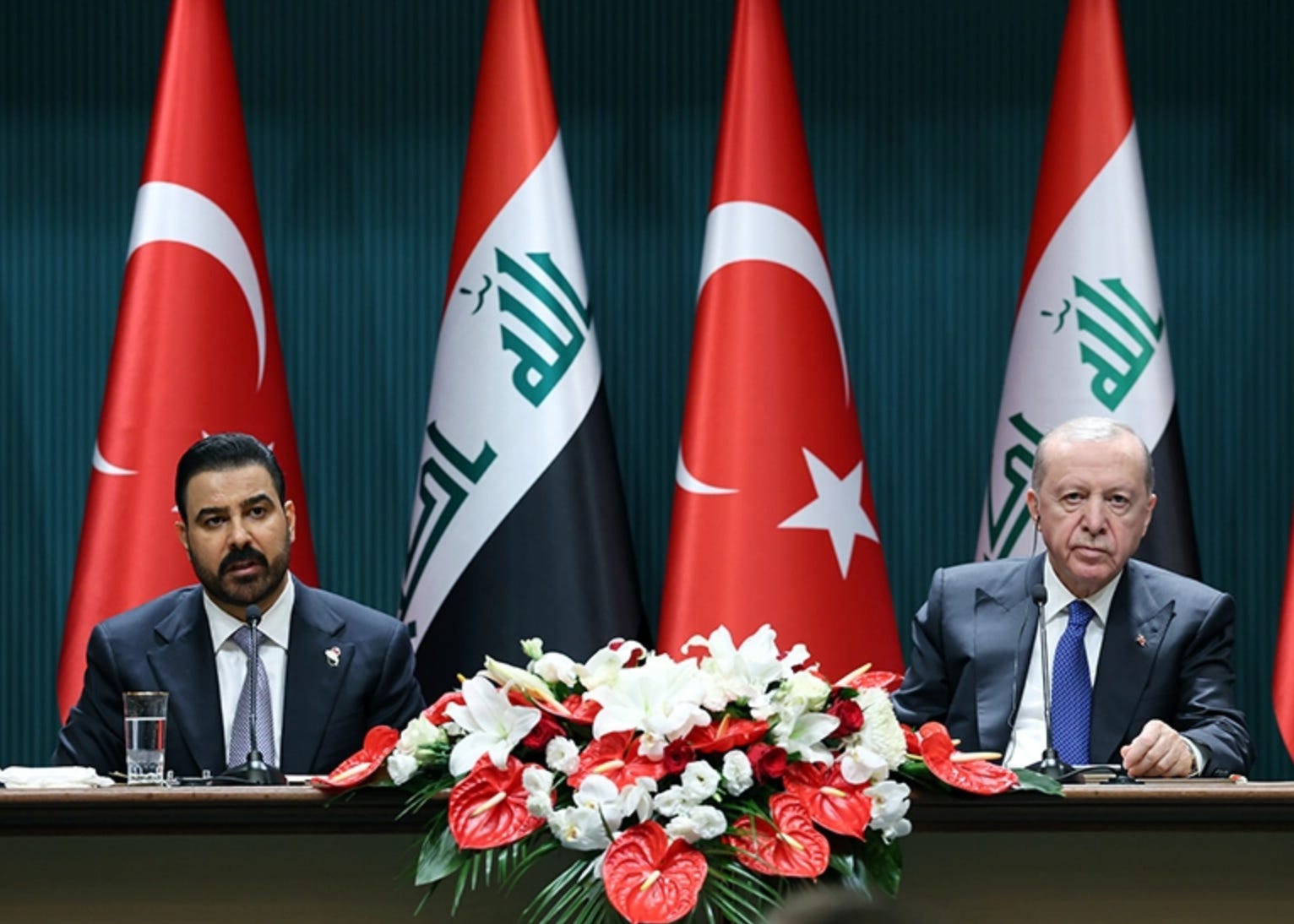
Ankara, Tuesday 28 July 2026. Iraq and Turkey had finished a day of talks and moved to the part where the cameras want a row of ministers signing folders. One folder went unsigned.
Erdoğan, noticing the count was short, asked whether there were not meant to be five agreements. He made a gesture with his hand, opening five fingers, and underscored it first in English, then in his limited Arabic.
‘Five! Khamsa! Hakan?’ He called Turkey’s foreign minister to the podium to explain. Fidan said something to Erdoğan, his back turned to the cameras. We do not know what.
Ali al-Zaidi, Iraq’s prime minister since May, turned to his transport minister, Wahb al-Hasni, and asked him in Arabic why he had not put his name to the document on the Development Road, the road-and-rail corridor meant to carry Gulf cargo from the port of Faw up through Iraq and into Turkey.
The transport minister responded inaudibly.
Zaidi asked, ‘Shu mushkila?’ (What is the problem?), then told the transport minister, in front of the cameras, to sign now.
Unsurprisingly, the video travelled fast, and everyone watched it as an embarrassment on the part of the Iraqi state. It is also a fair map of how power works in Iraq now, and of how it got that way.
The transport ministry has since called it a protocol failure, pointing to a last-minute objection from Iraq’s oil ministry, which argued the agreement should have gone before parliament first.
That may be true. But it does not settle whether something more deliberate sat underneath, and Iraqi commentators remain divided over whether the ‘Ankara incident’ was a political refusal or ordinary confusion over paperwork. And there is an important reason for this two-way political reading.
The transport minister, Wahb al-Hasni, is not a technocrat who wandered into the wrong seat. He is a man of the Badr Organization, and for years he ran the office of Badr’s leader, Hadi al-Amiri. To see why a Badr minister might decline to sign Iraq westward into a Turkish and Gulf orbit, you have to know what Badr is.
Iran’s top instrument in Iraq
It is the oldest Shia militia in Iraq and the one with the closest ties to Iran. The German analyst Guido Steinberg calls it, flatly, Iran’s most important instrument in the country.
It began in the early 1980s as the Badr Corps, the armed wing of an exile party called the Supreme Council for the Islamic Revolution in Iraq, or SCIRI, whose members had fled to Iran when Saddam Hussein’s persecution of Shia clerics and activists intensified at the end of the 1970s. From the start it was a sub-unit of Iran’s Revolutionary Guard Corps (IRGC), built from Iraqi exiles and prisoners of war, and during the Iran-Iraq war of the 1980s its men fought on the Iranian side against their own country’s army. Everything else about Badr grows from where it was born. Its founding generation did not drift towards Tehran later in life. They were made there.
In terms of ideology, Badr adheres to wilayat al-faqih, the principle Ayatollah Khomeini built the Islamic Republic on, which holds that in the absence of the hidden twelfth Imam the Shia community should be led by a supreme religious jurist. In Iran that jurist is the Supreme Leader. So for a committed Badr member, he is the highest religious and political authority there is, above any Iraqi office.
The Badr leader al-Amiri has said so repeatedly, and presents himself as a Shia internationalist, a man for whom the unity of the Shia world under Iranian leadership counts for more than the integrity of the Iraqi nation-state.
Badr’s strength inside Iraq rests on two things it seized after the US invasion in 2003 and never let go of. The first is territory. It controls Diyala province northeast of Baghdad and has a grip on Salah al-Din, a base no other Shia militia holds in the same way, which is why some scholars describe Badr as a state within the state on the Hezbollah model. The second is the interior ministry. When a Badr figure, Bayan Jabr, took that ministry in 2005, its police and commando units became instruments of the sectarian civil war of 2006 and 2007, running death squads and secret prisons against Sunnis, and Badr’s people stayed lodged in the ministry long after Jabr left.
There is a detail here that turns the ‘Ankara incident’ into something close to a rhyme with the past. From 2010 to 2014 the transport minister of Iraq was Hadi al-Amiri himself, who, Steinberg notes, used the ministry’s budget to build up his militia. The transport portfolio is Badr turf. A decade ago, its leader ran it as a source of money and patronage. So I believe all of this makes the ‘Ankara incident’ hardly a protocol mistake.
The Turkish side knew this. They knew about the transport minister’s missing MoU, and Erdoğan had turned it, intentionally, into a live event for a reason. The calling of Hakan Fidan to the stage, and asking for the ‘khamsati’ paperwork, were all part of a plan to push the Iraqi minister, or the Badr establishment within the state, to a fait accompli, and in a way make them conspicuous to the rest of the world.
How it came to this
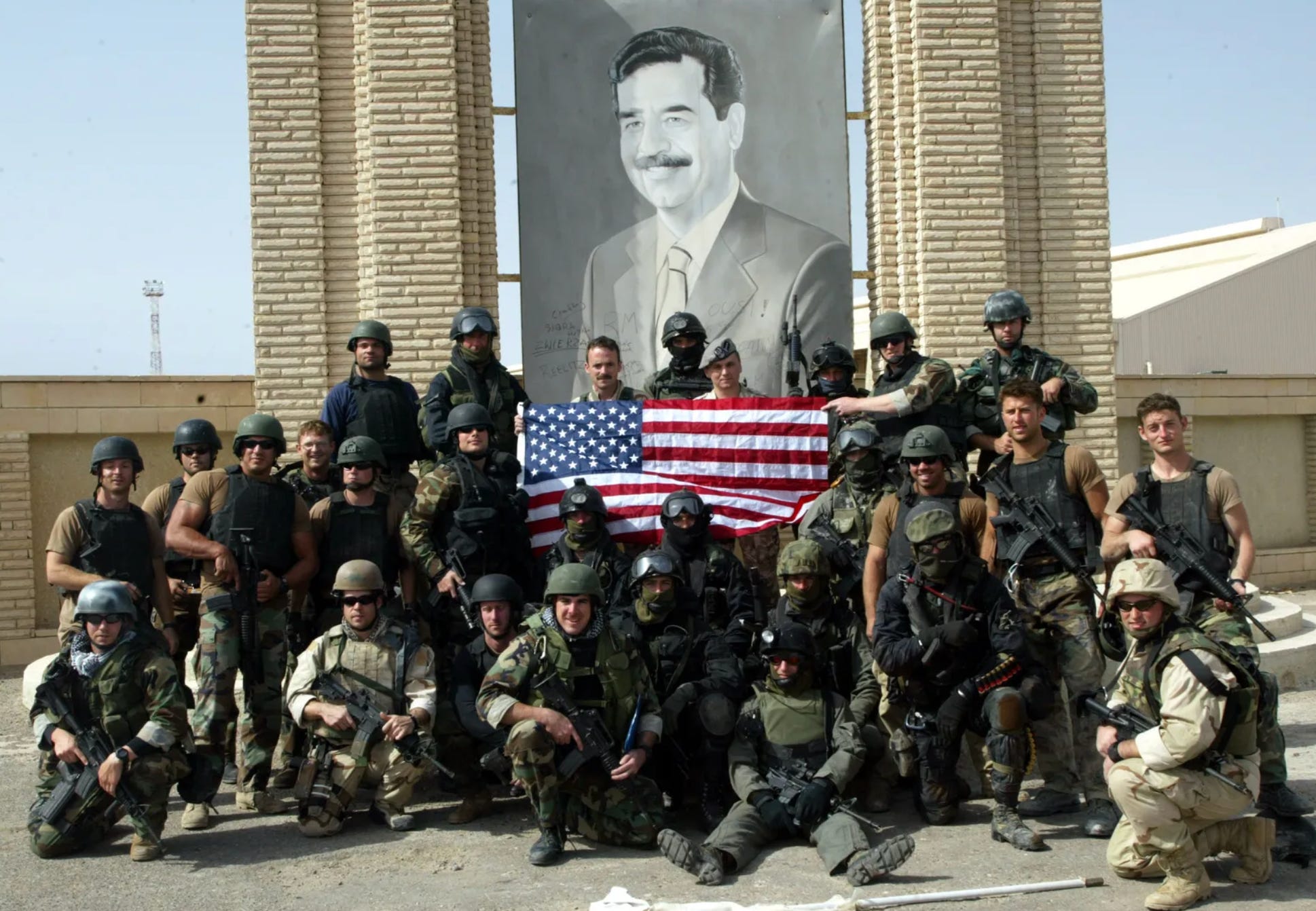
But also remember that none of this was inevitable, and the second thing we need to remember is another culprit that turned the Iraqi state into this factionalized apparatus. The 2003 American invasion. The occupation banned the Baath Party and purged its members from public life down to schoolteachers and clerks, a policy it called de-Baathification, and it dissolved the Iraqi army, throwing hundreds of thousands of trained and armed men out of work. In the vacuum of a weakened or non-existent state emerged the one force that had spent two decades preparing for it. The Iranian Revolutionary Guard had pushed its Iraqi proxies across the border, Badr among them, and the late Khamenei, who had called Saddam’s removal a gift from God, now had an open country to work in.
The IRGC aimed at ‘the Lebanonization of Iraq’, a sectarian divide within the Iraqi state apparatus that they could manipulate, and the man who ran it was the late Qassem Soleimani, head of the Quds Force, the arm of the Revolutionary Guard that handles Iran’s militias abroad. Soleimani tried to build a spread of armed Shia parties loyal to Tehran, each holding a piece of the state, none answerable to it. For a while the Iranians hoped the young cleric Muqtada al-Sadr and his Mahdi Army could be turned into an Iraqi Hezbollah, with Sadr as a new Hassan Nasrallah, the man who led Hezbollah in Lebanon. Sadr proved too unpredictable and too much his own man for the part. Badr and the harder factions took it up instead.
Nouri al-Maliki, Iraqi prime minister through the worst of the sectarian years, was said to be Soleimani’s man in Baghdad, kept in office in 2010 on Iranian insistence even after a rival won more seats. The 2005 constitution helped, carving the state into sectarian and ethnic shares and handing each community its slice of the spoils. Then in 2014, when ISIS overran a third of the country and the army collapsed, Grand Ayatollah Sistani in Najaf called Iraqis to arms, tens of thousands answered, and the militias were gathered into a state-funded umbrella called the Popular Mobilization Forces (PMF) or the Hashd ash-Shaabi. Tens of thousands of its fighters were later folded into the official security forces, out of a force that has since grown to well over a hundred thousand. The proxy was now inside the state, drawing a state salary.
Soleimani was killed by an American drone at Baghdad airport in January 2020, together with Abu Mahdi al-Muhandis, the Iraqi commander who ran the Hashd day to day. Even with these two powerful men gone, the structure that Iran worked on in Iraq outlived them, a government made of armed parties that each hold ministries and provinces and cannot be disarmed by the centre, because in large part they are the centre.
Not a cabinet but a combination of factions
Where the Iraqi case parts from Lebanon is worth mentioning as well. Lebanon is a balance of weak sects. Iraq is a Shia majority sitting on national oil revenue, so what emerged there is closer to the dominance of one community’s armed parties, funded by the state’s own oil money, over everyone else. And each has a different vision of Iraq. For example, the hardest factions, Kataib Hezbollah and Asaib Ahl al-Haq, want an Islamic republic on the Iranian model and call themselves the muqawama, the resistance. Badr sits between them as a Shia majoritarian, nationalist in its way, but a nationalism that treats the Shia majority as the real Iraq and the rest as guests.
This is the government structure the current prime minister al-Zaidi presides over. It is less a cabinet than a treaty between armed factions, each with its ministry, its budget, its fighters and, in several cases, its patron in Tehran. Al-Zaidi is himself a compromise, installed in May after the Coordination Framework, the bloc of Iran-aligned Shia parties that has run government formation since Sadr walked his MPs out of parliament in 2022, first tried to make Maliki prime minister again and had to drop him under blunt American pressure. Badr took its seats in the November 2025 election and its share of the spoils, the transport ministry among them. Badr has a longer game it plays with the state it sits inside. Because Badr is older and larger than the other factions, it can capture a growing slice of the official army and police and use them to steer policy, the way the Baath once colonized the state it claimed to serve. The interior ministry was the first prize. The transport ministry, and the corridor that runs through it, is the newest.
The road that Turkey wants
Turkey wants the Development Road, a rail and motorway corridor costed at some 17 billion dollars, running from the new Grand Faw Port on the Gulf up through Iraq to the Turkish border and on into Europe. An overland route that bypasses the Gulf sea lanes and the Strait of Hormuz. Two of the five documents on the table last week in Ankara belonged to it, and both were transport minister al-Hasni’s to sign. One covered rail and road links through the Fishkhabur crossing. The other was a framework for building transport infrastructure inside Iraq in exchange for Iraqi natural resources, and it is that exchange, resources pledged against roads, that carries the sovereignty charge and that the oil ministry wanted taken to parliament first.
Around this road sits the rest of the Turkish government’s Iraq policy. Iraq offered to supply Turkey with as much as a million barrels of oil a day for its own use, which Erdoğan welcomed as a way to stop relying on others, an arrangement to buy rather than a route to carry. TPAO, the Turkish state oil company, took a 15 per cent share of the Kirkuk fields that BP operates, moving Turkey from a bystander to a co-producer of Iraqi crude oil. Water, since the Tigris and Euphrates reach Iraq through Turkish dams and give Turkey a tap it can tighten. And security, meaning the PKK (the Kurdistan Workers’ Party), which declared its dissolution in 2025 and has been withdrawing to northern Iraq, where Turkey wants its remaining camps emptied and its disarmament verified.
Put together, it is an offer to pull Iraq westward, into an economic and security order anchored on Turkey and the Gulf and congenial to the US’s wish to lever Iraq out of Iran’s orbit. The American envoy who has pushed these deals put the aim without hiding it, that they would make the Strait of Hormuz an afterthought, which is another way of saying they are meant to strip Iran of the chokepoint that has long given it a hand on the region’s oil. That is the order a Badr minister who is close (more than close) to Tehran has every reason not to sign into. But the deal was signed at the end, and most probably the building of the road will commence.
Nevertheless, it was not the only problem of the Iraqi government that week. On the evening of al-Zaidi’s visit, while he was still in Turkey, American and Saudi jets struck Hashd ash-Shaabi (Popular Mobilization Forces- PMF) sites across Iraq, from Kirkuk in the north to Basra in the south, killing around twenty of its fighters along with several Iranian advisers, in reprisal for drone attacks the militias had launched on Saudi oil facilities. Baghdad called it a flagrant violation of its sovereignty. Al-Zaidi convened an emergency security council and cancelled his first official trip to Saudi Arabia in protest. He had spent the week presiding over a signing ceremony he could not fully control and then absorbing strikes on his own soil he could not prevent.
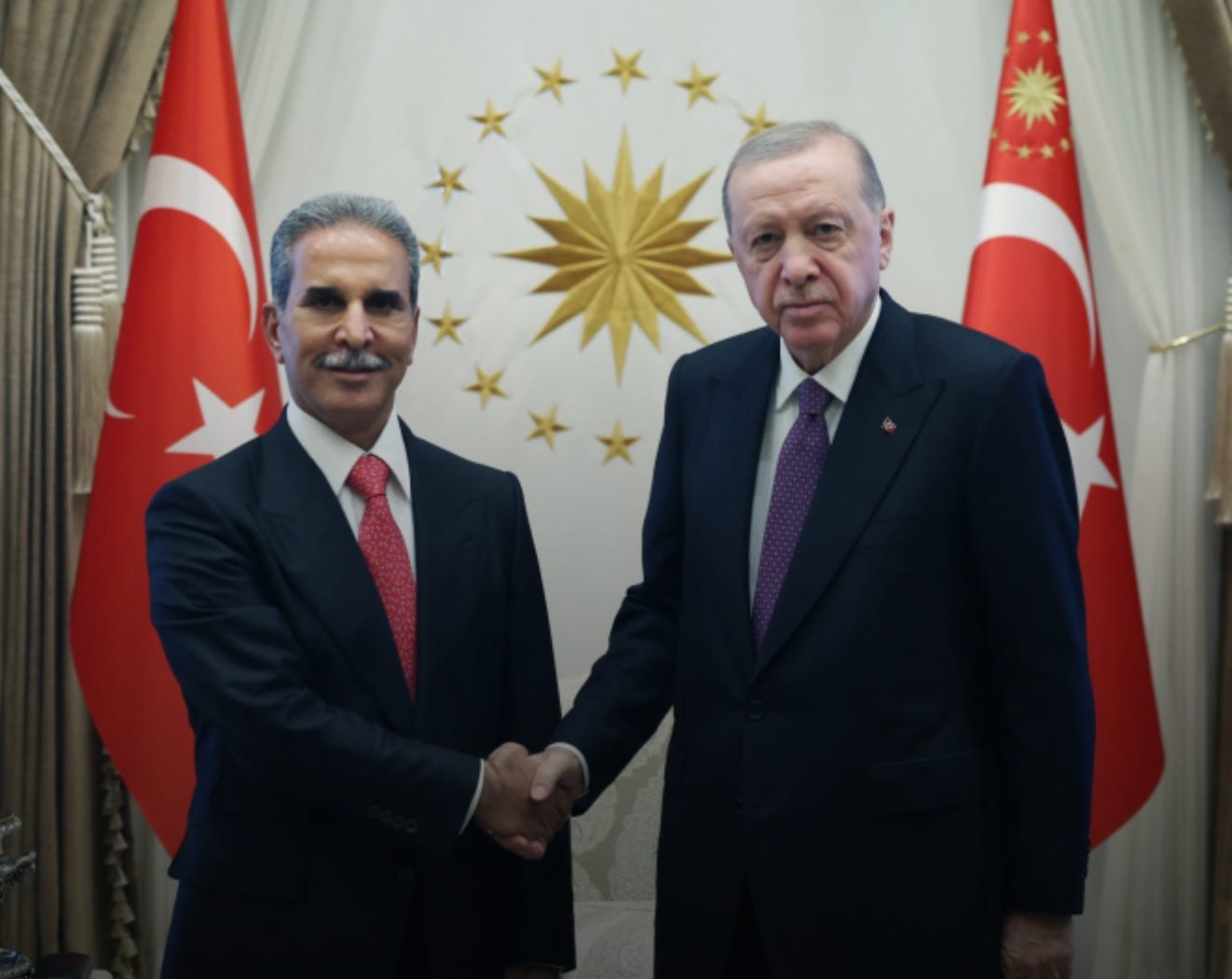
Two days later, on 30 July, Erdoğan received a different Iraqi visitor at Beştepe. Faiq Zidan, head of the Supreme Judicial Council, unelected and holding no executive office, is widely taken to be the most powerful man in Iraq, the figure who can make and unmake prime ministers through the courts he controls. His meeting with Erdoğan, and a second with Hakan Fidan the same day, were announced without a readout. No agenda was given. But I believe none was needed. The prime minister may preside over the ceremony, but the man who runs the judiciary does the business.
So the week in Ankara is a fair picture of the larger contest. Turkey pulls Iraq west with roads and oil and the promise of becoming a corridor between continents. Iran’s project, or what is left of it, pulls the other way. Iran may be under attack by the US, but the men it placed inside the state years ago still run through it.
Twenty years after the invasion that broke the old state, Iraq is rich, courted by Turkey and the Gulf, sitting on the route everyone wants to control, but with its state carved into fiefdoms. Hardly a straightforward partner for Turkey, Iran or the US.