

Hello hello, merhabalar, ahlan wa sahlan bikum…
I am back after a two-week break in which I marked a few graduate exams and read a couple of extraordinary theses. So I am ready for the next academic year, as Michaelmas, the first term of the Oxford year, is on the horizon.
So I thought it would be best to start off by gauging where we are in the region on a few critical matters.
Israel and Turkey - The crux of the problem
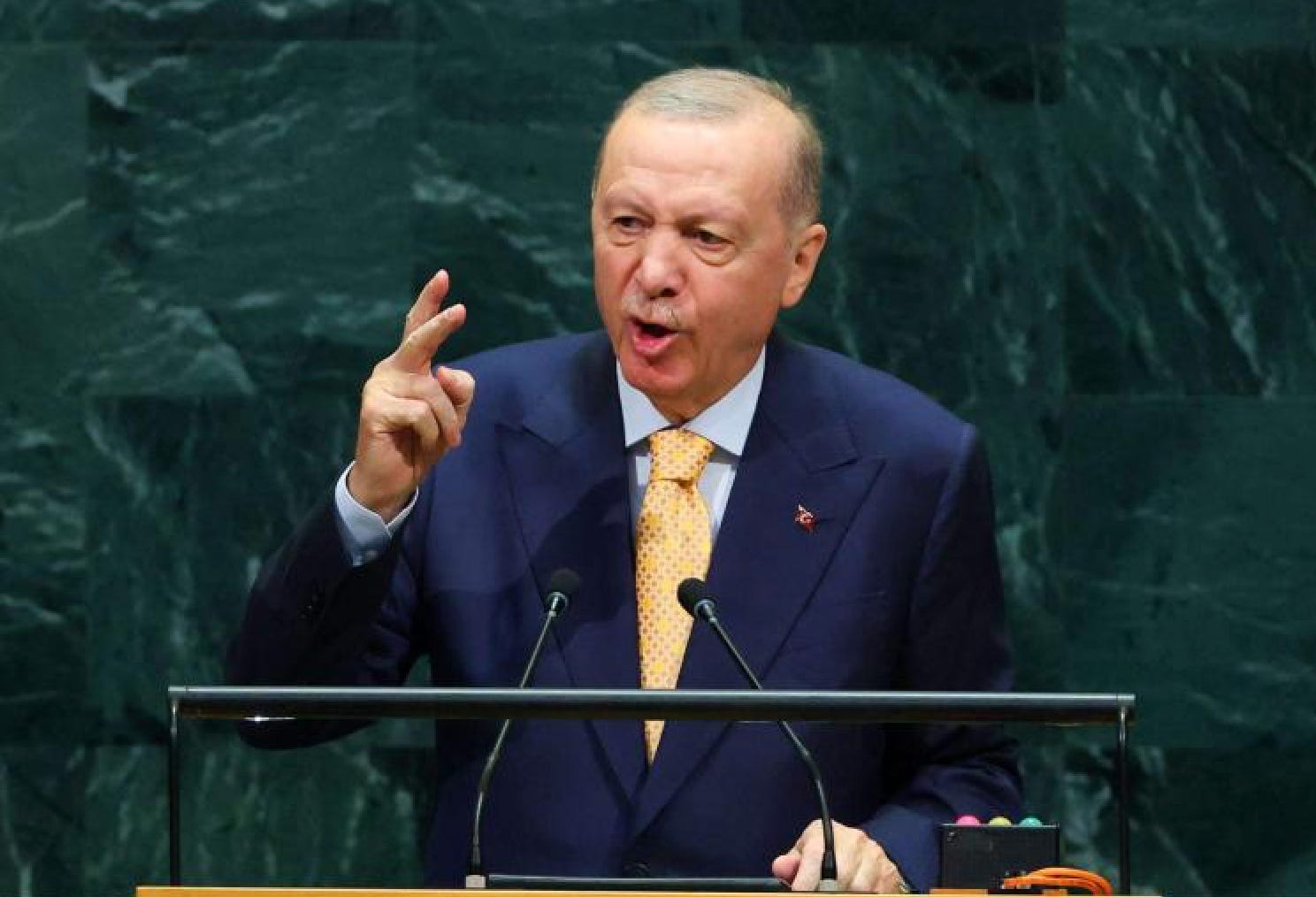
The tension between the two countries seems to be in an interregnum, but it has certainly not subsided. In his speech to the UN General Assembly this week, Erdoğan spoke with his usual bravado of genocide in Gaza and of Israel’s hostile expansionism in the region. Many heads of state did the same, in fact, King Abdullah II of Jordan being the most articulate. Netanyahu, by contrast, arrived in New York for his address on Thursday with few friends. Even Trump has no plans to meet him, and a year ago most delegations walked out of the giant auditorium as he took the stage. Erdoğan seems to have had a “successful” New York visit, and he continues to enjoy Trump’s usual praise. “Sometimes you get along with the toughest people, like him,” Trump said, gesturing to Erdoğan, at the NATO summit in Ankara in July. However, this is not necessarily good news where the escalation between Israel and Turkey is concerned. It would only make Netanyahu and his far-right cabinet more frustrated.
At its core lies the contest over what kind of state emerges from the collapse of the Assad regime in December 2024. I argue that everything else follows from that.
Since Assad fell, Turkey has made itself the principal external patron of the al-Sharaa government. It signed a defence and training agreement in August 2025, began training Syrian personnel that October, keeps bases in the north, and in August was reported to be preparing to deploy to a Syrian airbase. That is what annoyed Israel. Israel wants a Syria too weak and too decentralised to threaten it, with no powerful military on its northern border, which is why it has gone on striking Syrian military assets and has held on to the buffer zone it seized inside Syria after Assad fell.
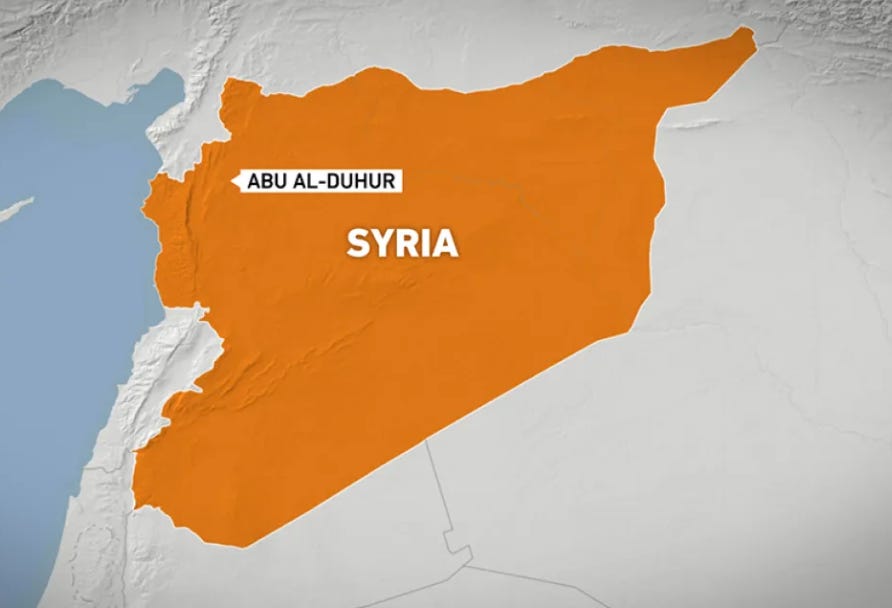
The strikes on the Abu al-Duhur airbase in Idlib province on the night of 17 to 18 August (8 of them, according to Syrian state television), which Israel justified as pre-empting a Turkish deployment that Turkish sources denied, were the sharpest expression of this. Washington’s envoy, Tom Barrack, publicly called the strike an unnecessary escalation and said the US had checked Israel’s intelligence and been told no such deployment was happening.
On a broader level, we can say that the current conflict stems from the fact that Turkey and Israel hold fundamentally divergent visions of the regional order. Turkey favours integrated stability with strong central states. Israel’s current leadership prefers fragmented neighbours it sees as less threatening. There is huge distrust between the two sides, and extremely dangerous rhetoric that can bring unintended consequences.
The distrust lies in a mutual, unspoken conviction that the other is not merely a regional actor but an aspiring hegemon seeking to reshape the Middle East in its own image. Turkey sees that Israel fundamentally desires a fragmented, weak and chaotic neighbourhood to ensure its own security, and that it views any Turkish attempt to stabilise or centralise regional states as a direct threat to Israeli freedom of action. Conversely, Israel assumes Erdoğan’s “status quo” regionalism is a thin veil for neo-Ottoman expansionism, believing Turkey intends to tether Syria and other neighbours into a subservient orbit that would eventually constrain Israel’s strategic depth and its ability to counter Iranian influence. Both sides operate on the silent premise that the other’s regional vision is inherently zero-sum and incompatible with their own survival.
How will this tension play out after the Israeli elections on 27 October? It may be that the current Netanyahu government has been pulled to the far right and holds a deeply pessimistic and cautious worldview, viewing regional threats through a lens of existential vulnerability, partly because of the trauma of 7 October. But… Israel’s military and strategic decisions are often driven by institutional security assessments rather than direct political calculation. Yes, if Netanyahu leaves, the hawkish environment could be tempered, but seeing Turkey as a threat, I’m afraid, will continue. Would this push and pull turn into more direct confrontation? I am not as optimistic as some experts. The history of wars and conflicts is full of contingent moments that change everything. When tensions are this high, something can go wrong and lead to a head-to-head clash, especially in Syria.
My only hope is that Turkey believes it is winning in Syria without having to fight for it. Why open a front with Israel? A direct clash with Israel would put at risk the al-Sharaa government the Turkish government has spent nearly two years building up, would hand Netanyahu the confrontation that suits his campaign, and would strain the relationship with the US at the moment Trump is dangling the sale of the F-35 fighter jets Turkey has wanted for years. Sitting still costs the Turkish government little, true, but escalating would cost a great deal. I believe the Erdoğan regime believes time is on its side, and that is the behaviour of a power that thinks like that. But… and it is a big BUT… there is surely a limit to Turkey’s restraint.
Strait of Hormuz - Quo vadis, oil prices?
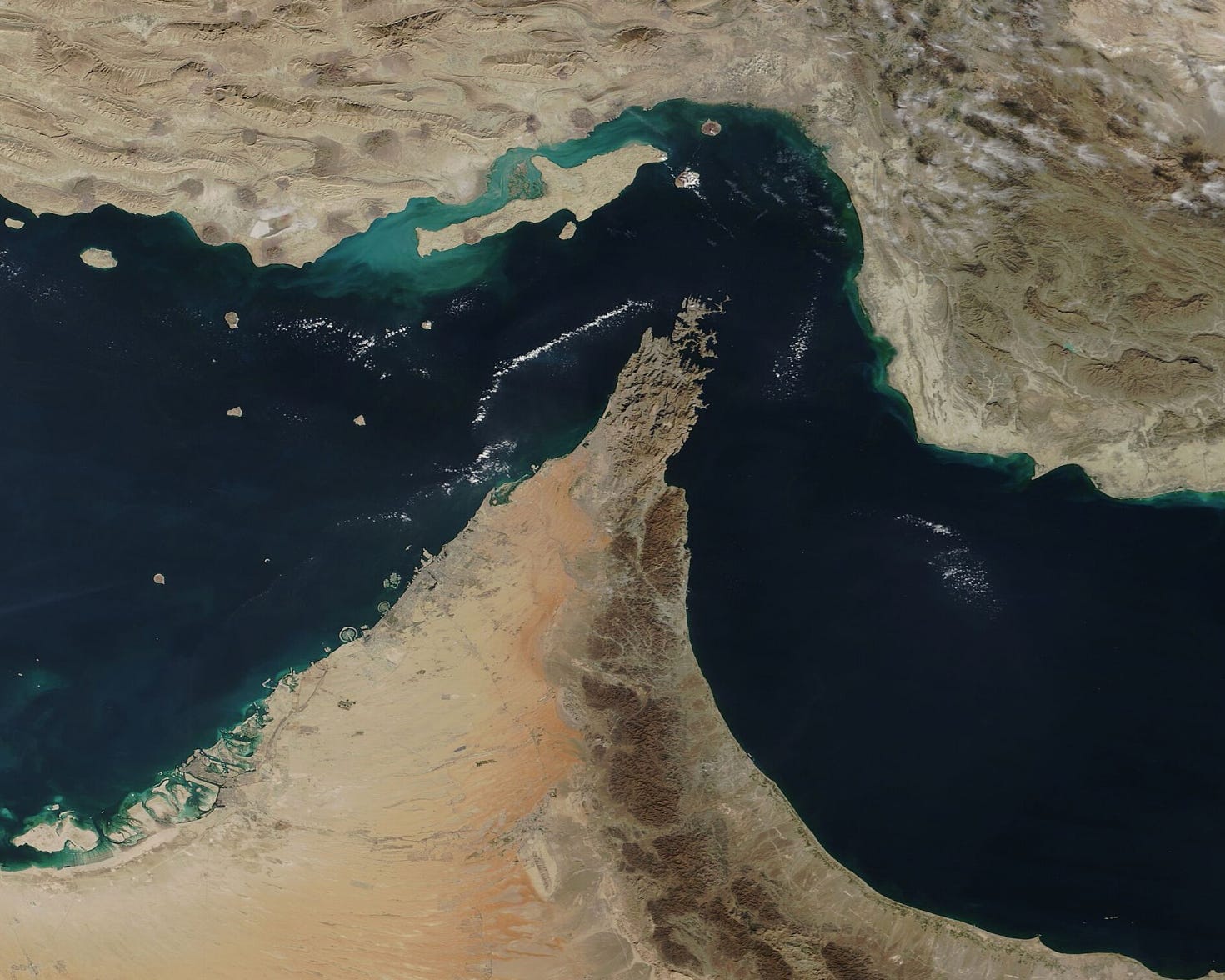
The Strait of Hormuz, the narrow passage between Iran and Oman through which roughly a quarter of the world’s seaborne oil and a fifth of its liquefied natural gas travelled before the war, has been largely closed since 28 February. On that day the United States and Israel launched their air war on Iran, and the Revolutionary Guard responded by forbidding passage, boarding and attacking merchant ships, and laying mines in the strait. Trump and Pezeshkian signed a memorandum of understanding on 17 June to end the war, and the US military lifted its blockade of Iranian ports the following day. Fighting resumed on 8 July, and the blockade was reinstated on 14 July.
By early September the Wall Street Journal was reporting that the blockade had halted new Iranian oil exports from the Gulf, leaving the Iranian government dependent on dwindling stocks already loaded onto tankers before July. The two sides then turned on each other’s shipping. The United States said it had struck three Iranian oil tankers after attacks on its warships, and a vessel caught fire in the strait after being hit by an unidentified projectile, shortly before Iranian and Gulf officials were due to meet in Oman to sign an agreement on shipping through the waterway. Even so, more ships are moving than at any point since the spring. Bloomberg reported that oil and gas flows through the strait had reached a six-month high, with Middle Eastern oil flows averaging 17.1 million barrels a day over ten days.
The diplomacy moved to New York this week, to the UN General Assembly. A senior Iranian official told Reuters that Iran could reopen the strait within seven days if the US eased its military pressure and lifted the blockade, and Iran has been negotiating with the Americans through a Qatari mediator. Pezeshkian set out the Iranian position in his speech to the General Assembly. He said other states could not enjoy free passage through the strait while using the same waterway to wage war on Iran and deny it access to its own waters. Marco Rubio, the US secretary of state, said afterwards that the talks had produced no major breakthrough, which suggested the June memorandum is no longer on the table. The Iranian president also has enemies at home. Hardline factions regard any agreement with Trump as surrender, and Mohsen Rezaei, head of the Supreme National Security Council, told state media that Iran would now negotiate under a new framework requiring the Americans to take the first step.
When the strait was first closed, I shared with you the arguments of Helen Thompson, professor of political economy at Cambridge, about a paradigm shift in the global energy system. It is, I believe, slowly getting there.
The more interesting question is why the world has absorbed all this without the economic catastrophe everyone predicted in March. The clearest answer I have heard comes from Jason Bordoff, a former senior energy adviser in the Obama administration, and Meghan O’Sullivan, director of Harvard’s Belfer Center, who spoke to the editor of Foreign Affairs recently (Here is the link to their article). They have called the closure the largest disruption of global energy flows in history, yet prices never approached the levels energy planners had feared. They attribute this to four buffers. The oil market was in surplus when the war began, so there was spare supply to absorb the loss. Saudi Arabia and the UAE used existing pipelines to send large volumes around the strait to other ports. The International Energy Agency, through which the major oil-consuming countries coordinate their response to supply emergencies, organised releases from the strategic reserves governments hold for exactly this purpose. And China cut its imports sharply by halting stockpiling and running its refineries below capacity, which removed a large block of demand from the market.
However, they are equally clear that the calm should not be mistaken for safety. The surplus, the reserves and the spare pipeline capacity are finite, and all three are being used up. The market for refined products is already under acute strain, diesel above all, because Ukrainian attacks on Russian refineries have coincided with the loss of Gulf export capacity. If the disruption continues, they argue, prices will eventually have to rise high enough to force what economists call demand destruction, meaning that households and businesses simply stop buying fuel they can no longer afford.
The costs of the crisis are also unevenly spread. The United States, as the world’s largest producer of oil and gas, is comparatively insulated from price shocks, and the two experts draw the uncomfortable conclusion that the costs of American foreign policy fall disproportionately on its allies and on poorer countries that import their fuel. The Gulf is divided in the same way. Saudi Arabia has been relatively protected, while the UAE has suffered physical damage and lost revenue. Their sharpest warning concerned Iran. If the Iranian government concludes that closing the strait is not achieving its aims, it may escalate by attacking other critical infrastructure, including Saudi refining capacity. On the same day they recorded the conversation, the Houthis launched a wave of missile and drone attacks on southwestern Saudi Arabia, setting fire to oil facilities and wounding 73 people in Abha, Jazan, Najran and Khamis Mushait. The Houthi campaign has its own Yemeni causes, which I turn to below, but it shows how quickly Saudi energy infrastructure can come within range of a war that began in the Gulf.
Mecca Pact - Whose idea?
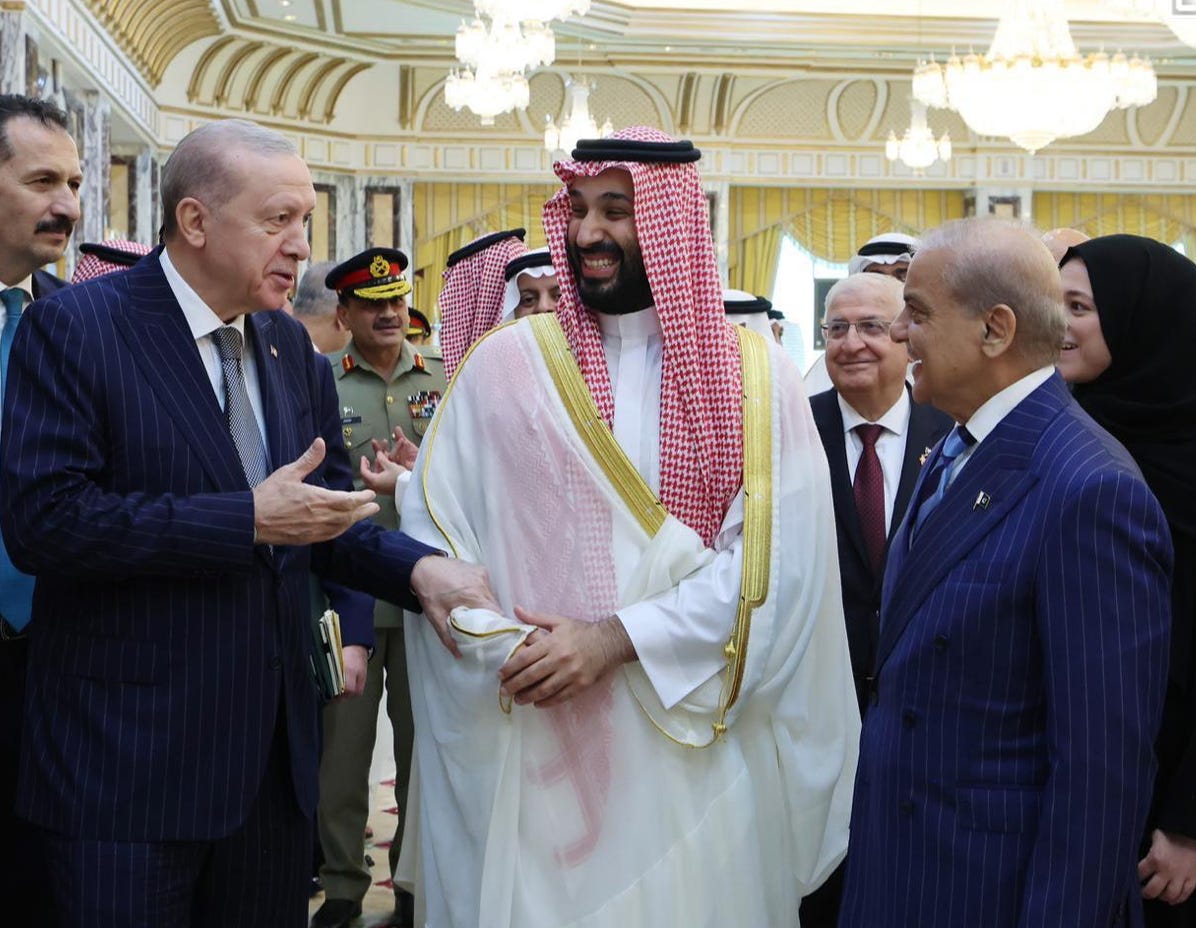
The defence pact signed by Turkey, Saudi Arabia and Pakistan on 7 August ruffled some feathers. Of course it did. Especially the feathers in Iran and Israel. Israel’s attack on the Abu al-Duhur airbase came on the heels of the announcement of the Mecca Pact, and some considered it a response. I do not think so. And I do not attach too great an operational importance to the pact either, as a Middle Eastern NATO or the like. I also strongly doubt the real-life effect of its Article 5-like clause, modelled on NATO’s rule that an attack on one member is an attack on all. I do not think any of the countries party to this pact would expect direct military help if one of them were attacked. I do not think, for example, that the Erdoğan regime would be able in any sense of the word to explain to the Turkish public the reason and logic for fighting on the Saudis’ behalf against the Houthis. That scenario is already here. The Houthis have been striking Saudi Arabia since the pact was signed, and so far the Turkish response has been words. On 19 September Fidan said the Saudis might have some military needs, especially on technical issues, and that Turkey would have no problem meeting them. Pakistan said no military response had even been discussed.
Nevertheless, in a lengthy interview with the state news agency Anadolu Ajansı the day after the signing, Foreign Minister Hakan Fidan said that no common threat is written into the text, that the Mecca defence agreement is defensive, and that Iran is not its target. He was less conciliatory about Israel, saying its international isolation should continue. Of course, that is what any government says on signing a pact of this kind. Turkey and Saudi Arabia both want Iran weakened and contained but not broken and dismembered. Fidan said plainly that the Turkish government has kept talking to Tehran throughout. Leaving Iran unnamed is deliberate, and it leaves room to bring Tehran back in later.
Another important piece of information I learned from a former senior Turkish diplomat is that the Mecca Pact was Saudi Arabia’s idea and desire, which goes back to 2009. The Saudis kept bringing it to the table, a defensive pact with Turkey, Pakistan and Egypt, through different channels, sometimes via diplomats, sometimes via businessmen. So if we take out the years when the two countries, and more so Erdoğan and Mohammed bin Salman, fell out drastically after the Saudi dissident and journalist Jamal Khashoggi was murdered and dismembered in the Saudi consulate in Istanbul in 2018, the idea has been on the table all along. Fidan himself said that preparations for this particular text had taken nearly two years and eight months.
What I am trying to say is that the idea of a pact like Mecca dates back almost two decades and is not the outcome of the current Israeli hostility and the Iran war.
Syria, protests and the economy
Unsurprisingly, Syria’s economic crises have started to overshadow the joy at the end of the conflict, and Syrians, who are under extreme economic pressure, now want betterment. But not much is on the horizon, even though the US has lifted its sanctions. I mean, it will recover, but it is going to be long and painful. We will talk about the reconstruction of the country, and the involvement of Turkey, the US and the Gulf states in it, over the next few weeks. But for now, let’s have a look at the latest fuel crisis, which spilled into open protest in mid-September.
Following increases of up to 40 per cent on diesel and 28 per cent on petrol on 13 September, demonstrations spread across several provinces, with some of the most visible unrest in Idlib. In Maarat al-Numan, protesters blocked the M5 highway connecting Damascus and Aleppo, while demonstrations elsewhere called for the price increases to be reversed and for senior officials responsible for energy policy to resign. The protests were the most widespread Syria had seen since the fall of Assad in December 2024.
What’s happening? Well, the crisis cannot be understood simply as the result of recent supply disruptions or regional instability. It is the product of a much longer structural collapse: the destruction of domestic production capacity during the war, the growing mismatch between the crude Syria produces and the refining capacity it retains, and the gradual withdrawal of a subsidy system that for years had kept fuel prices artificially low.
Before 2011, Syria produced around 380,000 to 390,000 barrels of crude oil a day and was able to export its surplus. War reduced output to roughly 100,000 barrels a day. According to the energy minister, the country now produces about 102,000 barrels a day against domestic demand of around 325,000, and imports the rest. The crude that is still extracted is also relatively heavy, creating compatibility problems for the country’s existing refineries.
Subsidies had already begun to shrink before the war. In 2005, the state covered around 78 per cent of the cost of diesel, but support was progressively reduced after price increases began in 2008. By 2019, around 30 per cent of the cost of petrol and 45 per cent of diesel remained subsidised. By 2023, the subsidy rate had fallen to around 19 per cent.
Since 2024, the new administration has largely removed fuel subsidies as part of its liberal economic programme. Prices have continued to rise despite the integration of the oil fields in the northeast into the central system. The consequences have spread across the economy, increasing industrial costs by 15 to 25 per cent, urban transport costs by 20 to 30 per cent, agricultural costs by 10 to 18 per cent, and food-sector costs by 12 to 20 per cent.
The public has not been persuaded by the government’s explanation, which pointed to global prices, the disruptions in the Strait of Hormuz and the Bab al-Mandab, and a two-month overhaul of the Baniyas refinery that has forced Syria to import more refined fuel. Anger has instead centred on the rising cost of living, the government’s economic priorities and perceptions of corruption and inequality. Under pressure from the protests, the government announced cheaper diesel for heating, agriculture and some industrial uses on 17 September, amounting to a partial retreat from the earlier price increases.
The Kirkuk-Baniyas pipeline, which would carry Iraqi crude to Syria’s Mediterranean coast, has been presented as a long-term answer. It is a distant one. Its proposed capacity is 2 million barrels a day, but estimates of its cost and timetable vary widely. A senior Syrian official has said the line could be running within three years, while other analyses put a full rebuild at $15 billion and at least four years of construction. Either way, it could not become operational before the end of the decade at the earliest.
The Houthis’ “successes”
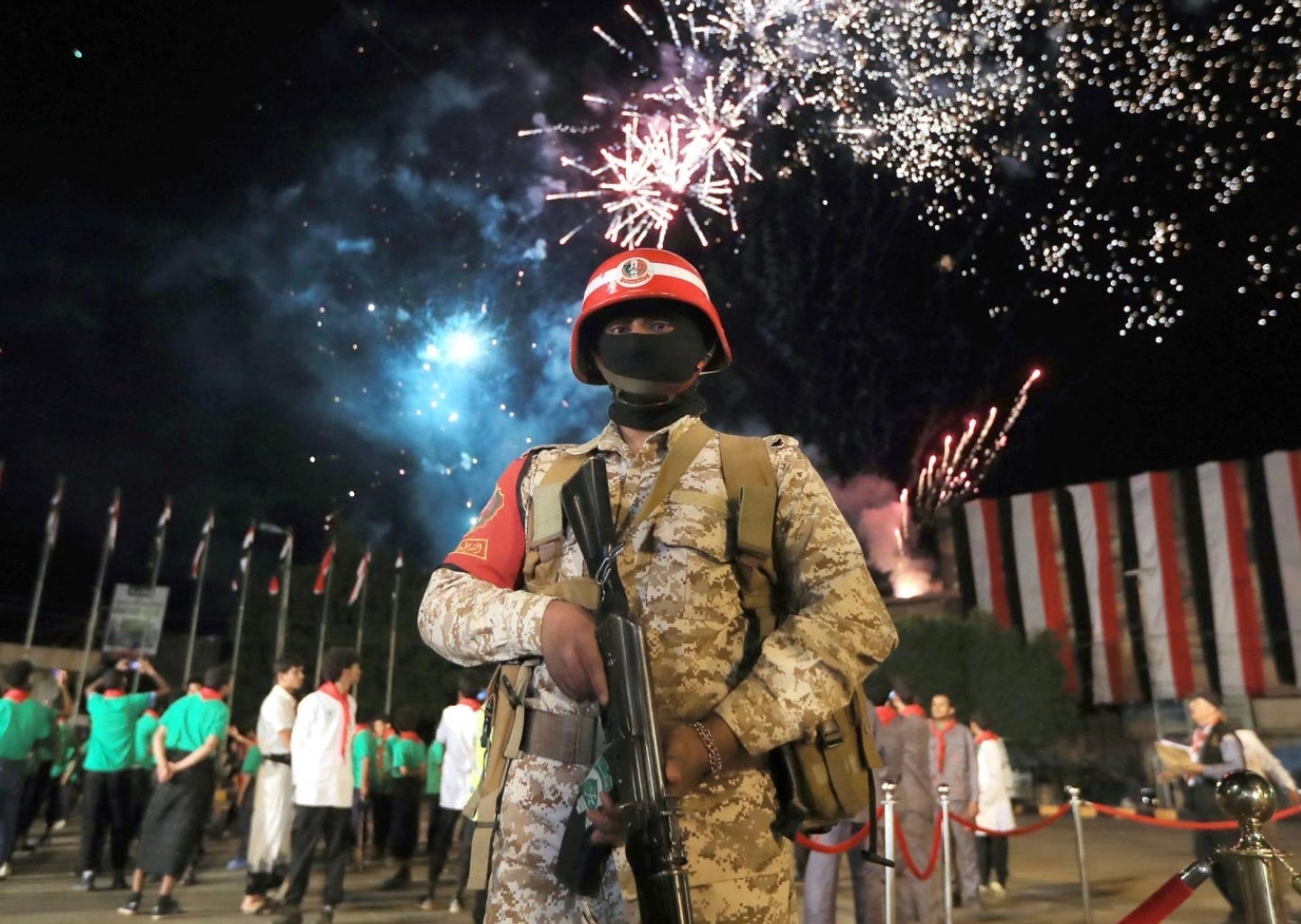
The Houthis seized the strategic port city of Mocha on 10 September and, the next day, Perim island at the narrowest point of the Bab al-Mandab, tightening their grip on Yemen’s Red Sea coast. They also captured the Zuqar and Hanish islands. These gains stem from a year-long mobilisation featuring ballistic missiles, drones and advanced operational tactics. In contrast, Yemeni government forces were unprepared for an operation of this sophistication.
The collapse of anti-Houthi forces, especially those aligned with the Yemeni government, resulted from multiple factors: divisions fuelled by divergent Saudi and Emirati agendas, insufficient unity despite recent Saudi attempts to improve coordination, inferior equipment compared to the Houthis, and inadequate air cover to stop Houthi advances.
There is no doubt that Iran’s sustained, long-term backing has been pivotal to Houthi success. Since 2014-15, Iran has supplied training, commanders and technical experts, enabling the Houthis to develop a substantial domestic military industry. The Houthis can now produce drones at scale and assemble missiles, reducing their reliance on direct Iranian arms shipments. Iran’s approach focuses on making its allies self-sufficient.
In this context, it is important to understand that the Houthis are neither mere Iranian proxies nor fully independent. Iranian support was crucial in elevating them to a regional threat, but they have become significant actors with their own networks and resources. They are strong allies sharing strategic objectives. And what do they want? Well, they have a really rigid worldview and show little concern for governance or public welfare, treating Yemen primarily as a recruitment base to build military strength. Their ultimate objective is a divine mission to march on Mecca and Medina, destroy Israel, capture Jerusalem and establish a global Islamic state. Recent successes reinforce this belief, which makes it even harder to negotiate or reason with them. According to the Yemeni conflict analyst Nadwa al-Dawsari, the only effective way to contain the Houthi threat is strategic, sustained support for the Yemeni government and its forces to dislodge the Houthis from key territories on the ground, support that has been insufficient to date. The Houthi challenge is international, she says, and not merely Yemeni or Saudi, and it demands a bold, coordinated effort from the US and Europe, who cannot afford risk aversion. She also thinks that ceasefires are a bad and misguided strategy, as the Houthis routinely use them to prepare for the next offensive.