War of Succession in Turkey, Vol. 2: Sex, Drugs, and the Politics of Power
The arrest of a pro-gov media figure offers a window into elite factionalism, intelligence rivalries, and a looming war of succession in Turkey.
**Here is War of Succession, Vol. 1, published at the end of October, titled “All Eyes on These Two Turkish Men: Hakan Fidan vs. İbrahim Kalın.”
We would not be surprised by incidents that expose the hypocrisy of a famous journalist, or by rumours revealing that a well-known figure is immersed in worlds of drugs and debauchery. That is fine most of the time. One’s private life is none of our concern. Yani, who cares, to be honest.
On the other hand, we have become increasingly accustomed, thankfully as women gather the courage to speak out, to hearing allegations of sexual harassment and workplace bullying against powerful presenters, editors, and reporters. They turn our stomachs, and we note them down as examples of power corruption in newsrooms and of toxic masculinity.
An arrest that took place in Turkey last week fits both of these patterns, yet it also carries meanings that go beyond them. For this reason, I need to explain the arrest of Mehmet Akif Ersoy, the now fallen editor-in-chief of Habertürk, one of the pro-government dailies. Ersoy was known for his closeness to Erdoğan’s Palace, routinely invited onto Erdoğan’s planes. His career was rapidly ascending, and just days before his arrest he conducted a one-on-one interview with the AKP spokesperson.
Ersoy’s arrest came on the heels of the detention and subsequent confession of a so-called “celebrity drug dealer,” and then widened to include allegations of sexual overtures toward other television anchors. These activities, it appears, were known to many for quite some time. I did not know. I suspect that only those privileged enough to be close to Erdoğan’s Palace knew—a privilege I am profoundly grateful never to have had, and never wished for—and that they tacitly condoned it all until the moment came to act. That moment has now arrived.
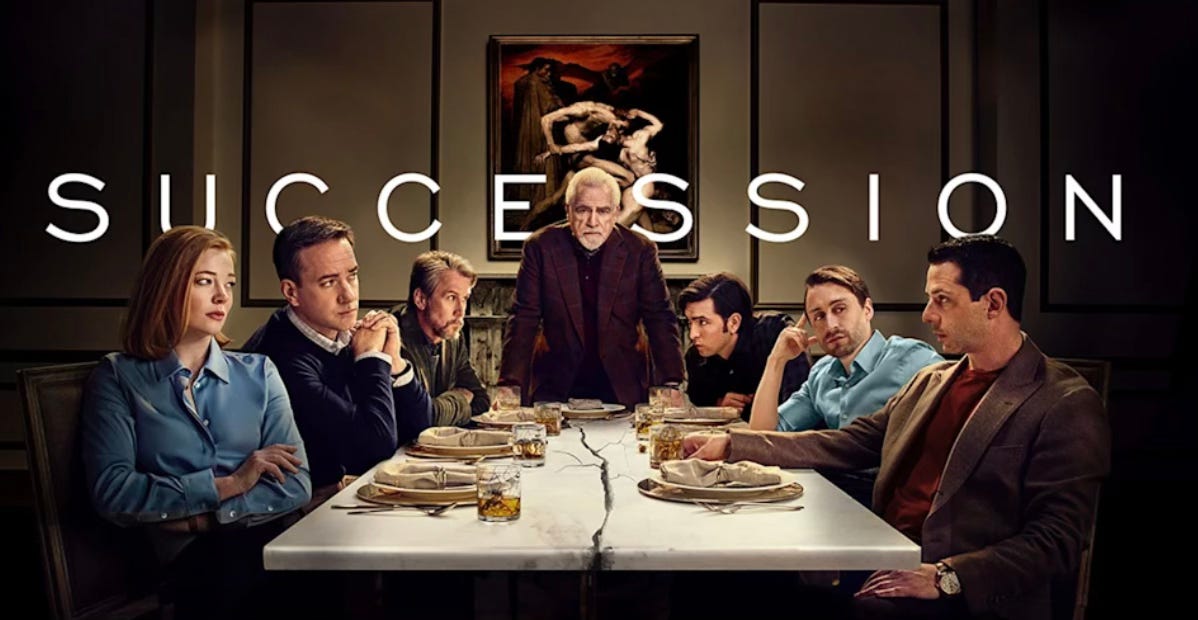
Which also suggests something else. The factions within that inner circle have entered a struggle over the day after. The day after Erdoğan. What we are witnessing is a manifestation of elite factionalism in an authoritarian regime and, quite plainly, a war of succession. This war is believed to be unfolding among Erdoğan’s sons-in-law, the foreign minister Hakan Fidan, the head of the national intelligence service İbrahim Kalın, and the most structurally advantaged candidate of all: his son, Bilal Erdoğan.
The false moral exceptionalism of Islamism
Ersoy, comes from a well-established Islamist milieu. His father was a prominent figure within Selam Tevhid, a radical Islamist organisation that emerged in Turkey in the 1990s and was closely associated with transnational jihadist networks. Selam Tevhid operated as both an ideological and organisational hub, maintaining links to militant Islamist groups in Iran and the wider Middle East, and was repeatedly investigated by Turkish security and judicial authorities for activities ranging from illegal financing to armed mobilisation. Although the organisation was formally dismantled, its networks and cadres continued to circulate within Turkey’s Islamist ecosystem, particularly in media, civil society, and informal religious circles.
A long but necessary parenthesis here: there may be some readers who feel genuinely astounded by the idea that a so-called Islamist could be involved in drugs and coercive sexual encounters. I can only repeat what I have been arguing for some time now: Islamism is a thin-centred ideology and should be treated like any other right-wing ideology. The Qur’an does not provide the kind of operational blueprint that a modern political ideology requires. Islamism’s claims, moral postures, and aspirations are therefore interpretations, strategic readings, and political projects rather than divinely mandated action plans. Its proponents should not be placed on a superior moral pedestal to begin with. If we are able to see Islamists as malleable, pragmatic, and entirely ordinary capitalist agents, their scandals become no more surprising than those of a Christian evangelist or a Hindu nationalist figure.
Over the past decade under AKP rule, Mehmet Akif Ersoy emerged as one of the media figures whose rise was actively facilitated and polished by those in power. Born in 1985 and a graduate of Istanbul University’s Faculty of Communication, Ersoy began his journalism career in 2009 as a reporter at a television channel called 6 News. He soon moved to the state broadcaster TRT, where his career accelerated rapidly.
In 2011, he was appointed as TRT’s representative and war correspondent in conflict zones including Libya, Yemen, Damascus, and Erbil. The following year, he interviewed Libya’s ousted leader Muammar Gaddafi shortly before Gaddafi’s death.
Within TRT, Ersoy went on to hold a series of influential positions, including Cairo correspondent, Deputy Arabic Coordinator, and Deputy Regional Director for Istanbul. In 2015, he was appointed senior adviser to the Presidency of Religious Affairs, the Diyanet, with responsibility for the Middle East and the broader Islamic world.
His trajectory continued upward. In 2016, he became editor-in-chief of Foreign Policy Magazine. In 2017, he joined Habertürk TV. By 2024, he had been installed as the network’s editor-in-chief, marking the culmination of a carefully cultivated rise within Turkey’s pro-government media ecosystem.
About a year after he moved to Habertürk, I had interviewed Ersoy about his time as TRT’s Cairo correspondent. At the time, my research focused on the AKP’s involvement in the Arab Uprisings. What stayed with me from that conversation was not any particular revelation, but his language. When speaking about the AKP and Turkish state officials, Ersoy consistently used “we,” rather than adopting the distance of a journalist describing power from the outside.
Intelligence, information and blackmail
This was hardly surprising. He never made any effort to conceal his proximity to power. Within that inner circle, Ersoy was believed to be especially close to the security and intelligence bureaucracy, and in particular to the former head of the National Intelligence Organisation and current foreign minister, Hakan Fidan. For this reason, there is a growing tendency to interpret Ersoy’s arrest as an indirect strike against Fidan himself. An unnamed figure said to be close to Fidan denied this allegation to a colleague of mine recently. It would be remarkable though if there had been an acknowledgment.
Whether it is Ersoy or another figure close to the former intelligence chief makes little difference. What matters is recognising that security services, intelligence agencies, and media outlets can function as instruments of regime survival against societal opposition, and become key resources in intra-elite bargaining and factional struggle. Control over intelligence enables selective surveillance, the timing of leaks, and the orchestration of legal action, while control over media shapes reputations, normalises selective enforcement, and signals shifts in elite favour.1 In highly personalised systems like Turkey, these domains often overlap, creating dense networks in which security actors cultivate media allies and journalists derive protection, access, and influence from proximity to coercive power. Surely this does not happen only in Turkey but has been observed in cases such as Russia, Egypt, and China, where intelligence-linked media figures rise rapidly, enjoy prolonged immunity from scrutiny, and then become vulnerable once factional alignments shift.2
The most serious charge underlying Ersoy’s arrest is the accusation of establishing and leading a criminal organisation. According to the prosecutor’s case, the network allegedly led by Ersoy drugged women, coerced them into sexual encounters with multiple men, and secretly recorded these encounters at private parties in order to use the footage for blackmail.
This is not, then, a matter of individual misconduct such as drug use. The allegation points to an organised operation designed to accumulate power and expand an influence network. That immediately raises unavoidable questions. Who was being blackmailed? What kind of leverage was being sought, and over whom?
These questions matter because, as I mentioned above, Ersoy was widely described as the AKP’s “media prince,” a journalist who routinely broke the most sensitive government stories, delivered ministers’ first public statements, and helped define the moral boundaries of society from the television screen. When an operation targets a figure so central to the regime’s media architecture, especially over activities many claim were long known, the timing becomes the real puzzle. Why now? And what kind of intelligence process preceded this move?
The deeper issue lies in the stance of Turkey’s judiciary itself. Long understood to be profoundly politicised and aligned with the AKP, the courts are now acting with striking resolve against the party’s own media prince, almost as if tearing down a wall. The prevailing interpretation is that a factional struggle has begun, and that this arrest may be only the first in a widening series of investigations and detentions.
Elite factionalisation is not an anomaly
The literature on authoritarian politics converges on the view that elite factionalism is not an anomaly but a constitutive feature of regime durability and breakdown. It is part of the authoritarian game. For example, father-son Assads played it well. So did Mubarak.
Scholars argue that authoritarian regimes survive primarily by managing internal elite coalitions rather than by repressing society alone.3 Power is sustained through bargains among ruling elites over access to rents, offices, and protection from repression, arrangements that remain inherently unstable because they rely on informal commitments rather than enforceable rules.4 The central dilemma of authoritarianism lies in the ruler’s need to neutralise elite rivals without provoking them into collective action against him.5
When succession looms or trust erodes, repression often turns inward, targeting regime insiders rather than external opponents. Turkey is not fully there yet, in my view. Empirically, this dynamic has been documented in cases ranging from Stalin’s purges and elite politics in post-Mao China, to contemporary Russia, where prosecutions, corruption charges, and public scandals function as tools of intra-elite discipline rather than mechanisms of accountability.6 In this framework, arrests and legal campaigns signal shifts in elite equilibrium rather than moral cleansing, revealing moments when coalition management gives way to coercive reordering.7
Read in this context, Ersoy’s arrest appears less as a sudden moral reckoning than as a moment in which previously tolerated violations were reclassified as actionable offences. Obviously, Ersoy’s informal protection arrangement within the web of loyalty and access seems to have collapsed. This appears to be what happened.
The activation of legal mechanisms against a figure so deeply embedded in pro-government media suggests a recalibration of informal bargains within the ruling coalition, likely shaped by succession uncertainty and declining trust among elites. In this sense, the arrest functions as a signal or cautionary to insiders: proximity to power is contingent, protection is revocable, and law remains a strategic instrument in the management of elite competition.
Eva Bellin, The Robustness of Authoritarianism in the Middle East: Exceptionalism in Comparative Perspective(Stanford: Stanford University Press, 2004);
Sheena Chestnut Greitens, Dictators and Their Secret Police: Coercive Institutions and State Violence (Cambridge: Cambridge University Press, 2016).
Yuhua Wang, Tying the Autocrat’s Hands: The Rise of the Rule of Law in China (Cambridge: Cambridge University Press, 2015); Timothy Frye, Weak Strongman: The Limits of Power in Putin’s Russia (Princeton: Princeton University Press, 2021).
Milan W. Svolik, The Politics of Authoritarian Rule (Cambridge: Cambridge University Press, 2012); Barbara Geddes, Joseph Wright, and Erica Frantz, How Dictatorships Work: Power, Personalization, and Collapse(Cambridge: Cambridge University Press, 2018).
Milan W. Svolik, The Politics of Authoritarian Rule (Cambridge: Cambridge University Press, 2012).
Ibid.
Victor C. Shih, Factions and Finance in China: Elite Conflict and Inflation (Cambridge: Cambridge University Press, 2008);
Timothy Frye, Weak Strongman: The Limits of Power in Putin’s Russia (Princeton: Princeton University Press, 2021).
Milan W. Svolik, “Power Sharing and Leadership Dynamics in Authoritarian Regimes,” American Journal of Political Science 53, no. 2 (2009): 477–494.


