
When did targeting another country’s leadership become normal?
No, it is not normal. But the threshold has shifted enough that we might not even flinch if one leader began speaking of sending another’s severed ear in an envelope to NATO.

I do not want to talk about rules of engagement, military self-defence or the laws of armed conflict. I want to focus on the deliberate targeting of another country’s leadership through assassination, decapitation or, at times, kidnapping, and how it has become normalised.
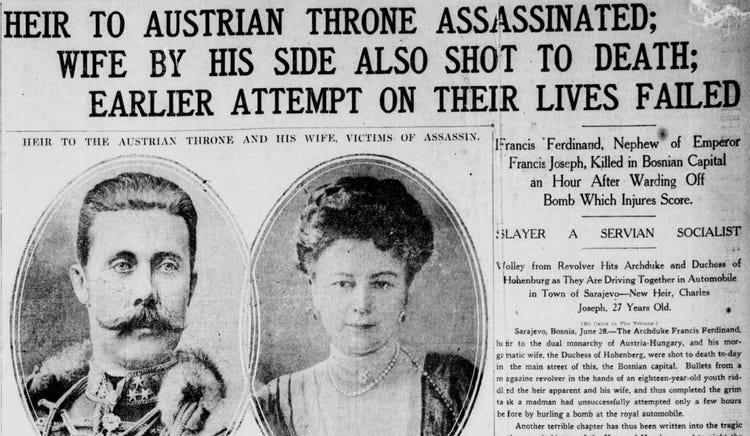
There once was the assassination of a Ferdinand, if you might remember. The Archduke Franz Ferdinand. We all know the spiralling conflicts and the great war that came after. The crises that ensued led to a war that reordered the balance across Europe and beyond. One act, and a sequence no one could fully contain. A historical juncture that changed the power configurations of the world.
Since then, there was, for a long time, a tacit understanding that assassinating another country’s leader was considered off limits, not out of restraint but out of calculation, the expectation of tit-for-tat escalation.
That restraint has weakened. The US and Israel increasingly act as if they are beyond this tacit consensus and have been using decapitation as a foreign policy tool for almost two decades now. The killing of Osama bin Laden, the US drone strike campaign against al-Qaeda leaders in Pakistan and elsewhere. Israel’s ‘targeted killing’ campaigns against Hamas, Hezbollah (I had written about the effects of Nasrallah’s killing by Israel on Hezbollah two years ago in this post) and Iran.
Since the 2003 Iraq war and the advancement of military technologies, the normative bar has wobbled and our understanding of what is permissible morally has been stretched thin by repetitive traumas and the exhaustion that comes from the unaccountability and impunity of belligerent men.
We have been watching a genocide, famine, massacres of children in part or in whole in Palestine. Would we be surprised and shocked, and question the legality and or the morality of the decapitation of Hamas, Hezbollah or Iranian leaders? We would not. We might not even flinch if one leader, I am not naming names, began speaking of sending another leader’s severed ear in an envelope to NATO. This is where we are. This is the mafiaisation of our daily political language.
But let me tell you this. Decapitation is not right, in most cases it is not legal and its outcome is rarely predictable.
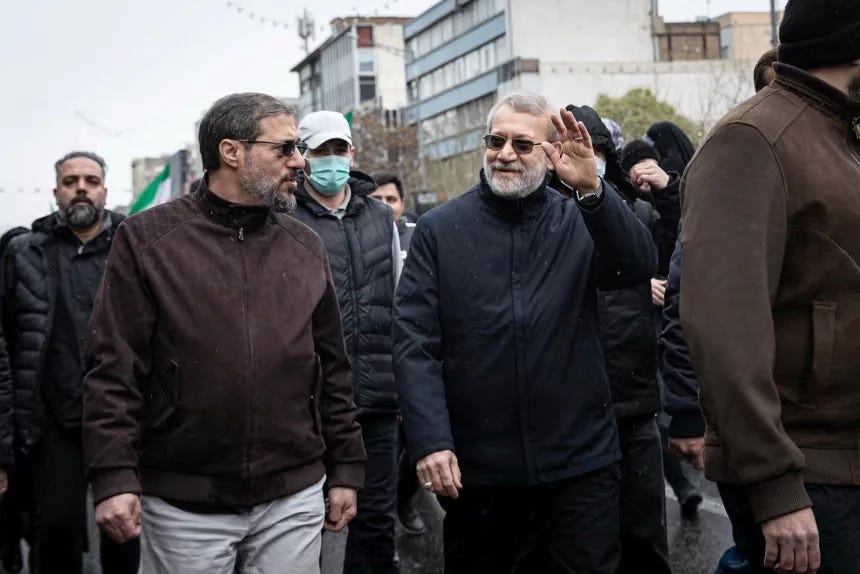
Israel stated on Monday that it had killed another senior regime figure, security chief Ali Larijani. A central figure within the Iranian political establishment, involved in the 2015 nuclear negotiations that led to the agreement between Iran and the United States. A committed ideologue of the regime, yet also a philosopher who worked on Kant and Descartes. He personally known to Western diplomats and might have reappeared as a negotiator if the war moved towards de-escalation. He was killed a few days after appearing in the streets of Tehran, surrounded by crowds, giving a live interview on state television about the resilience and moral superiority of Iranian people.
I believe neither the slain Supreme Leader Ali Khamenei nor Larijani were naïve enough to think that Israel would not target them. Experts believe that the reason they did not hide underground was partly because there was no end to hiding and, secondly, because martyrdom is part of the culture of the Iranian revolution. They must have believed that their death by Israeli drones would serve as a glue for the regime elements left behind.
The literature on decapitation as a useful strategy is mixed and the research usually focuses on non-state actors targeted as part of counterterrorism strategy. One study claims1 that decapitation is not an effective counterterrorism strategy and is frequently counterproductive. Its central claim is that a terrorist group’s resilience to decapitation is determined by two variables: bureaucratisation and communal support. Bureaucratised organisations have clear divisions of labour, established rules and routines, and diversified resource bases. These features make them far less dependent on any single leader, enabling smoother succession and continued functioning after a leadership strike. Older and larger groups tend to be more bureaucratised and are therefore harder to destabilise.
Communal support matters because it sustains recruitment, funding, covert operations, and ideological relevance. Religious and separatist groups tend to enjoy higher communal support than ideological ones, since their doctrines are reproducible independently of any particular leader. Heavy-handed counterterrorism tactics, including drone strikes that cause civilian casualties, can perversely increase this support.
In conclusion, decapitation may produce short-term disruption but risks counterproductive consequences: martyrdom effects, retaliatory attacks, recruitment surges, and the emergence of more radical successors.
Iranian state identity is rooted in the “Karbala paradigm”, a theological framework that reframes military defeat and death as a transcendent victory (shahid). This makes traditional deterrence difficult, as escalation often leads to deeper entrenchment rather than submission.
The Shia understanding of martyrdom rests on the seventh-century struggles at the heart of early Islam, above all the deaths of Ali and his son Husayn. Ali, the Prophet Muhammad’s cousin and son-in-law, is regarded by Shia Muslims as the rightful first imam, whose rule was cut short by assassination. Husayn, his son, was killed in 680 at Karbala after refusing to pledge allegiance to the Umayyad caliph Yazid, a ruler widely seen in Shia tradition as embodying unjust and illegitimate power. It is this confrontation, between Husayn’s small band and Yazid’s forces, that becomes the moral template: resistance against tyranny even in the face of certain defeat. Ayatollah Khomeini reworked this narrative into a modern political language, casting the Shah as a contemporary Yazid and embedding revolt within the obligations of belief. The premise was stark. Faced with despotism, the faithful must be prepared to rise and, if necessary, to die, regardless of the odds. During the Iran–Iraq War, this moved from idiom to institution through the Basij, where teenage volunteers such as Mohammad Hossein Fahmideh were elevated into icons of sacrifice. From the outside, particularly within Western realist frameworks, this logic is often misread. Deterrence assumes a shared fear of loss. Here, loss can be recoded as transcendence, death as passage rather than defeat. To provoke a state shaped by this tradition is to risk reactivating a machinery of martyrdom capable of absorbing devastation and outlasting internal strain.
In a similar vein, continued decapitations may remove individuals but risk creating “nuclear warlords” seizing dispersed assets and the creation of a “jihadist highway” for groups like ISIS-K.
Another study2 asks a prior and somewhat neglected question: how do states actually decide to assassinate in the first place? The article ranges across five centuries of foreign policy assassination, from Venetian statecraft to the Obama drone programme.
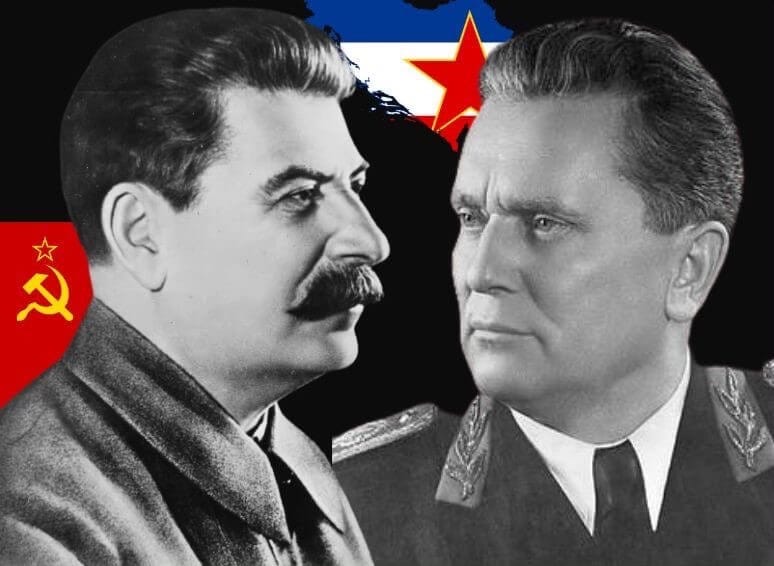
The first and most common logic behind the decision of assassination is driven by the assumption that a replacement would be more compliant. One of the clearest instances occurred between 1948 and 1953, when Joseph Stalin repeatedly plotted to assassinate Josip Broz Tito, convinced that Yugoslavia would then be led by officials more amenable to Moscow.3 More broadly, this reflects a strategy of targeting a rival state’s elite in the belief that their successors, once in power, would pursue policies aligned against their own government’s interests and in favour of the intervening state. In the end, decisions to pursue assassination are often driven by a largely unsubstantiated belief that no successor could be worse than the current figure, and that whoever follows might well prove better.4
Really? Are we sure that the successor would be more preferable? Why, for how long and by whose standards?
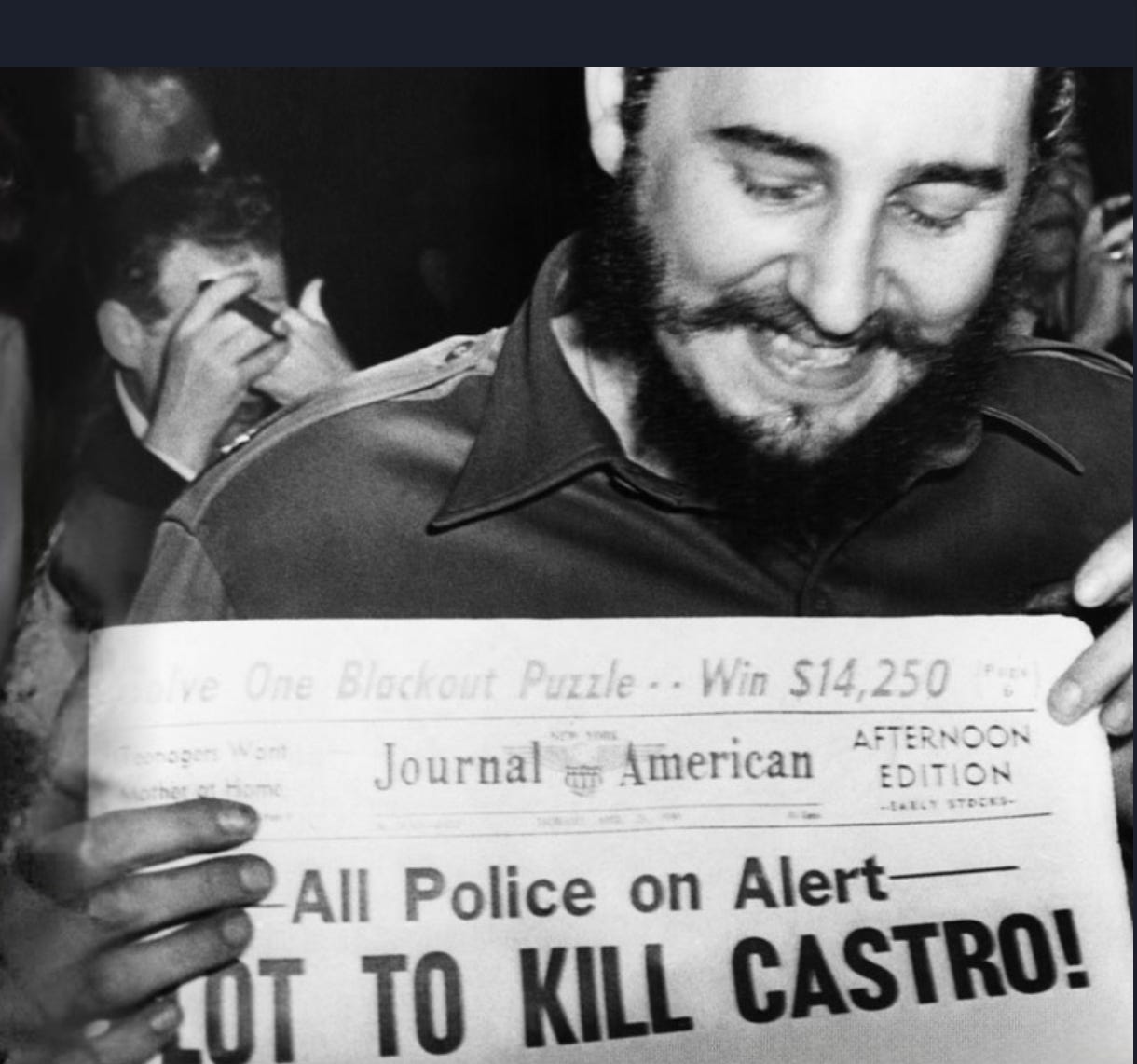
Because assassination violates widely held norms, deliberations are confined to very small circles, which excludes relevant expertise and prevents rigorous analysis of consequences. The CIA’s Fidel Castro plots went forward for years without the analytical directorate being informed. The consequences of killing him were assessed twice in formal reports that the plotters never read. Second, cognitive bias: leaders facing difficult value trade-offs tend to simplify problems so that the need for choice appears to disappear. They persuade themselves that killing a leader will simultaneously deter terrorism, weaken the enemy organisation, and strengthen the peace process. They also systematically personalise adversary states, attributing hostile foreign policy entirely to the individual in power rather than to institutional or structural forces. This leads to persistent overestimation of what assassination can accomplish.
The resulting default logic is the “no one could be worse, anyone might be better” assumption, which allows decision-makers to proceed without seriously analysing the successor’s likely identity or orientation. The Dominican Republic, Libya, and the attempts on Saddam Hussein all illustrate this pattern.
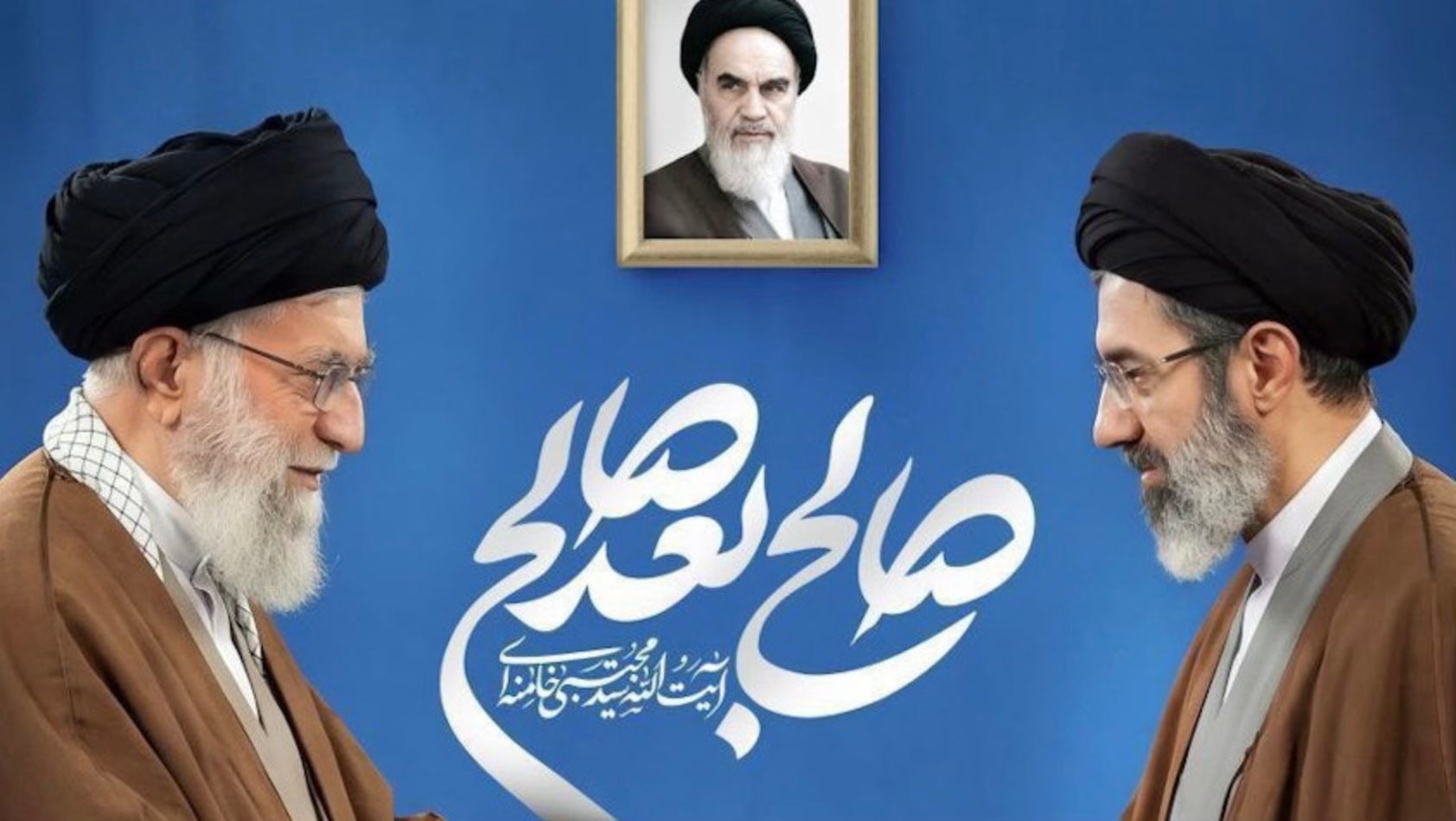
Think about someone whose father and mother have been killed by a force ingrained in their head and identity as the ultimate tyrant. Would that person be “better” than his father? He might be, but better for whom and in what sense? These are the questions that now surround Mojtaba Khamenei, Iran’s new Supreme Leader, reportedly wounded in the same attack.
The bin Laden raid is treated as the best-conducted case in the historical record, precisely because it avoided the most common analytical trap. Policymakers made no assumptions about al-Qaeda’s future leadership or whether a successor would be more moderate. The goal was elimination for past deeds and emotional closure after September 11, which reduced the cognitive complexity of the decision. The process was also unusually inclusive, with a wide range of senior officials present at the final deliberation.
The drone campaign, by contrast, represents a different and more troubling trajectory. Drone strikes are structurally attractive to decision-makers because they are cheap, deniable, and carry lower domestic political risk than invasion. Over time, the CIA and JSOC developed separate kill lists with different criteria and minimal coordination. The paper argues that the underlying analytical problems, especially the unresolved question of whether leadership targeting actually works, have never been seriously engaged by the officials ordering the strikes.
In the end, the practice persists without a clear evidentiary basis, while its strategic and political costs remain insufficiently scrutinised. What is more troubling is how routine it has become.
Jenna Jordan, “Attacking the Leader, Missing the Mark: Why Terrorist Groups Survive Decapitation Strikes,” International Security 38, no. 4 (Spring 2014): 7–38.
Warner R. Schilling and Jonathan L. Schilling, “Decision Making in Using Assassinations in International Relations,” Political Science Quarterly 131, no. 3 (Fall 2016): 503–39.
Ibid, 507.
Ibid, 505.