

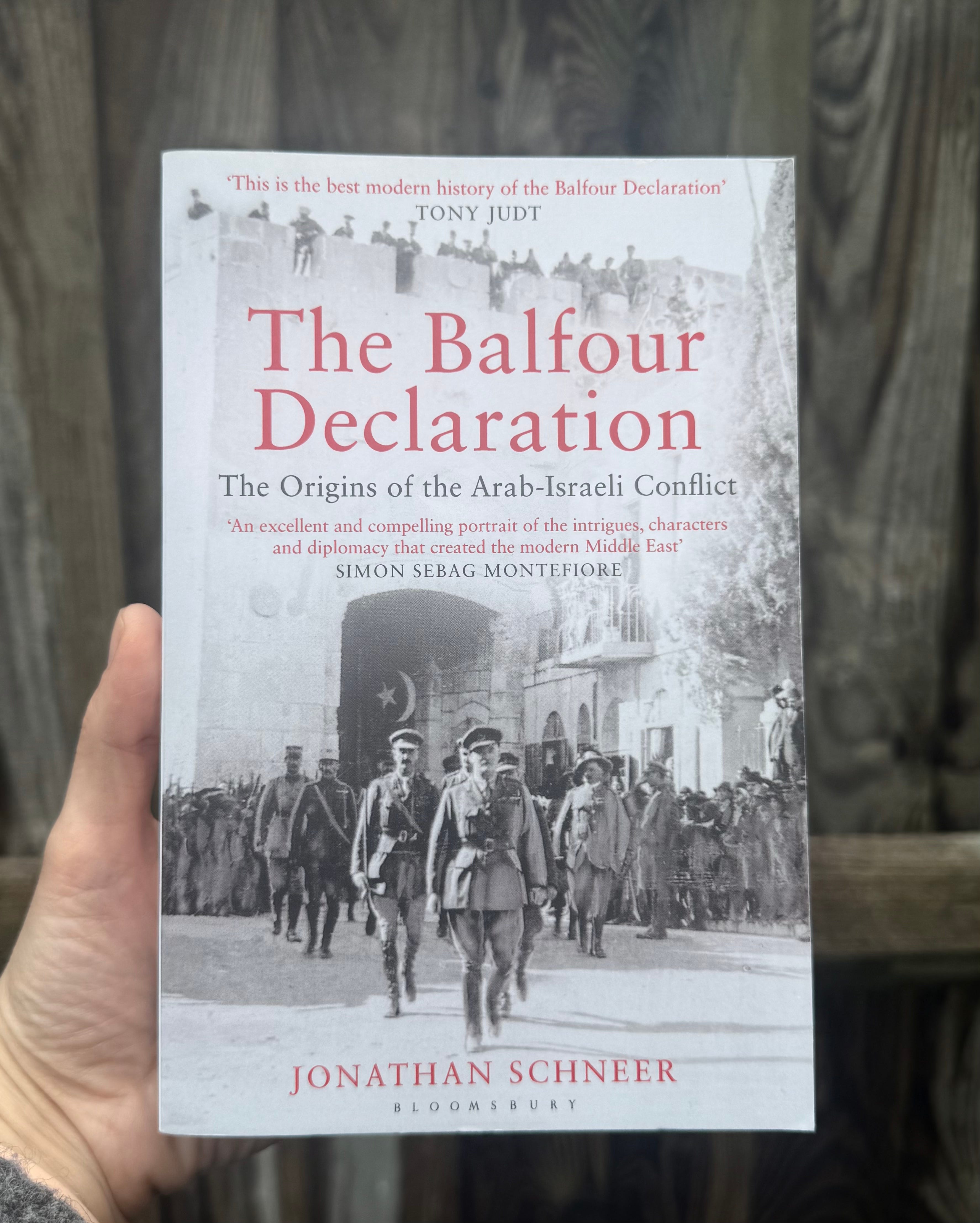
The Balfour Declaration was drafted in the glow of wartime idealism and the shadow of imperial ambition. In 1917 Britain promised support for a Jewish “national home” in Palestine, imagining it as both an act of justice and a stroke of strategy. Yet the lone Jewish member of the Cabinet, Edwin Samuel Montagu, opposed it with fierce clarity, warning that Zionism would endanger Jews rather than redeem them. His dissent, soon drowned out by triumphal politics, reveals how the language of sympathy can conceal hierarchy and how the moral debts of Europe, left unpaid, still shape the politics of the present. In a previous post, I had promised to return to the Balfour Declaration in greater depth, and I now turn to one of the most meticulous accounts of its making and aftermath, The Balfour Declaration by historian Jonathan Schneer.
In November 1917, as the First World War ground thr…
