

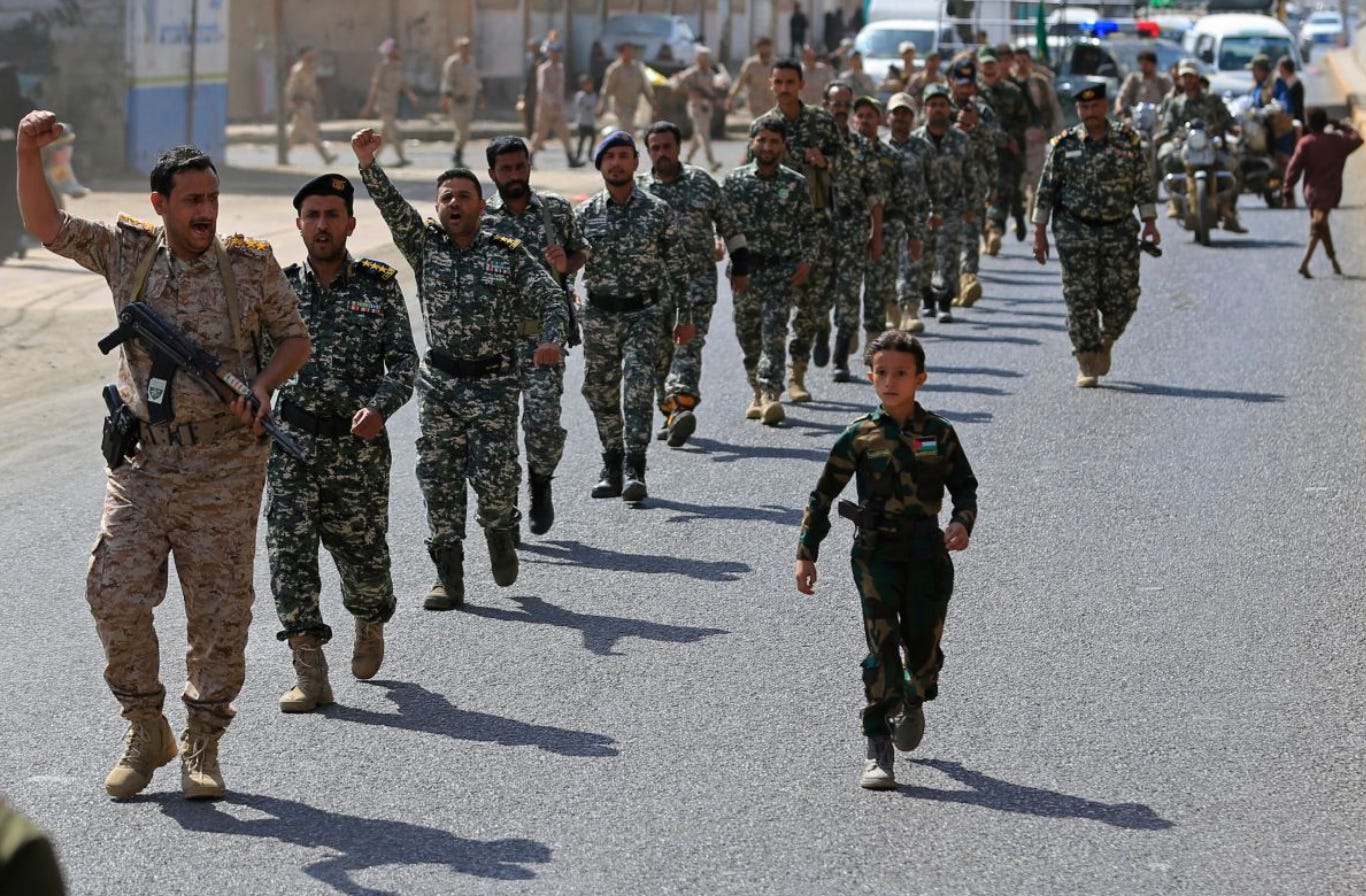
On 7 August 2026, Turkish President Recep Tayyip Erdoğan, Saudi Crown Prince Mohammed bin Salman and Pakistani Prime Minister Shehbaz Sharif signed what they called the Mecca Joint Defence Agreement. The ceremony was accompanied by the customary declarations of brotherhood, solidarity and regional security. The three countries announced that an armed attack against one would be regarded as an attack against all. The agreement was widely described as a Middle Eastern equivalent of NATO’s Article 5.
On Tuesday the Erdoğan government sent the Mecca Defence Pact to the Turkish parliament for ratification. On the same day Ragıp Soylu of Middle East Eye, the London-based news site that has broken most of the stories about this alliance, published the full text. I mean the English translation.
The document contains 16 articles, establishing obligations that extend well beyond diplomatic solidarity. Quite extensive, I should say.
They cover collective defence, military cooperation, intelligence sharing, logistical assistance, joint operations and defence-industrial integration. A permanent secretariat will be headquartered in Saudi Arabia. A new Strategic Political and Defence Committee will bring together the foreign ministers, defence ministers and chiefs of general staff of the three countries. But here is the deal: the agreement is intended to remain in force indefinitely, and no signatory can withdraw during its first ten years.
Aha! We didn’t know any of this, right?
Why did the public learn these details only now?
One possible explanation is that the governments wanted to avoid awkward questions before the agreement reached the ratification stage. For Turkey, those questions are particularly consequential. It is one thing for Erdoğan to announce a strategic partnership with two important Muslim-majority countries. It is quite another to explain to Turkish citizens why their armed forces might be required to defend Saudi Arabia against the missiles and drones of Yemen’s Houthi movement.
Through September, the Houthis fired missiles and drones at Saudi oil installations and airports. Their targets included the East-West pipeline, which carries close to 4% of the world’s oil supply, and King Khalid International Airport in Riyadh.
On 5 October the pact’s new Strategic Political and Defence Committee met in emergency session in Riyadh and ‘Turkey, Pakistan and Saudi Arabia have agreed to activate “deterrence measures” under a mutual defence pact and rapidly deploy forces to the Gulf kingdom to counter attacks by Yemen’s Houthis.’ I’m sorry, what?!
So the alliance was invoked, and Turkish soldiers were being readied for defending Saudi Arabia, before a single Turkish member of parliament had read what Turkey had signed. Turkish has a phrase for this, borrowed from the circumcision ceremony. The cut is made quickly, before the boy can feel the pain and resist, and the grown-ups chorus oldubitti maşallah. Literally means “it happened, it’s done, God bless.” I feel like the Mecca Pact is handed to the Turkish public the same way, in this oldubitti, fait accompli manner, with the cost still to come.
The Erdoğan regime’s account of the delay is only half convincing. Treaties do enter the public record when they are submitted for ratification. However, that does not explain why the executive made operational commitments under a treaty whose terms nobody outside it could check. It also sits awkwardly beside the agreement this pact absorbs. The bilateral defence pact Saudi Arabia and Pakistan signed in September 2025. Which also has never been published. It looks like secrecy is part of this alliance’s habit.
Does the Mecca Pact cover Houthis?
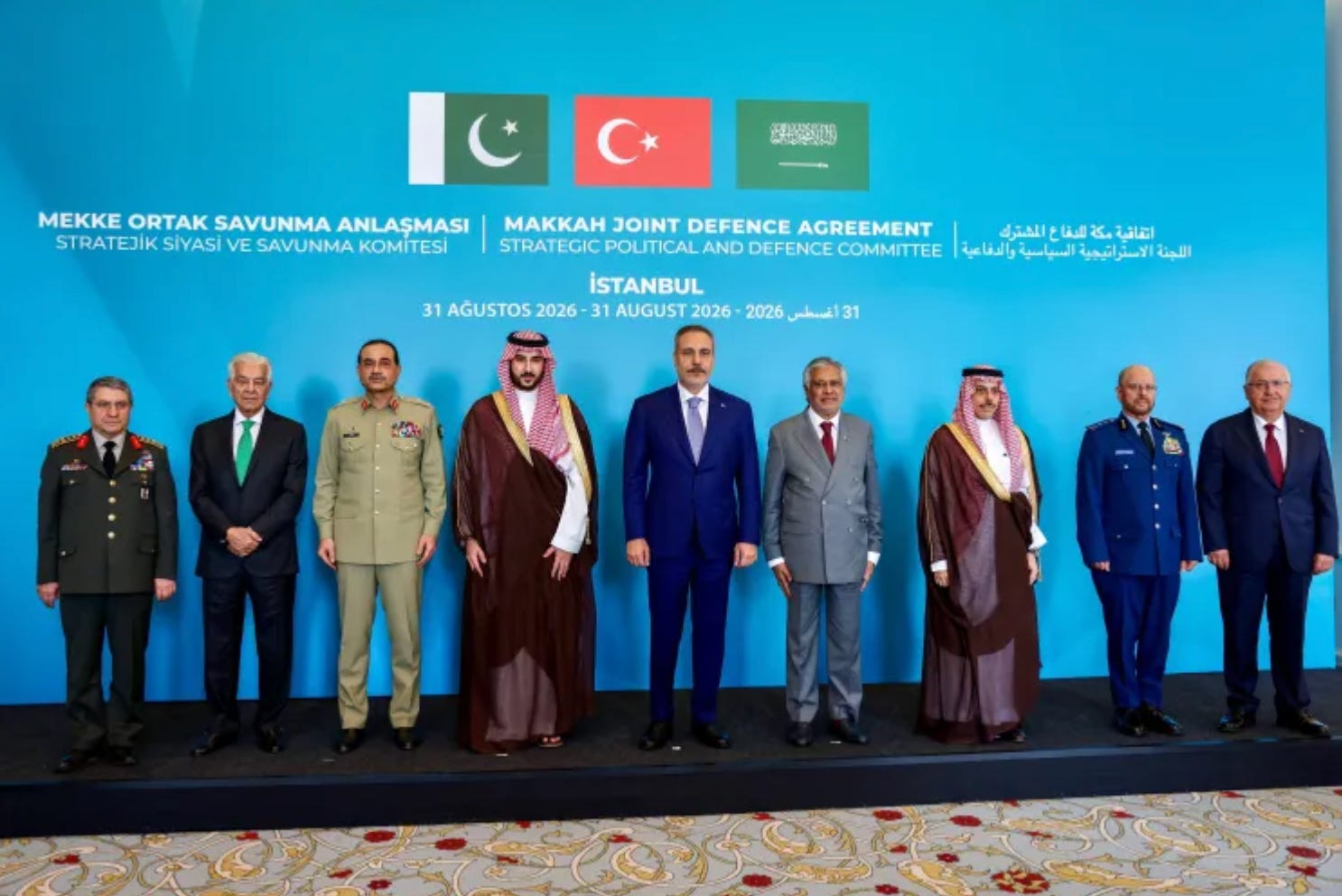
Now let’s look at the details of the pact.
It is said that the Mecca Pact is modelled on the North Atlantic Treaty, and yes, its Article 2 closely echoes NATO’s Article 5 by treating an armed attack on one member as an attack on all.
The differences are where the Houthi question lives.
NATO lets each ally take “such action as it deems necessary,” so help can arrive as fighter jets or as a statement of sympathy. The Mecca text promises to assist “immediately,” then makes the scope of that help depend on an “objective assessment” without saying who will make it. NATO’s guarantee also stops at a map of Europe and North America. The Mecca pact draws no map, so its promise extends to Saudi Arabia’s border with Yemen and Pakistan’s with India.
Aha! That would bring Turkey into quagmires beyond its national imagination.
The sharpest difference is Article 1. NATO obliges allies only to consult when one of them feels threatened. The Mecca pact obliges them to use “all necessary means” to eliminate any threat to a member’s territory or borders. That is the phrase the UN Security Council uses when it authorises force.
It also lowers the trigger from an attack that has happened to a danger a government perceives, and on any Saudi reading, a Houthi launch site in northern Yemen is such a danger. The Houthis are not a state, but the treaty covers any “externally originating” attack. Its counter-terrorism clause offers a second route as well, because Saudi Arabia has listed the Houthis as a terrorist organisation since 2014. Hakan Fidan, Turkey’s MFA, insists this is “not an attack agreement.” Reading the text, I must agree. This is more than “an attack agreement.”
If we compare the Mecca Pact with NATO’s Article 5, the resemblance is unmistakable. Yet the differences matter. The North Atlantic Treaty obliges members to assist an ally under armed attack while allowing each government to take whatever action it considers necessary. The Mecca Pact similarly leaves the scope and nature of assistance to an assessment of need and available resources, but its wording on eliminating threats and providing immediate assistance is more assertive.
Surely, this does not mean that Turkey has promised automatically to send soldiers to Saudi Arabia, or that Pakistan will necessarily enter a war on Riyadh’s behalf. And true that the treaty leaves room for governments to determine how they fulfil their commitments. Military equipment, intelligence, logistical assistance, and air-defence support could all count as assistance without deploying combat troops. So, in the end, it will come down to politics.
But politics is sinister in patrimonial and corrupt settings. It means whatever keeps the ruler in place. In such regimes in which the state is treated as one man’s personal property, foreign policy is shaped less by national interest than by his survival. Erdoğan in one case and Sisi in the other. In Pakistan, the same logic applies to the army and its chief, Field Marshal Munir.
Saudi Arabia is a country that is being hit, week after week, by an armed movement across its southern border. The question is therefore immediate: When the next Houthi missile lands in Saudi Arabia, what does Turkey do? Or how long can Turkey and Pakistan afford not doing much?
I can say that the opposition in Turkey is against this pact, as are many high-level bureaucrats and diplomats. But Turkey is run as a one-man show, according to what that one man sees as the benefits. To himself and his family.
One more thing: Article 92 of the Turkish constitution exempts deployments that a treaty requires from a separate parliamentary vote. Once the pact is ratified, a government could argue that sending troops to Saudi Arabia needs no further motion. The AKP is now preparing a separate parliamentary mandate to authorise the deployment of Turkish military personnel to Saudi Arabia once the pact is ratified. For now, then, the government appears to be following the route of parliamentary authorisation.
Of course, the Turkish parliament stopped being a real check on Erdoğan some time ago, and the AKP-MHP majority passes whatever it is asked to pass. Still, the vote matters. At least, it forces ministers to bring the deployment to the chamber, set out its scope in writing and hear the opposition say no on the record.
So rich, yet so vulnerable! Why?
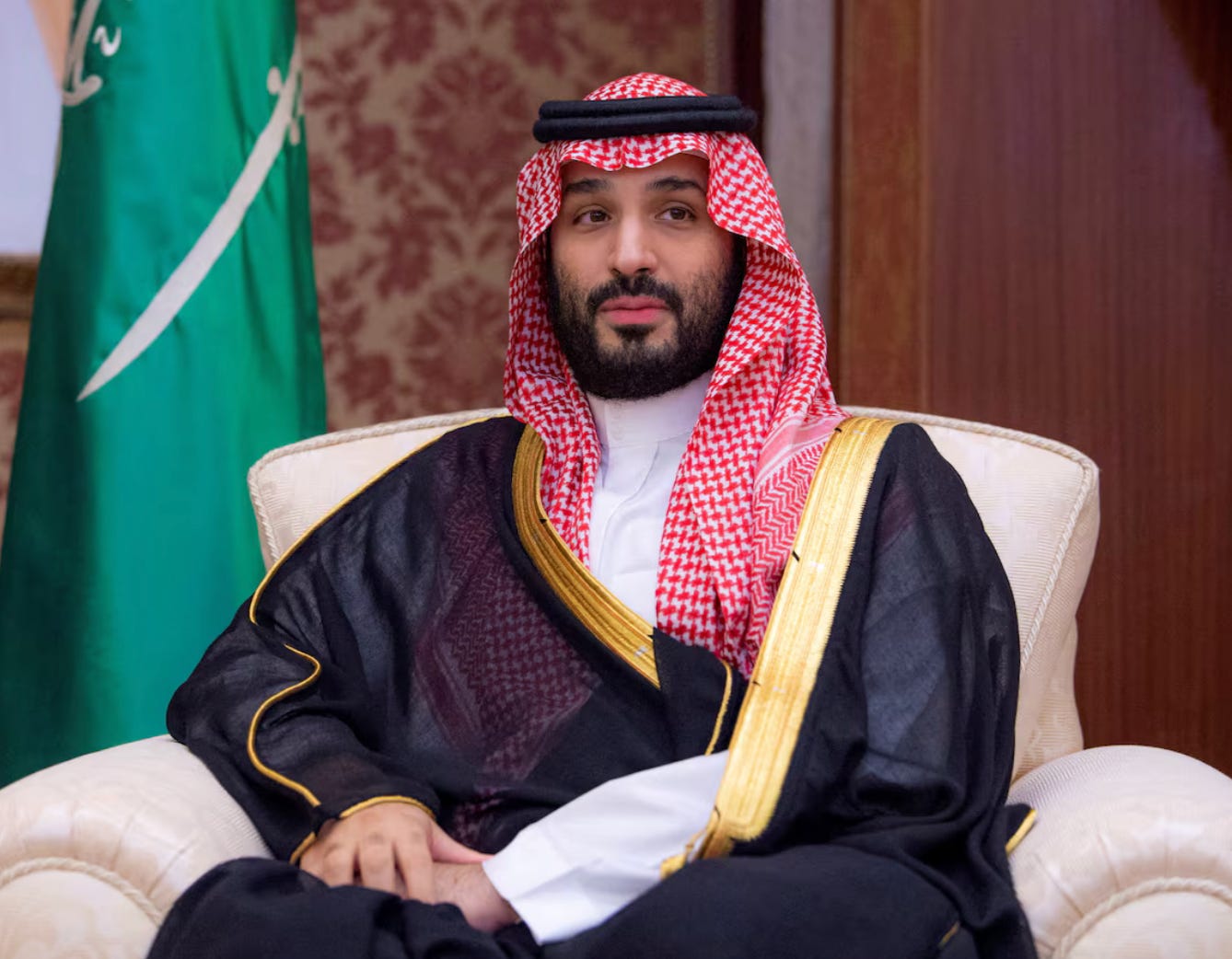
In March 2015, Saudi Arabia launched its military intervention in Yemen, leading a coalition intended to defeat the Houthis, who had seized Sanaa the previous September, and restore the internationally recognised government. Eleven years later, the Houthis remain entrenched in northern Yemen, armed with increasingly sophisticated ballistic missiles and drones capable of reaching deep into Saudi territory. The Saudi-led campaign devastated Yemen without achieving its principal military objective. Following the collapse of the de-escalation that began with the UN-brokered 2022 truce, hostilities intensified again in July 2026. On 10 October, a Houthi missile attack on Riyadh’s international airport killed thirteen people and injured hundreds.
Now the ultimate question: how can one of the wealthiest countries in the Middle East, equipped with some of the world’s most expensive American weaponry, remain so vulnerable to an armed movement operating from one of its poorest neighbours?
As Bernard Haykel, professor of Near Eastern Studies at Princeton University, explained in an interview with Fareed Zakaria on 18 October, Saudi Arabia’s military weaknesses are partly the product of deliberate political choices made decades ago. During the 1950s and 1960s, when military coups were sweeping across the Arab world, the Saudi monarchy pursued what political scientists call coup-proofing. Yani, deliberately fragmenting the armed forces, dividing command structures and creating competing security institutions to prevent any single military organisation or commander from accumulating sufficient power to overthrow the regime. Hafez and Bashar al-Assad were masters of this.
This helped protect the Saudi king, but at the expense of military coordination, institutional cohesion and meritocracy. Different branches of the Saudi security establishment subsequently developed separate procurement systems and chains of command under different princes. MBS has attempted to reform this inheritance, but, as Haykel argues, the institutional culture remains deeply entrenched. Moreover, the Saudi military was principally designed to confront conventional armies, rather than an insurgent movement skilled in asymmetric warfare.
The Houthis, meanwhile, have become disciplined and battle-hardened through more than a decade of war. Haykel also identifies a deeper ideological and historical antagonism. The movement presents Saudi Arabia as an instrument of Western imperialism and draws on longstanding Yemeni resentment of its wealthy neighbour, sharpened by an enormous economic disparity. According to Haykel, the Houthis challenge Saudi sovereignty itself, laying claim to its southern provinces and even to Mecca and Medina.
The prospects of accommodation are consequently limited. Haykel argues that paying off the Houthis might buy Riyadh temporary respite, but risks inviting further demands. Nor does he believe the movement can be decisively defeated militarily. Saudi forces may push the Houthis back from recently conquered territories, but their complete defeat is improbable.
This explains the apparent contradiction in Riyadh’s regional strategy. Saudi Arabia is seeking diplomatic de-escalation with Iran while prosecuting its military campaign against the Houthis. As Haykel observes, the kingdom regards Iran as capable of inflicting considerably greater damage, while believing that it still has room to confront the Houthis militarily.
Saudi Arabia’s disappointment with Washington adds another layer. The United States remains indispensable to Saudi security, but its own military resources, including ballistic missile interceptors, are stretched, while domestic political considerations constrain direct intervention. Haykel nevertheless dismisses the prospect of Saudi Arabia replacing the United States with China. The kingdom’s military training, technological development and elite networks remain deeply embedded in the American system.
This is where Turkey, Pakistan and Egypt enter the picture. Saudi Arabia needs additional military capabilities and partners willing to share the burden of protecting its territory. Turkey offers a developed defence industry, particularly in drones and other military technologies; Pakistan brings substantial military experience and a longstanding security relationship with the kingdom; and Egypt, with its armed forces and geographical position overlooking the Red Sea, has its own reasons to prevent further regional destabilisation.
Yet none of these countries necessarily shares Saudi Arabia’s appetite for another prolonged confrontation in Yemen. Whether their support remains confined to air defence, equipment, intelligence and logistical assistance, or develops into direct military involvement, will depend on the obligations they have accepted and their willingness to act upon them.
Remember “Egypt’s Vietnam”
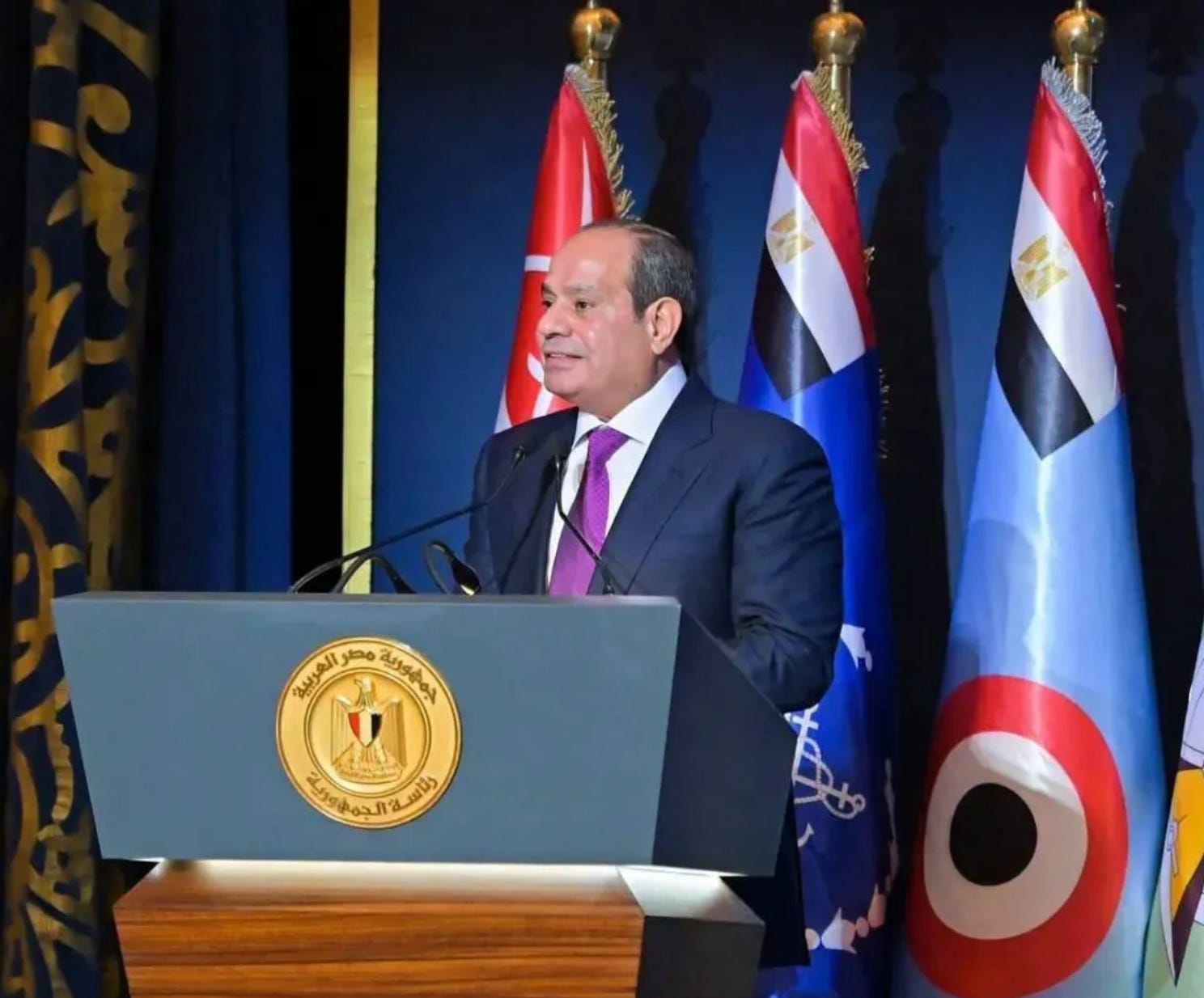
Recently, Egypt has also entered the picture. Why it stayed out of the Mecca Pact in the first place has never been officially explained. According to Turkish sources quoted by Middle East Eye, the Turkish government formally proposed Egyptian membership, but Cairo was unwilling to choose between a bloc of Turkey, Saudi Arabia and Pakistan and a looser one of Israel, the UAE and India. Riyadh, in turn, came to see Egypt as somewhat unreliable.
On 17 October, President Sisi pledged to protect the kingdom “in accordance with the directives” of King Salman and Crown Prince Mohammed bin Salman, and the next day Egypt’s National Defence Council, which he chairs, endorsed providing military assistance.
But Egypt’s constitution requires a two-thirds majority in parliament before troops can be sent on a combat mission abroad, and parliament hesitated. The Egyptian Social Democratic Party told its MPs to abstain because they had been given nothing on the mission’s objectives, scope, duration, cost or risks to Egyptian troops. The vote has been postponed to 26 October. In a chamber Sisi largely controls, this is interesting!
This may be due to the memory of Yemen in the Egyptian psyche. You know, Yemen is sometimes called Egypt’s Vietnam.
Between 1962 and 1967, President Gamal Abdel Nasser sent Egyptian troops to Yemen to support republican forces against the Zaydi royalists (supporters of the deposed imam, whose Zaydi Shia dynasty had ruled North Yemen), who were backed by Saudi Arabia.
What began as a limited intervention developed into a ruinous military commitment involving some 70,000 Egyptian soldiers at its peak and more than 10,000 deaths. No wonder the Yemen experience left a lasting imprint on Egypt’s military establishment. When Saudi Arabia assembled its coalition against the Houthis in 2015, Egypt contributed naval and air forces but avoided deploying ground troops.
Today, Sisi faces a difficult calculation. Saudi Arabia and the United Arab Emirates have been indispensable financial backers of his government since the 2013 coup against the Muslim Brotherhood government. On top of that, Houthi attacks on Red Sea shipping have severely reduced Egypt’s Suez Canal revenues. A Saudi deposit of $5.3 billion at Egypt’s central bank falls due this month. So money pulls Egypt into this conflict and alliance because Sisi can scarcely afford to alienate Saudi Arabia. Yet there are compelling historical reasons to avoid another ground war in Yemen.