

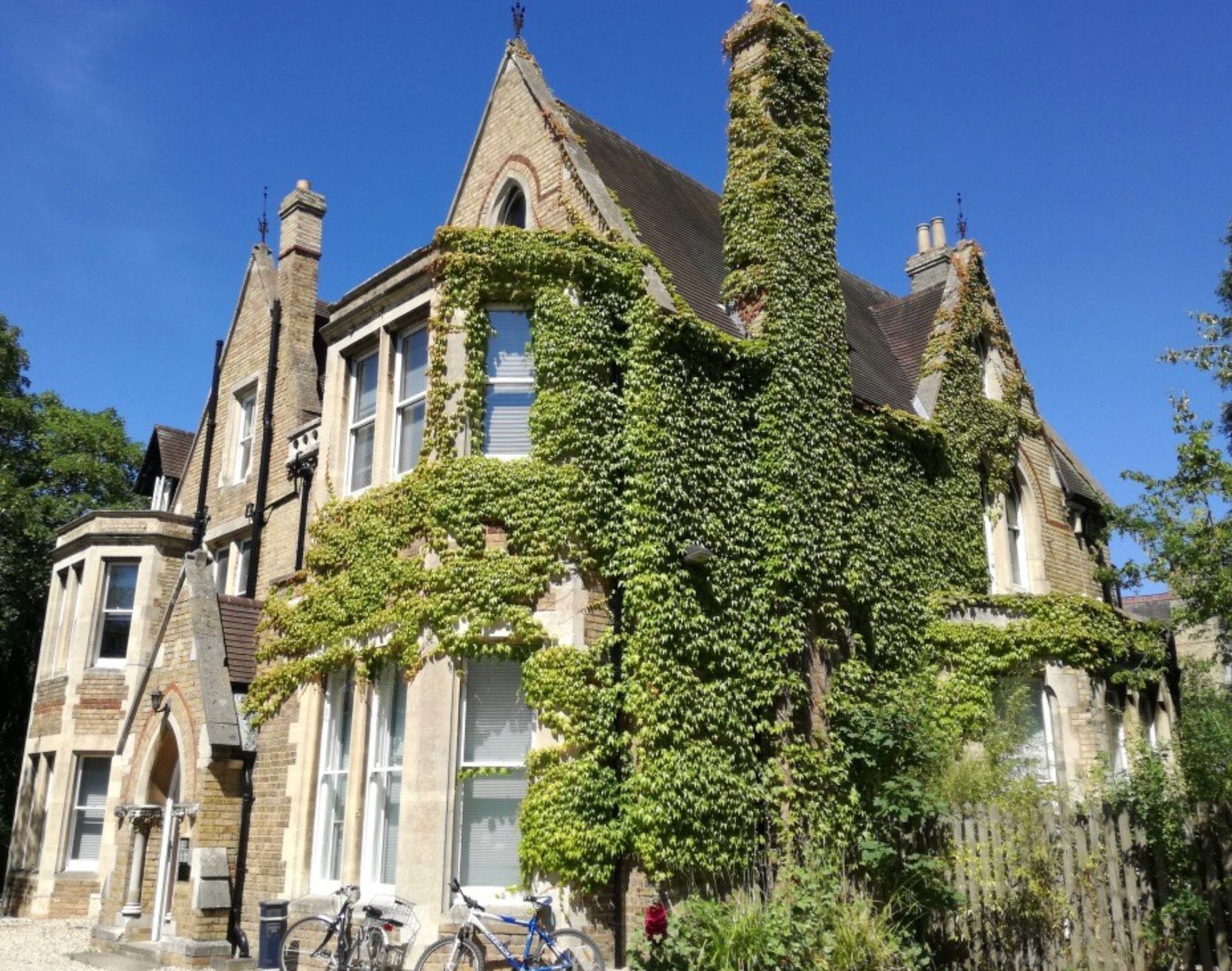
Last week at St Antony’s College, Oxford, we celebrated the 50th anniversary of the European Studies Centre (ESC) with half a day of panels and a stellar line-up of speakers, one panel of writers who write about Europe and a second of intellectuals who think about it and work on it. The mood, I would say, was one of measured foreboding. Almost everyone was bracing for a hell of a 2027.
The long 2027, they called it, with several elections ahead at the heart of Europe. As you've probably guessed, everyone expected far-right parties across Europe to come first. Even the Democrats’ sweep of both houses of Congress in the American midterms did not instil much optimism, since Trump is predicted to be the most dangerous lame-duck president ever.
Dangerous strongmen abound in Europe and on its edges as well. As I write this column, one of the last news channels in Turkey not run by a government-aligned business or a kayyım (state custodian) has been raided and confiscated. All of a sudden, the said news channel reinvented itself as a nature-loving pensioner in search of new hobbies! It started airing documentaries about trees and animals, and its website filled up with food recipes and DIY ideas. What an unravelling! A day earlier, though, it was airing heated debates of journalists and opposition figures trying to explain the bewildering extent of the corruption scandal involving investment funds. No more.
Most people expect things to get worse, with more opposition figures imprisoned and probably the YouTube channels shut down too, which millions now watch because they are the only remaining sources of news not manufactured by the government. Last week, as you may remember, I wrote about my friend Ahmet Şık, the journalist turned opposition MP, whose wife was targeted because his parliamentary immunity protects him. He had been relentlessly asking about the involvement of AKP figures in the fund scandal. His wife, Yonca, was released after hours of questioning over an allegation of espionage apparently arising from her longstanding work for a German political foundation.
Going after an opposition MP’s wife marked, I believe, another threshold in the regime’s intimidation of its opponents. Another line was crossed, which introduced a more intimate, visceral kind of fear in all of us. So, believe me, wallahi there is no stopping the regime in Turkey until it feels safe enough to call a snap election and re-elect Erdoğan for another term. Under the constitution, he can only stand again if parliament calls an early election, and in that election Erdoğan will choose his own “opponent.” A non-election election, as one of my dear friends put it.
‘Non-election elections’ happen in places like Belarus, Turkey and Russia. It may be that the rest of Europe is not in the same predicament - yet. Beset by the far right at home and by Russia at its door, it is not in a much better place.
Europe as a place of movement
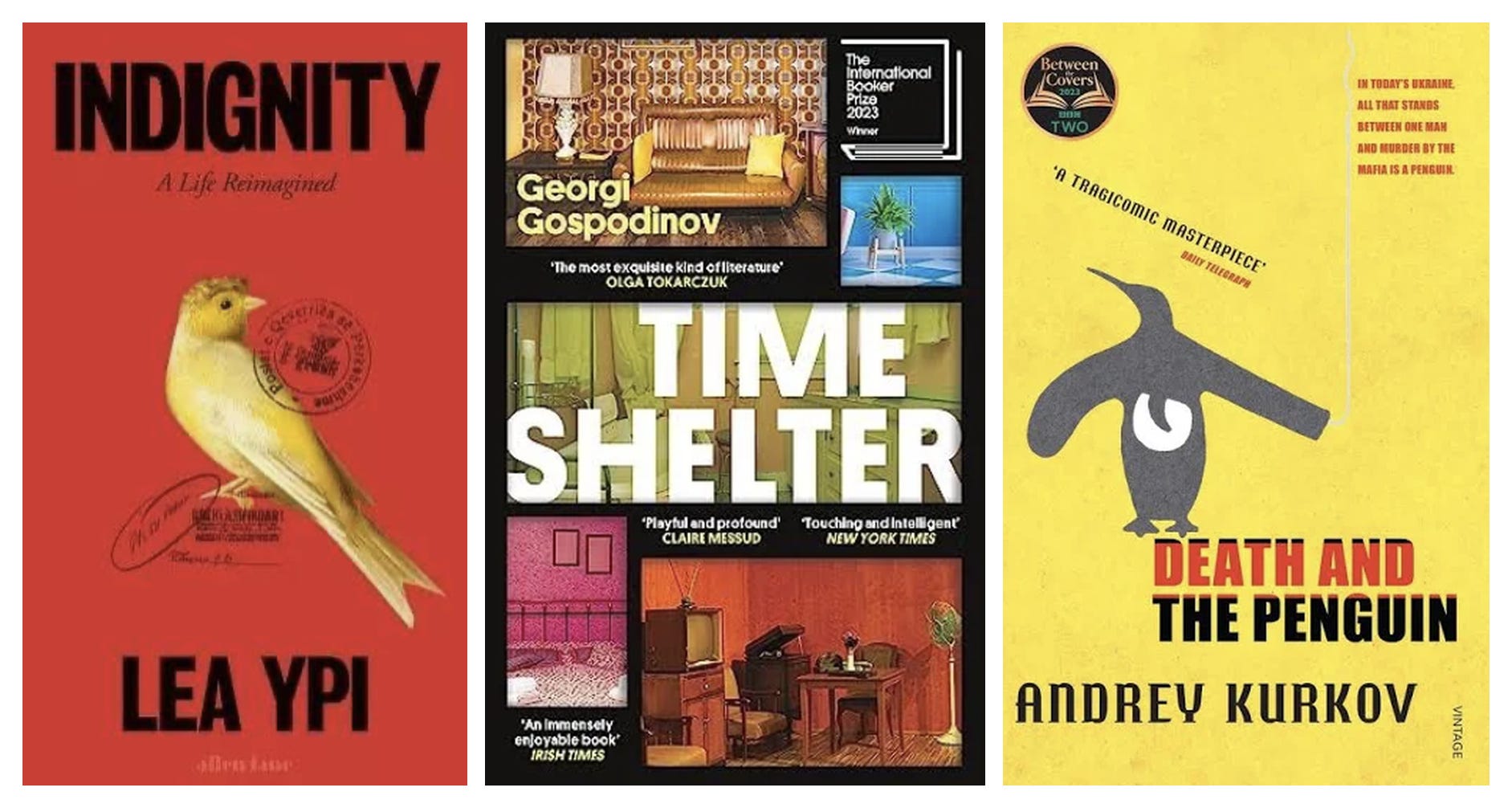
The first panel at the ESC brought together three writers who approached the idea of Europe from its eastern edge. Andrey Kurkov, the Ukrainian novelist best known for Death and the Penguin, recalled that the Soviet Union taught him to think of everything beyond its borders simply as “the West.” Ukrainians learnt what Europe actually was from the migrant workers who came home describing countries where the law applied. His own first glimpse came in 1980, on a trip to Poland arranged by an acquaintance who posed as his aunt. Poland was the ultimate “abroad” for Kurkov then.
Georgi Gospodinov, the Bulgarian writer whose novel Time Shelter won the International Booker Prize in 2023, described a Europe reached through the radio dial and through family stories. Everyone loved Europe precisely because nobody could go there. Both Gospodinov and Kurkov described Europe as a place of movement, somewhere one aspired to travel to, from places where movement of any kind seemed suspicious.
The third speaker was Lea Ypi, one of the most perceptive thinkers of our time and the Albanian political theorist at the LSE. Her memoir Free, which became a bestseller, tells of growing up in Durrës as communism collapsed. Her recent work of narrative non-fiction, Indignity, goes back a generation, reconstructing her grandmother’s life from a 1941 honeymoon photograph and the files of Albania’s communist secret police. At the panel, she also talked about a movement that does not go anywhere, a circular non-movement movement. She remembered the evening giro, when the whole town walked the same streets in its best clothes, round and round. Accession to the EU, she suggested, feels much the same. The candidates walk the circuit, Brussels talks about their homework in a tone she found patronising, and nobody marks the decay of institutions inside the member states themselves.
The second half of their conversation moved from longing to warning. Gospodinov said that a person’s time cannot run backwards but a country’s political time can. The collective nostalgia that politicians manufacture, and then mobilise, for a past with the censorship and the queues edited out, is the surest route back to authoritarian rule. It is the premise of Time Shelter, in which European nations hold referendums to choose the decade they want to return to. Ypi spoke about the young and their movement towards the future. She said they are tired of emigrating to find the rules and institutions Europe promised. They want them built at home. Kurkov reminded us that Ukraine is now fighting for its future while the rest of Europe is weighed down by its past. The consensus was that falling trust among Europeans is already bringing back the internal border checks that free movement was supposed to abolish.
The second panel was chaired by the historian Timothy Garton Ash, a former director of the Centre, and was gloomier in its forecasts. Alongside him sat Sylvie Kauffmann of Le Monde, the Bulgarian political scientist Ivan Krastev, the Italian political scientist Nathalie Tocci, who advised two EU foreign policy chiefs, and Frank Trentmann, a historian of modern Germany at Birkbeck. Krastev expects populist parties to win the coming elections and to govern in fragile, transactional coalitions in which small radical partners pull the larger ones further out. Governments will hedge nationally rather than trust collective European arrangements, he argued. Moscow, he added, reads the possibility of the EU breaking up through the memory of the Soviet collapse in 1991 and would like to hurry it along. Tocci argued that Giorgia Meloni’s moderation in Rome owed much to the centrist governments around her in Europe, a restraint that weakens as those governments move right. She also argued that the old trust between Europe and the United States will not return whoever wins in Washington in 2028.
Until it was possible
The European Studies Centre, now directed by Paul Betts, a historian of modern Germany, had every reason to celebrate its fifty years. At St Antony’s last week, though, it seemed that the only thing worth celebrating was the Centre itself. There was not much about the current state of Europe or a self-disintegrating European Union to be cheerful about. That is why Lea Ypi decided to remind us that hope is a moral duty.
And one of us, Mehmet Karlı, an international law scholar, issued a call to action. Public intellectuals, he said, have a moral responsibility to offer a dream for Europe and for democracy instead of retreating into the comfort of pessimistic analysis. He suggested that part of their reluctance comes from postmodern suspicion of grand narratives. Yet the young need exactly such a narrative, a dream they would strive to realise and that would give them the strength to resist the obstacles in their way.
The panel answered in different keys. Garton Ash expressed a (small-c) conservative dream of a Europe that keeps, repairs and reforms what its citizens already value. Tocci’s dream was a wider Europe that pools its power over finance, technology, defence and energy, because the slow, incremental method was designed for a gentler world. But incrementalism now risks hollowing out the European project. Le Monde’s Sylvie Kauffmann insisted that it is not too late, that Europe is already adapting, and held out Ukraine’s eventual membership as the hopeful prospect. Ivan Krastev asked whether anyone can still offer a credible dream for Europe without a dream for the world, now that the universalism Europe once claimed for itself has worn so thin.
History is helpful here. As Ivan Krastev and Timothy Garton Ash said, only a few months before the Berlin Wall fell, or before the velvet revolutions began, everything seemed impossible, until it became possible. Those moments are historical junctures in which possibilities that never crossed our minds open up, and opposition leaders who seemed destined to stay in prison or exile forever become presidents and prime ministers.
Things will get worse, and probably worse still. But when all seems impossibly dark and abysmal, a new era becomes possible. Holding on to that thought may be the first moral duty we owe the young.
In the interim, when politics gets messier, we can take refuge in humour. Seriously. I believe it is an underestimated tool in the repertoire of resistance.
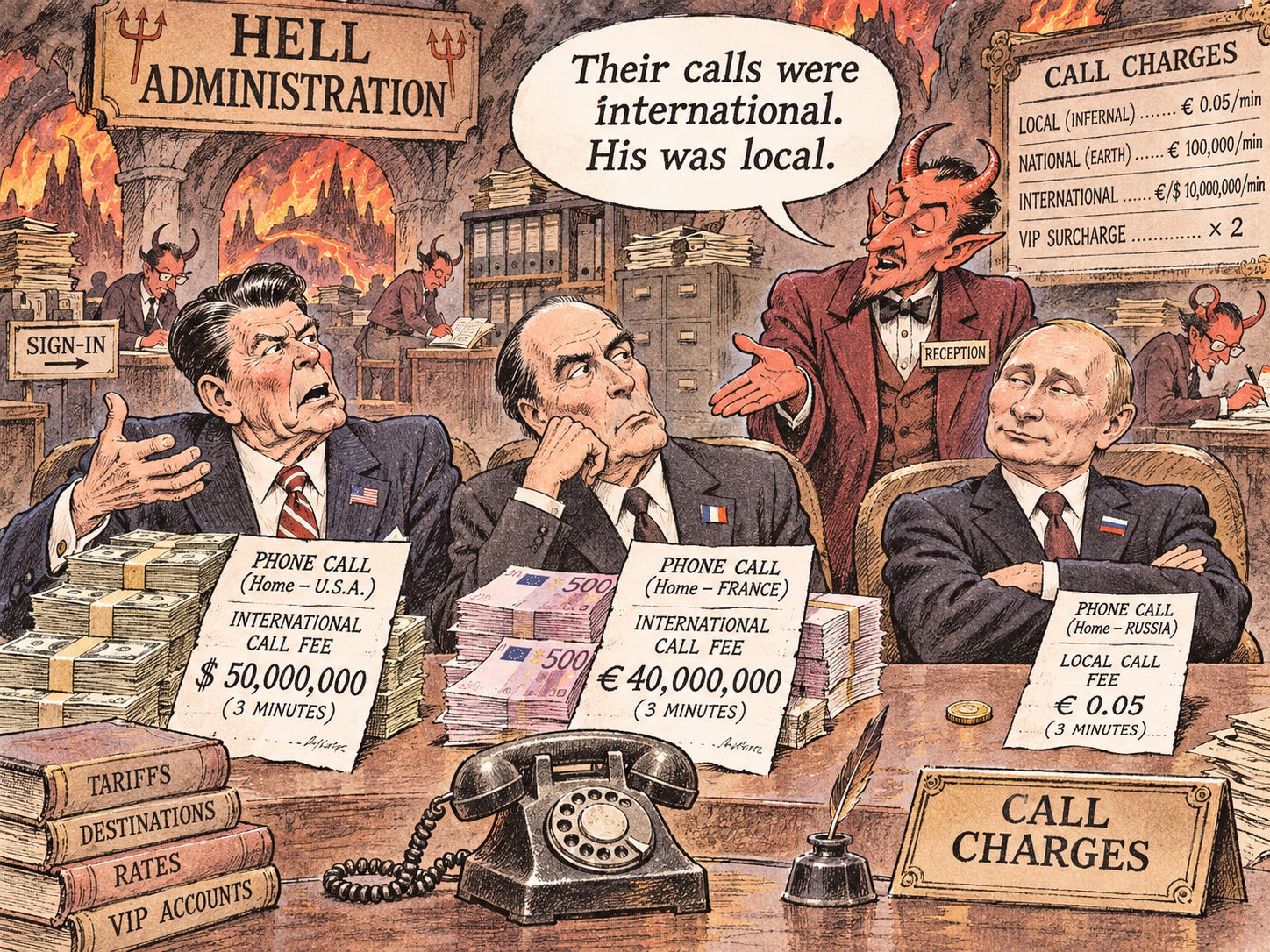
The Ukrainian author Kurkov reminded us that under Soviet rule, humour was the one safe vehicle for dissent. He told a joke to prove it:
The devil is giving Reagan, Mitterrand and Putin, as VIPs, a guided tour of the administration building of hell, and through an open door they spot an old-fashioned telephone on a desk. Reagan asks to call the White House, and the devil agrees, at five million dollars for five minutes. Mitterrand asks to call Paris and pays five million euros. Putin asks to call the Kremlin, and the devil charges him five kopecks. Reagan and Mitterrand protest. Why did we pay so much more than Putin? The devil explains the arithmetic. “You were making international calls, and Putin’s is a local one.”
I know other leaders who would qualify to pay a local rate for a phone call in hell.
I know you do too.