
Why Europe's foundational crisis runs through Syria and Gaza
Europe blames Putin, Trump and Xi for its predicament. But the rot began with the 2015 Syrian refugee deal with Erdoğan and became visible in the silence over Gaza genocide.

The question that opened the Dahrendorf Lecture last week at St Antony’s - Oxford’s most relentlessly pro-European college - would have been unthinkable five years ago. Does Europe matter? Is Europe still relevant? Dimitar Bechev, who runs the programme founded by Timothy Garton Ash to honour the late Ralf Dahrendorf, was being deliberately provocative, but only just… The question is one that some of the best European magazines have begun to ask, and the room knew it.
The lecturer answering it was Comfort Ero, the President and the CEO of the International Crisis Group — perhaps one of the few organisations that produces genuinely granular, on-the-ground conflict analysis. Founded thirty years ago in response to the international community's failure to prevent the genocides in Bosnia and Rwanda and the state collapse in Somalia, and animated by the dictum ‘never again’, Crisis Group spent most of its institutional life treating Europe as the stable periphery from which the world's disorders could be analysed. No longer.
Under Ero, the organisation has just taken the strategic decision to reinvest in Europe, treating the continent not as a stability anchor but as a region exposed to conflict pressure and great-power competition.
That an organisation built to analyse conflict elsewhere has now redirected its analytical resources toward Europe is, as Ero acknowledged, itself a finding about Europe.
The continent is no longer the normative template against which other regions' instabilities are read. It is one of those regions now.
I would not have predicted it half a decade ago. The days we live in…
De-risking or conscious uncoupling with the US
Ero began her lecture with first principles, the three pillars on which the post-war European project rests: American security guarantees. A rules-based international order. Economic integration. All three are now under simultaneous strain. Russia’s war in Ukraine has shattered the assumption that territorial aggression in Europe belongs to the past. The United States -historically the anchor of European security- has become, under its current administration, less a partner than a variable. A recent poll across six European countries found 87 per cent of respondents in favour of greater European autonomy and “de-risking” from Washington.
De-risking, a term Ursula von der Leyen first used for China, is not the same as decoupling. It accepts that structural dependence on a partner has become a strategic vulnerability, but seeks to reduce that dependence by degrees. For example, through diversification of supply chains or the building of alternative partnerships, rather than through an abrupt severance. Isn't it interesting that a concept originally devised to navigate exposure to China is now being used for the future of Europe's relationship with the United States?
Jeremy Shapiro, the research director at the European Council on Foreign Relations (ECFR), has come up with another formulation, conscious uncoupling. He realised, when he saw my blank face, that I had missed the popular-culture reference, and had to explain. In March 2014, Gwyneth Paltrow announced that she and her husband, the Coldplay frontman Chris Martin, were ending their decade-long marriage by "consciously uncoupling", yani separating amicably, remaining a family, refusing to make their break-up a spectacle. The phrase was much mocked at the time, but it has aged well. For Shapiro, it captures what Europe's relationship with the United States needs to become, not a rupture, not a continuation of dependence, but a deliberate, dignified renegotiation of the terms.
Timothy Garton Ash asked Ero about the nature of this decline. Was it gradual or sudden? He also recalled that former Vice President of the European Commission (2019-24) Josep Borrell, who had given the same lecture a year earlier, had located the rupture in double standards towards two events - Russia’s full-scale invasion of Ukraine and Europe’s response, or rather its conspicuous non-response, to the genocide in Gaza. Ero accepted that these were the moments in which the crisis became impossible to ignore, but pushed the inflection point earlier, to around 2015.
The deals that broke the principle
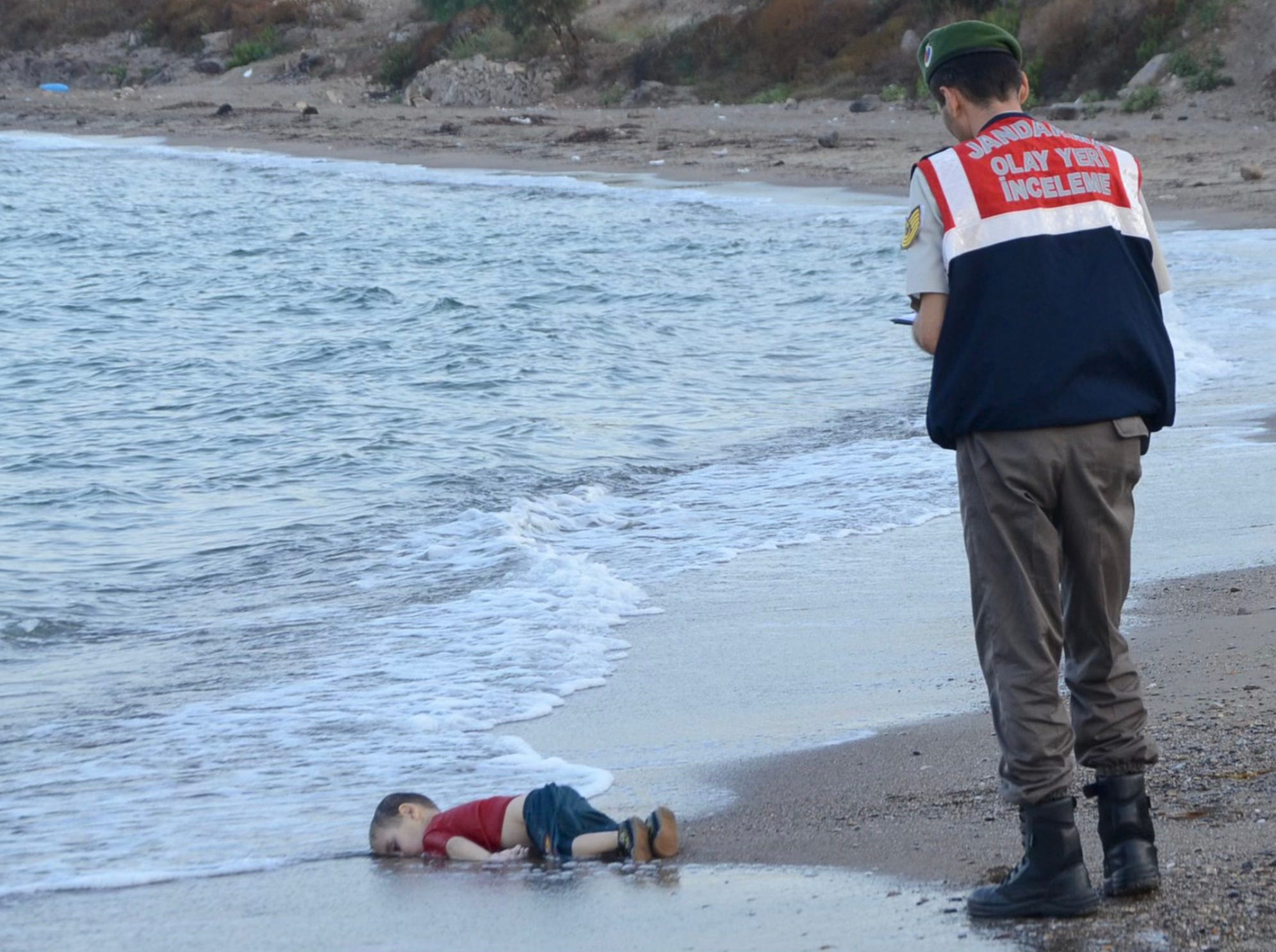
You remember what happened in 2015. Faced with a million asylum-seekers arriving via the Aegean, the EU negotiated its way out of the problem by paying Recep Tayyip Erdoğan’s Turkey to keep Syrians on the eastern side of the border -six billion euros, a revived accession dossier that Brussels had no intention of honouring, and the quiet reclassification of Turkey as a “safe third country” - that almost no serious international lawyer believed it to be. The deal worked, in the narrow sense that crossings collapsed. It also did something more lasting. It exported Europe’s humanitarian responsibilities to an authoritarian partner, handed Erdoğan a permanent instrument of leverage, and inaugurated the externalisation playbook now imitated everywhere from Italy-Libya to UK-Rwanda. Well done, really.
If 2015 was where the principle began to be applied selectively, Gaza is where it snapped clean in half. The European response to Russia in Ukraine had been swift. ICC arrest warrant for Putin endorsed across the bloc, twenty sanctions packages, suspension of cooperation agreements, a near-instantaneous redefinition of what international law required of European governments.
The response to Israel’s conduct in Gaza has been the inverse. When the International Court of Justice ruled in January 2024 that South Africa’s case alleging genocide was plausible, Germany formally intervened on Israel’s side; France, Italy, Austria and the Czech Republic dismissed the case in varying registers; the European Commission declined to comment.
When the ICC issued arrest warrants against Netanyahu and his then defence minister Yoav Gallant who had announced a complete siege of Gaza with the words we are fighting human animals and we are acting accordingly’, France invented a doctrine of head-of-state immunity that no European lawyer believed in; Italy, Germany, Poland and Hungary signalled, in language of varying clarity, that they would not arrest him.
In April 2025 Orbán hosted Netanyahu in Budapest. Greek PM Mitsotakis met him in Jerusalem on the first day of Eid al-Fitr, one of the holiest days in the Islamic calendar, while Israeli airstrikes were killing dozens of Palestinians in Gaza. The EU-Israel Association Agreement, with its human-rights essentiality clause, was reviewed three times and never suspended. In September 2025 a United Nations commission of inquiry concluded that genocide was being committed; the institutional EU did not adjust its position. Spain, Ireland, Belgium and the Netherlands pushed in the other direction, and they were the exceptions that proved the rule. The phrases rules-based international order or international law or international treaties, repeated across this period in every European communiqué on Ukraine, was being hollowed out by the same governments using it.
What struck me, sitting in a room full of people who had spent careers thinking about Europe, was the quiet consensus about the fundamental reason behind the European project’s fundamental crisis. It is not Russian tanks, nor American volatility, nor Chinese capital. It is the hypocrisy, the double standard, the inconsistent application of the principles on which the entire post-war order was built.
A principle applied selectively is no longer a principle. Yani, it becomes a preference. Which is ok if you are being honest about it. But you cannot claim a rules-based order while choosing which rules apply to allies and which to adversaries; you cannot invoke international humanitarian law in Bucha and avert your eyes in Gaza; you cannot lecture the Global South about territorial integrity while paying Erdoğan to do your border work. The Europeans I most respect understand this. The trouble is that understanding it has not yet been translated into doing anything about it.
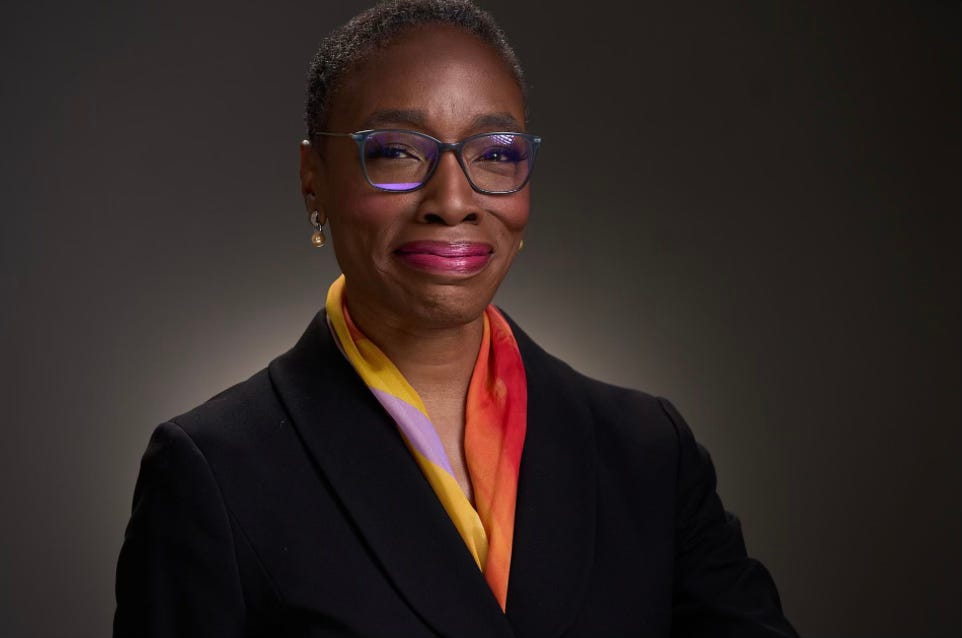
Ero’s prescriptions for the short term are sober and operational.
Use leverage with unity and consistency. The Greenland crisis showed what coordinated resolve can achieve. A front of eight states - Denmark, France, Germany, the UK, Italy, Spain, Poland, the Nordics - and Trump withdrew the threat in January, having met the kind of coordinated European resistance his administration had not anticipated. Acquiescence gains little in the face of leaders like Trump.
Reassess reliance on the United States. Unquestioned reliance is no longer credible; de-risking now applies across the Atlantic as well as toward Beijing. But strategic autonomy must be built multilaterally, deliberately, with political will and coherent policy — and not captured by any single member state’s defence-industrial agenda.
Build coalitions of the willing. The EU and NATO remain essential but can be ponderously slow. Agile, issue-based coalitions can act faster, as the leader-led initiatives on Ukraine and amid the US-Israel-Iran tensions have shown.
Defend the rules-based order consistently. Consistently is the word here. Without it, the rest is rhetoric or laf salatası as we say it in Turkish.
Address the eroding global standing. In the Global South, Europe is increasingly perceived as backless, inward-looking and altogether too comfortable lecturing others. Influence is built on credibility, not power alone.
Confront internal fragmentation and populism. Despite real progress (the recent overcoming of Hungarian obstacles, for instance), political divisions and populism remain decisive threats. Major elections — though formally local — carry national and Union-wide implications. Europe, Ero insisted, must address the crises it cannot externalise.
The Scramble for Europe
If Ero’s diagnosis is the foreground, Dimitar Bechev’s new book The Scramble for Europe: Russia, China and Turkey Challenging Regional Order supplies the background. Dimitar traces the consolidation of the EU-anchored European order and its slow unravelling from the late 2000s. His central argument is that the three challengers want different things from a diminished Europe. Russia is the radical revisionist, exposed in Ukraine, intent on remaking the security architecture by force. China is the patient co-opter, working through economic dependence to integrate Europe into a future order it expects to dominate. Erdoğan’s Turkey is the perpetual stakeholder, weary of being the eternal candidate, demanding recognition as a top-tier player rather than waiting at the door. Folded together, these revisionisms are not a single threat but a structural condition to which Europe has been responding piecemeal, distractedly, and on the back foot.
Ero and Bechev are arguing, from different angles, for the same conclusion. The crisis is foundational rather than cyclical, which means it will not pass on its own; the pressure is multidirectional rather than singular, which means it cannot be deflected by managing one relationship well. Europe is therefore left with only its own conduct as a variable.
It is shocking how the diffusion of the authoritarian populist playbook, with its transactional, Machiavellian, pragmatic ethos, recognises neither borders nor the lessons of history. Travels fast and furious from country to country, region to region. However, transactionalism works, in the narrow sense in which the 2015 deal worked. In a way it does not work in the long term. The alternative, on the other hand, requires Europeans to pay prices they have been reluctant to pay since at least Bosnia. Is anyone willing to change that? No one in the room was sure at Oxford.
So it is fair to say that whether Europeans choose consistency and principle over expedience in the years ahead will determine not whether Europe matters, -I think it will-, but what kind of Europe survives the period we are now in.
You can pre-order Dimitar Bechev’s book by Oxford University Press here.